The best whiskey drinks to order depend on three things: how sweet you like your cocktails, how ambitious the bar's program is, and whether you want something the bartender can make in thirty seconds or something worth waiting for. If you need a starting point, four drinks cover most situations — the Old Fashioned (spirit-forward, barely sweet, works anywhere), the Manhattan (richer, vermouth-driven, best at cocktail bars), the Whiskey Sour (balanced and approachable, safe at almost any bar), and the Penicillin (smoky and citrusy, a modern classic worth seeking out when the bar clearly knows what it's doing).
Beyond those anchors, the right whiskey drink to order shifts considerably depending on context. Venue matters. A dive bar is not the place for a Vieux Carré, and a craft cocktail bar that charges eighteen dollars a pour probably has something more interesting than a Jack and Coke — ordering one signals you haven't looked at the menu.
Taste matters as much as setting. Drinkers who find straight whiskey harsh tend to do well with sour-style drinks; those who already drink it neat usually prefer builds that keep the spirit prominent. The picks below are organized around both variables, so you can land on something you'll actually enjoy rather than defaulting to whatever sounds familiar.
What makes a whiskey drink worth ordering at a bar
A whiskey drink earns its place when the spirit is doing actual work — contributing flavor rather than hiding behind sweetness or fizz. The best orders share three qualities: the whiskey base was chosen deliberately for that recipe, the drink holds its balance from the first sip to the watered-down last one, and the bar you're standing in can execute it properly.
Start with the mixer question. High-sugar sodas and heavily sweetened syrups don't enhance whiskey — they flatten it. A cheap bourbon drowning in ginger beer tastes like ginger beer. A well-aged Scotch lost in a bucket of simple syrup is money you didn't need to spend. The mixer's job is to frame the spirit, not replace it — and when the ratio tips too far, the whiskey becomes irrelevant to whatever you're actually drinking.
Balance — between sweet, bitter, and sour — is what separates a cocktail that holds together across an entire glass from one that's fine for two sips and cloying by the fourth. An Old Fashioned built correctly stays interesting as the ice melts because the bitters pull against the sugar, creating a kind of slow-motion tension that a pre-batched, syrup-heavy version simply cannot replicate. A Whiskey Sour with real lemon juice doesn't collapse into candy. That structural tension is the thing you're paying for.
Bar context changes everything. Most people ignore this, and it costs them a mediocre drink they still tipped on. A craft cocktail bar with house-made syrups, fresh citrus, and a bartender who has made a Penicillin two hundred times this month can deliver something with real layered complexity — smoke, heat, and sweetness all pulling in different directions — but that same drink at a sports bar on a Saturday night is a gamble you'll probably lose, because the ingredients and the attention required to execute it simply aren't there. Simpler two- or three-ingredient orders — a bourbon and ginger, a Scotch and soda — travel well across bar types.
The whiskey category itself matters too. Bourbon's corn-driven sweetness, rye's dry spice, Irish whiskey's lightness, Scotch's smoke — most classic cocktails were built around one of these profiles. Swap the base and you're not making the same drink with a different label; you're making a different drink entirely.
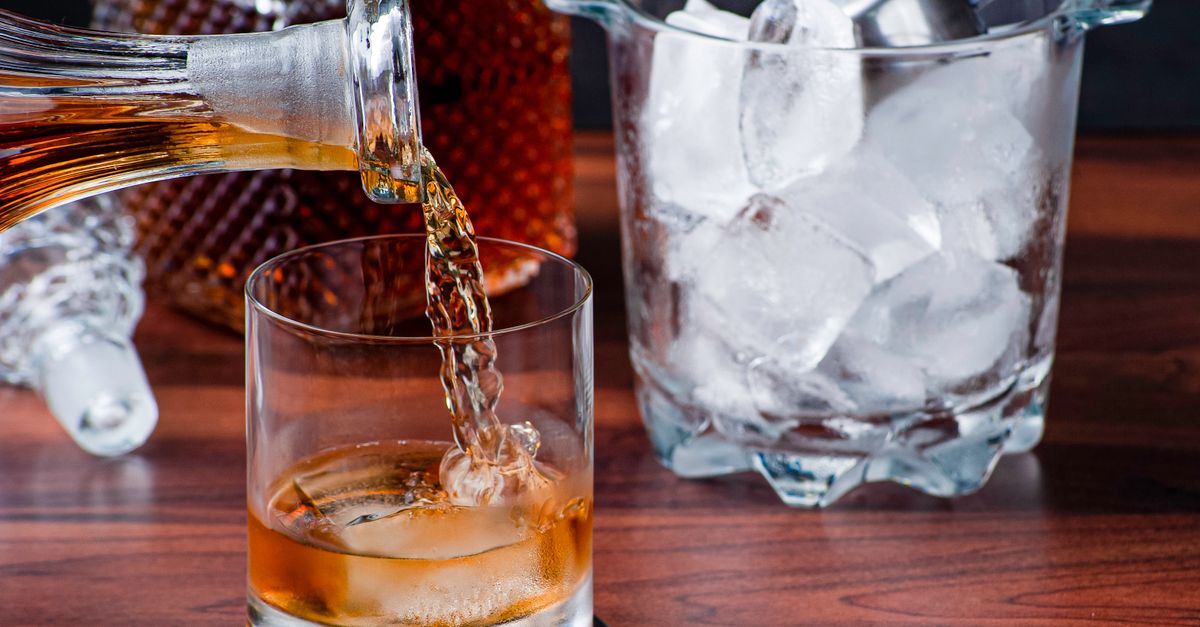
The most popular whiskey drinks to order, ranked by how often they appear
Five drinks account for most whiskey orders at bars that take their back bar seriously — Old Fashioned, Manhattan, Whiskey Sour, Boulevardier, and Mint Julep. Knowing what each one is built from, and what mood or setting calls for it, means you can walk into almost any bar and land on something you'll actually enjoy.
Drink | Base spirit | Dominant flavor | Best setting |
|---|---|---|---|
Old Fashioned | Bourbon or rye | Rich, slightly bitter, caramel | Any bar with a decent whiskey list |
Manhattan | Rye or bourbon | Herbal, dark fruit, complex | Cocktail bar or nice dinner |
Whiskey Sour | Bourbon | Citrus, sweet-tart | Casual bar, first whiskey drink |
Boulevardier | Bourbon | Bitter, rich, warming | Cocktail bar, cooler weather |
Mint Julep | Bourbon | Minty, sweet, icy | Outdoor bar, hot afternoon |
The Old Fashioned is the right opening move at any unfamiliar bar. Order one and you learn something fast: a bartender who muddles orange slices and drowns the thing in club soda is working from muscle memory, not craft. The real version is just bourbon or rye, a sugar cube or simple syrup, and Angostura or orange bitters, stirred long and cold, with a wide citrus peel expressed over the glass. The flavor sits somewhere between caramel warmth and a clean bitter edge. It's the benchmark precisely because it has nowhere to hide.
The Manhattan raises the stakes. Rye brings a dry spice that works beautifully against sweet vermouth; bourbon makes it rounder and almost dessert-adjacent. Served up in a coupe, it's a more formal drink — the combination of whiskey, vermouth, and bitters produces something deeply layered, where each ingredient reshapes what you taste in the next sip, and that kind of interplay rewards attention rather than rewarding speed. Order one at a sports bar and you'll often get something underflavored and underchilled. At a cocktail bar, it's frequently one of the best things on the menu.
The Whiskey Sour is, despite what some whiskey purists claim, a serious drink. It converts skeptics. Bourbon, fresh lemon juice, and simple syrup in the right proportions produce something bright and warming at once, and the balance between those elements is more demanding to execute correctly than the short ingredient list implies. Ask for it with egg white and the texture goes silky; without, it's sharper and more refreshing. If someone tells you they don't like whiskey and you want to change their mind, this is the order.
The Boulevardier is effectively a Negroni with bourbon swapped in for gin — Campari, sweet vermouth, and whiskey, stirred over ice. The drink is confrontational by design. The bitterness is more insistent than a Manhattan's, and bourbon pushes back against it in a way that gin simply can't, which is part of why the drink feels heavier and more deliberate in the glass. It fits a cold evening better than a summer afternoon. For a broader look at how these cocktails translate from the bar to the kitchen, this guide to whiskey drinks you can make at home lays out the ratios clearly.
The Mint Julep deserves more than one day a year. Crushed ice, bourbon, fresh mint, and sugar syrup — it's almost absurdly simple, and almost nobody orders it outside of Kentucky Derby weekend. That's a missed opportunity. On a sweltering afternoon at an outdoor bar, with the ice already starting to bead through the metal cup, nothing else in the whiskey canon comes close.
What to order if you want something beyond the classics
These five cocktails sit one step past the canon — familiar enough that any competent craft bar can execute them, obscure enough that ordering one signals you've already worked through the Old Fashioneds and Manhattans. They're the natural second chapter.
Penicillin is probably the most significant whiskey cocktail invented in the last thirty years. Sam Ross built it in New York around 2005: blended Scotch, fresh lemon, honey-ginger syrup, with a float of peaty Islay Scotch on top. The float is functional, not decorative — every sip comes through a thin layer of smoke before hitting the sweeter body underneath. It works at almost any bar carrying decent back stock, and if a place has Laphroaig or Ardbeg on the shelf, they can make it properly. Order this when you want something that rewards attention.
Paper Plane is four ingredients in equal parts: bourbon, Aperol, Amaro Nonino, fresh lemon. That's it. The formula was developed by Sam Ross as well, and it's one of those rare builds where adjusting any single ratio makes the drink worse — no exception. The Nonino brings enough bitter herbal weight to keep the Aperol from turning it into something too bright, and the bourbon grounds the whole thing. If a bar is out of Nonino and offers a substitute, the drink becomes something else — still potentially good, but a different cocktail entirely.
The Gold Rush is a Whiskey Sour made with honey syrup instead of simple, and that substitution adds a floral depth that plain sugar can't replicate. It reads as unpretentious but isn't obvious. A strong order for someone who wants their drink easy to describe and measurably better than what they'd get from the default menu.
A New York Sour starts as a standard Whiskey Sour and finishes with a float of dry red wine — usually something with enough acidity to hold its shape on the surface. The visual is striking. What's less obvious is that the flavor shifts meaningfully in the final third of the drink, as the wine folds into the citrus and the two stop tasting like separate things. It's not a gimmick, though it's often marketed like one.
The Sazerac — rye, Peychaud's bitters, sugar, absinthe rinse — is the most demanding of this group to execute correctly. New Orleans bars treat it with appropriate seriousness; elsewhere, results vary considerably, sometimes dramatically. Order it somewhere you trust the bartender, and watch whether they bother chilling the serving glass before they build it. If they skip that step, they know the recipe but not the drink.

Sweet and fruity whiskey drinks worth ordering
Sweet and fruity whiskey drinks are a legitimate category, not a compromise — and the right base spirit makes all the difference between something that tastes integrated and something that just tastes like candy with a burn underneath.
The Whiskey Smash is the strongest order in this range. Bourbon muddled with lemon wedges and fresh mint, lightly sweetened — it sits somewhere between a Julep and a Sour, but more direct than either, with none of the ceremonial weight that makes the Julep feel like an occasion. Less fussy. Ask for a wheated bourbon if the bar stocks one; the softer grain character carries the fruit without fighting it.
Irish Coffee is chronically underordered, which is a shame. Irish whiskey, hot coffee, brown sugar, and a float of lightly whipped cream: it's one of the few hot whiskey drinks that actually holds together as a drink rather than a mug of warm spirits poured into a glass and called something — which is more than can be said for most warm whiskey cocktail menu entries. The base matters. Its lighter, malt-forward character doesn't compete with coffee bitterness the way a high-rye bourbon would.
Bourbon lemonade — sometimes listed as a Lynchburg Lemonade variant, sometimes just built at the bar on request — is the most casual option. Simple to execute. It works noticeably better with a high-corn, low-rye bourbon whose natural sweetness leans into the lemon rather than scraping against it, because rye-forward expressions push back in a way that reads as harsh rather than complex, and almost no amount of extra sweetener rescues that particular friction once it's there. Most bars can turn one out on request.
That last point is worth flagging with your bartender: if a fruit-forward or sweet drink is tasting too boozy or sharp, the fix is usually the base, not the proportions. Steering toward Irish whiskey or a lighter corn-heavy bourbon — Four Roses Yellow Label, Elijah Craig Small Batch — almost always smooths it out.

Get Your Venue Discovered
List your venue on WhatDrink so people searching for their next drink by style, location and occasion can find you.
List Your VenueWhat whiskey drinks to order at a dive bar vs. a cocktail bar
The bar you're standing in changes your order more than your taste does. A Penicillin at a dive bar isn't just unlikely to be good — it's likely to be unrecognizable, made with bottled lemon, whatever Scotch is cheapest, and no ginger honey syrup anywhere on the rail, because the venue dictates equipment, ice quality, ingredient freshness, and bartender training. Ignore that.
At a dive bar, keep it simple and you'll almost always drink well. A whiskey sour made with sour mix is fine — it's what the bar is set up to make, and a good well bourbon carries it. Jack and Coke is bulletproof. So is a mid-shelf bourbon with ginger beer, which is forgiving enough that even a heavy hand with ice doesn't ruin it. If the back bar has a decent bottle of Bulleit or Evan Williams Black, asking for it over ice with a splash of water is a pleasure in the most straightforward sense, with no expectations to dash. For a fuller breakdown of what actually works in this setting, this guide to ordering whiskey at a dive bar vs. a cocktail bar lays out the reasoning clearly.
At a cocktail bar, you can ask for things that need real work. The Penicillin — blended Scotch, fresh lemon, ginger honey, Islay float — requires technique and sourced ingredients; only bars that care about their back bar have them, and most places don't. A Vieux Carré needs fresh sweet vermouth and Peychaud's. The Paper Plane is deceptively easy to get wrong if the Aperol and amaro aren't measured precisely by someone who's made it before. These are the drinks that justify the $18 price tag.
⚠️ The vermouth test: if you can't tell what kind of bar you're in, order a Manhattan. A cocktail bar keeps its vermouth refrigerated and rotates it; a lesser bar pours from a sticky bottle that's been open since the previous spring, and a single sip of a flat, oxidized Manhattan tells you whether to pivot your next order or stay simple.
What to skip at a dive bar: anything with egg white (the hygiene math isn't great when the bar is slammed), fresh herb muddling, or a rare single malt float. Those requests waste everyone's time and rarely produce what you imagined.
The universal fallback — bourbon on the rocks, splash of water — works at every bar, costs the least to get wrong, and lets the whiskey speak for itself. That's rarely a bad thing.

How to order whiskey drinks when you don't know what you want
Tell the bartender one drink you've enjoyed before — that single piece of information does more work than any amount of vague description. "I liked an Aperol Spritz" gets you to a Boulevardier in two sentences, because the bartender now has a flavor profile to mirror rather than a blank canvas to guess at. "I want something not too strong" lands you nowhere useful.
If you have no reference drink to offer at all, start with one question to yourself: sweet or spirit-forward? That split does most of the sorting — sweet pulls toward bourbon and Irish whiskey, rounder entries with more vanilla and caramel, while spirit-forward means you want the grain to push back, which is rye or Scotch territory. Direction matters more than vocabulary here. Pick one.
Once you've placed yourself on that axis, the bartender can do the rest — but there's a quick diagnostic worth running before you hand over the decision entirely. Ask which bourbon they pour most often. A bartender who names a recognizable mid-shelf bottle (something like Elijah Craig or Buffalo Trace) is signaling that they stock beyond well liquor and that someone behind the stick actually thought about the back bar. A blank stare or a house-pour non-answer tells you something too.
💡 For a first order when you're still finding your footing, a Whiskey Sour or a Gold Rush are both low-risk picks. They're forgiving to make and appear on almost every menu. That gives you a clear dial to adjust on the second round — ask for it a little sweeter, or pull back on the citrus, depending on what landed wrong, and neither will expose a weak bar or punish a bartender who isn't paying full attention.
One honest caveat: the "easy" sweet drinks often carry more sugar than they appear to. A Gold Rush built on honey syrup runs lower than a whiskey lemonade loaded with simple syrup, but both still add up over a night — especially across two or three rounds, at which point the difference between a stirred spirit-forward drink and a sweetened sour starts to show up in how you feel at round four. Old Fashioneds and neat pours are the lower-sugar route by a wide margin, a fact that rarely makes it onto menus. If that's a factor in how you're ordering, this guide to choosing lower-calorie cocktails at a bar gives you a cleaner framework than scanning a menu and guessing.
The whole conversation with a bartender, done right, takes about thirty seconds. The anchor is that first reference drink — give them something to navigate from, and they'll do the rest.
FAQ
What's a good whiskey drink to order if you're new to whiskey?
A Whiskey Sour is the most forgiving entry point: the lemon juice and sweetener round off the spirit's edges while still letting you taste what the whiskey is doing, and it's available at nearly every bar with a well stocked back shelf. If you find that too tart, a John Collins (the same build with soda) stretches the flavors further and cuts the intensity without hiding them entirely. Both orders give you enough whiskey character to decide whether you want to go bolder next round.
What are the most popular whiskey cocktails at bars?
The Old Fashioned and the Whiskey Sour are consistently the two most-requested whiskey cocktails across bar types, followed closely by the Manhattan and the Highball. The Old Fashioned appears on practically every cocktail menu in existence; the Whiskey Sour holds because it translates well across skill levels, from a shaken fresh-juice version at a craft bar to a pre-mix pour at a casual spot. Those four drinks account for a substantial share of whiskey orders at most venues.
What whiskey drinks can I order at any bar, not just a cocktail bar?
A Whiskey Highball — spirit over ice, topped with soda water or ginger ale — works anywhere because it requires nothing more than a bottle and a carbonated mixer. The Old Fashioned is nearly as portable: it needs only whiskey, sugar or simple syrup, and bitters, all of which even a minimal bar keeps behind the counter. Both drinks are simple enough that execution quality doesn't swing wildly between venues the way a multi-ingredient cocktail does.
What's the difference between a Manhattan and an Old Fashioned?
A Manhattan is a stirred cocktail built with whiskey, sweet vermouth, and bitters, which gives it a wine-like richness and a noticeably lower proof than the spirit on its own. An Old Fashioned uses no vermouth — it's whiskey, a small amount of sugar, and bitters, stirred over ice and usually garnished with an orange peel, so the whiskey stays front and center with less sweetening influence. The Manhattan is silkier and more complex; the Old Fashioned is more direct and spirit-forward.
How to Choose What Whiskey Drink to Order: A Practical Summary
The decision comes down to three things stacked in order: what you like to drink, where you're drinking it, and what the occasion calls for. Sweetness as your anchor? Bourbon works as your base almost everywhere — it plays well in Sours, Old Fashioneds, and anything with fruit. If you want drier, spicier, or more aromatic, rye or Scotch opens different doors. Those base preferences narrow the field before you've even looked at a menu.
Bar type shapes how adventurous your order should be. At a dive bar or a high-volume sports bar, ordering a Highball or an Old Fashioned gets you a clean, reliable drink because both require almost no technique. Asking for a Paper Plane or a Penicillin at a bar that doesn't stock Aperol or Islay Scotch is a gamble — you'll either get a substitution that changes the drink meaningfully, or an apologetic no. Save the multi-ingredient builds for venues that have a proper cocktail program and staff who are clearly running one.
Occasion matters more than most drinkers admit. A long social night calls for something lower-proof and sessionable — a Highball or a Collins you can nurse across two hours. A meal with a clear beginning and end suits a Manhattan or an Old Fashioned, both of which are meant to be sipped rather than paced through. A round of shots at a celebratory bar moment is a different format entirely, and trying to squeeze a craft cocktail into that context usually just slows things down.
For the widest range of drinkers and the broadest bar coverage, three orders do the most work: the Whiskey Sour for newcomers and anyone who wants something bright and balanced; the Old Fashioned for drinkers who want to taste the spirit with minimal interference and don't mind a slightly slower-paced drink; and the Highball for every situation where simplicity and drinkability matter more than complexity. Between those three, you can navigate almost any bar, any crowd, and any mood without a wrong turn. If you're ordering for yourself tonight and still undecided, the most reliable starting point is whichever of those three best matches the last spirit-forward drink you enjoyed — that connection tends to be a better guide than anything on the menu.