
Swapping Aperol for Campari in a negroni recipe works — the result is a different drink, not just a milder version of the same one. The standard build is equal parts: 1 oz gin, 1 oz Aperol, 1 oz sweet vermouth, stirred over ice and strained into a rocks glass with an orange peel. What you get is lighter in color, softer on the palate, and pushed toward bitter orange and dried citrus rather than the sharp, almost medicinal punch Campari delivers. No agreed name has stuck — you'll see "Aperol Negroni," "Apegroni," and a few others floating around. Aperol's lower alcohol content (11% ABV versus Campari's 25%) meaningfully changes the finished drink: same volume in the glass, noticeably less alcohol overall.
Whether that's the point or a limitation depends on what you're after. The Aperol version suits people who find a classic Negroni too aggressive. It's also a distinct creative choice — the citrus notes interact differently with vermouth and botanical gins, which opens up some interesting substitutions worth thinking through carefully, and the softer bitterness shifts how the whole drink holds together in a way that a simple "milder Negroni" framing doesn't quite capture.
How to make a Negroni with Aperol: the base recipe
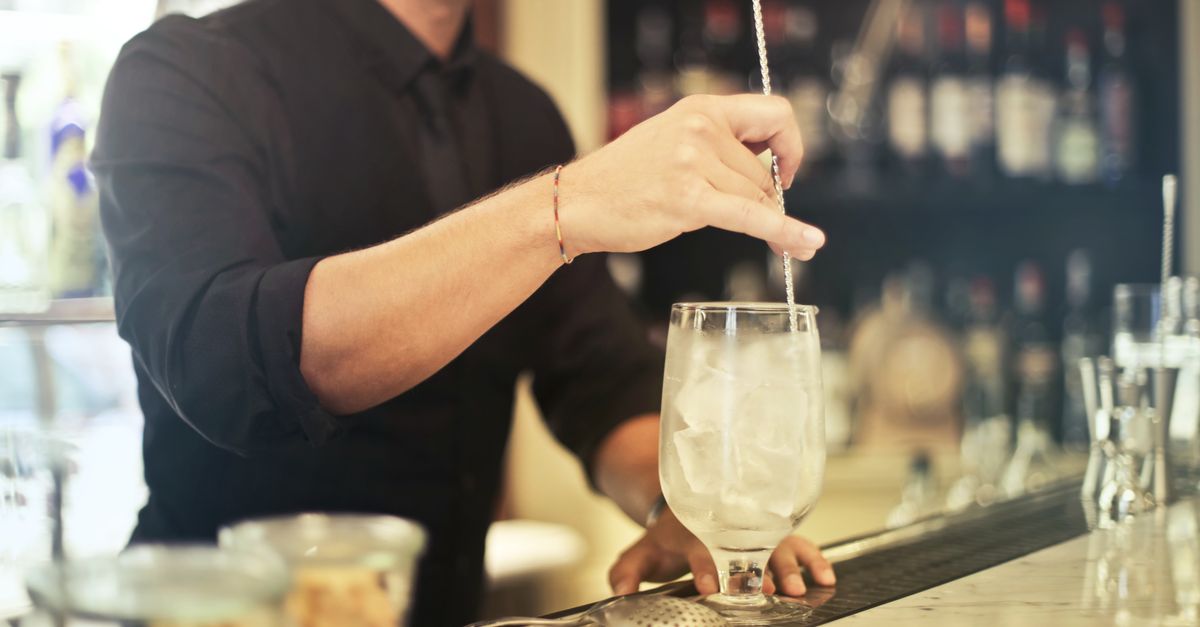
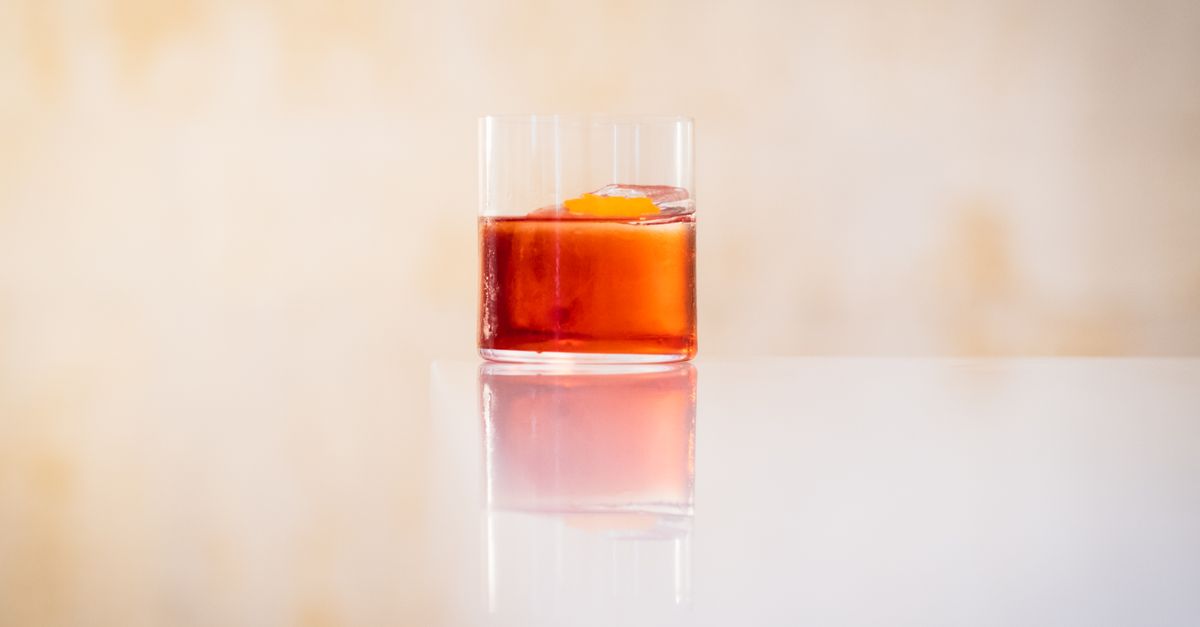
Equal parts gin, Aperol, and sweet vermouth, stirred over ice and strained into a rocks glass — that's the whole recipe. Combine 1 oz of each in a mixing glass filled with ice, stir for about 20 seconds until the outside of the glass feels cold, then strain over a single large ice cube. Finish with an orange twist expressed over the glass, or a half-wheel perched on the rim. Done.
The flavor sits noticeably lighter than a classic Negroni: the bitter edge softens, a bright citrus note moves to the front, and the overall body thins out in a way that makes it considerably more approachable for anyone who finds Campari aggressive. If you want a benchmark for how Aperol fits into the broader gin cocktail landscape, this guide to gin cocktails you can make at home puts the spirit's range in useful context.
Some recipes scale every component up to 2 oz, which keeps the flavor proportions identical. The catch is dilution. Because Aperol already sits lower in both alcohol and sweetness than Campari, the extra liquid picked up during stirring can push the finished drink toward watery — particularly if you hold to the same 20-second stir time you'd use for the smaller build. Trim three or four seconds off to compensate.
Can you use Aperol instead of Campari in a Negroni?
Yes — the substitution works, but the drink that comes out is meaningfully different from a classic Negroni. Aperol sits at 11% ABV against Campari's roughly 25%, so the finished cocktail lands noticeably lighter. That gap matters. If you're building a Negroni and want to understand how other ingredient swaps shift the structure, this guide to Negroni variations without vermouth is useful context.
Beyond alcohol, the flavor profile shifts considerably. Aperol is sweeter. It leads with rhubarb and orange up front and carries very little of the sharp, quinine-adjacent bitterness that defines Campari and gives the classic cocktail its backbone. Campari is drier, more herbal, and brings a bitter core that the drink was essentially designed to showcase — swap it for Aperol and you get something rounder and more approachable, which is either the point or a compromise, depending on who's pouring.
For someone who finds the classic Negroni too aggressive — and plenty of people do, even if they won't say so — the Aperol version is the stronger choice for that palate. The drink becomes easier to sip without losing the basic architecture of equal parts.
Campari, though, is irreplaceable if what you want is that full bitter punch. Aperol doesn't replicate it; it sidesteps it.
What is a Negroni with Aperol called?
There is no canonical name for this drink. The cocktail world has not settled on one, and you will find it listed differently across menus, recipe sites, and bar conversations — most often simply as an "Aperol Negroni," which is informal but functional enough that any attentive bartender will understand the request.
Expect a clarifying question or two. Some bartenders assume you want the proportions adjusted, or they may reach for sweet vermouth out of habit, having built thousands of standard Negronis without ever swapping the bitter component. Being ready to specify "same build as a Negroni, Aperol in place of Campari" saves a round of back-and-forth. Worth the extra sentence.
Two adjacent drinks are worth distinguishing, because the names sometimes blur in casual use. The Negroni Sbagliato replaces the gin with Prosecco — still Campari, still sweet vermouth. The Aperol Spritz shares the Aperol but drops both the gin and the vermouth entirely, building instead on Prosecco and a splash of soda, which makes it a fundamentally different category of drink rather than a variation on the same bitter-spirit-vermouth architecture. Neither is a riff on what this piece covers; they are separate cocktails that happen to share an ingredient.
Negroni with Aperol and dry vermouth: does the swap work?
It works, but it produces a noticeably different drink — drier, leaner, and far less fruit-forward than the sweet vermouth version. Swapping in dry vermouth removes the sugary counterweight that normally balances Aperol's bitter orange character, and what emerges is something more herbaceous and austere, sitting structurally closer to a reverse-dry Martini than anything resembling a classic Negroni.
The tradeoff matters most in gin selection. A juniper-heavy London Dry will turn aggressive without sweet vermouth to soften it; a floral or citrus-forward gin — think something like Hendrick's or a Mediterranean-style bottle — keeps the drink from going angular. Aperol's gentle bitterness actually integrates better with those lighter botanical profiles when there's no sweetness in the glass to absorb the rough edges.
On ratios: consider bumping the gin to 1.5 oz rather than the usual 1 oz equal-parts split. Dry vermouth is thinner and less viscous than sweet, and without the adjustment the drink can taste oddly watery despite being technically correct.
⚠️ This version won't satisfy everyone. If someone finds sweet vermouth cloying or prefers bone-dry aperitifs over fruity ones, it's an elegant solution. For anyone who came to the Aperol Negroni precisely for softness and approachability, pulling out the sweet vermouth defeats the whole purpose of choosing Aperol in the first place.
Get Your Venue Discovered
List your venue on WhatDrink so people searching for their next drink by style, location and occasion can find you.
List Your VenueNegroni with Aperol vs Aperol Spritz: how the alcohol content compares
The Aperol Negroni is significantly stronger than an Aperol Spritz — closer to a standard Negroni than its blushing, citrusy appearance suggests. That's the gap most people don't account for when they order one thinking it'll drink like a brunch cocktail.
The numbers bear this out. A 3 oz Aperol Negroni combines gin at roughly 40% ABV, Aperol at 11%, and sweet vermouth around 16%, which blends to approximately 22% ABV in the glass. An Aperol Spritz — Aperol, Prosecco, and a splash of soda — lands between 8% and 11%, depending on the Prosecco and the pour.
Drink | Key Ingredients | Approx. ABV | Approx. Calories |
|---|---|---|---|
Aperol Negroni | Gin, Aperol, sweet vermouth | ~22% | 180–220 kcal |
Aperol Spritz | Aperol, Prosecco, soda water | ~8–11% | 120–160 kcal |
On calories: both Aperol and sweet vermouth carry meaningful sugar, so a generous pour can push the Aperol Negroni past 220 calories. Readers keeping closer tabs on intake might find this guide to lower-calorie cocktails to order at a bar a useful reference before committing to a second round.
How to vary the Aperol Negroni: vodka base, gin choices, and other easy adjustments
The most useful swap is also the most flattening one: replace gin with vodka and the drink becomes noticeably simpler. Aperol's orange and herbal bittersweet character moves to the foreground, the vermouth softens around it, and the whole thing reads as more approachable — which is the point if you're serving someone who finds classic Negronis too assertive. What you lose is structural complexity. Vodka doesn't push back.
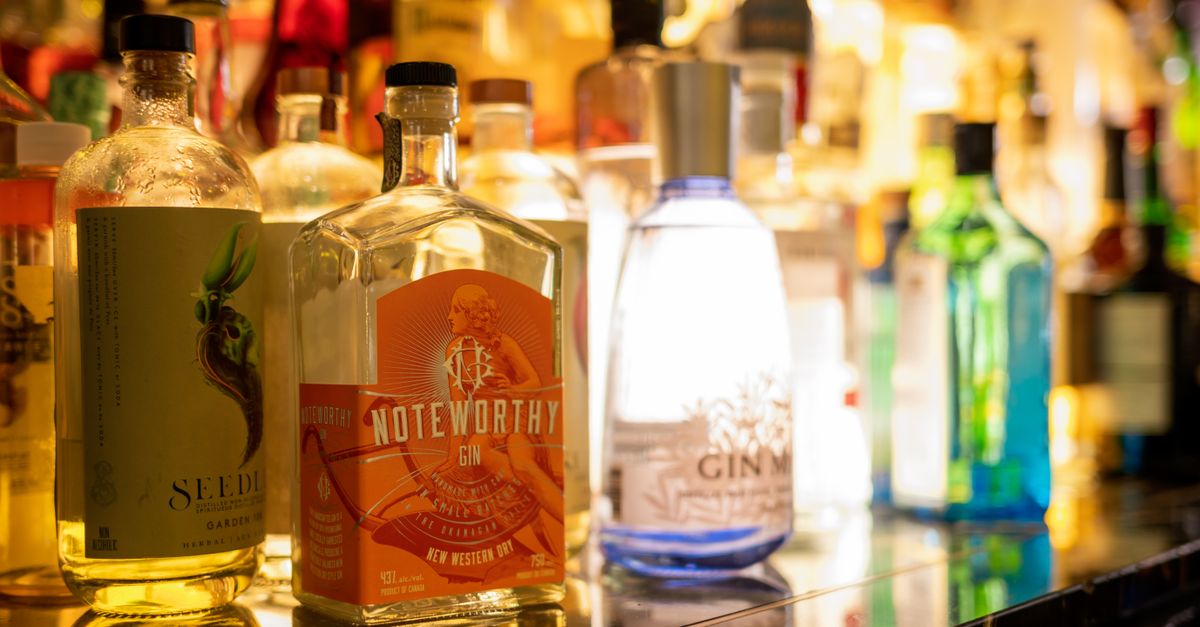
Gin selection matters more than most recipes acknowledge. Juniper-heavy London Drys create a slight friction against Aperol's sweetness — not everyone finds that pleasant. Citrus-forward or floral gins like Hendrick's, Tanqueray Sevilla, or Monkey 47 integrate far more cleanly into the drink's softer profile, which is why they keep appearing in bartender shortlists for this particular build, while the boldest juniper-led bottles tend to fight the Aperol rather than complement it. If you're unsure which bottle to open, this rundown of summer cocktail ideas by flavor profile is worth browsing before you commit.
A small splash of fresh grapefruit juice or lemon lengthens the serve and pushes it toward Paper Plane territory — brighter, slightly tart, better over ice on a warm evening.
FAQ
Can I use Aperol instead of Campari in a Negroni?
Yes — Aperol works as a direct substitute for Campari in a Negroni, keeping the same 1-1-1 ratio of spirit, bitter liqueur, and vermouth. The result is noticeably sweeter and considerably less bitter, with a lighter orange character in place of Campari's deeper grapefruit-and-herb intensity, and many drinkers who find Campari too aggressive actively prefer this version rather than treating it as a fallback.
What is a Negroni with Aperol called?
There's no single universally agreed name. "Aperol Negroni" is the most common and self-explanatory label, and you'll see it used that way on cocktail menus and in recipes across the industry. Some bartenders call it a "Venetian Negroni" — a nod to Aperol's origins in the Veneto region — though that name hasn't fully standardized, and ordering it as an Aperol Negroni will be understood almost anywhere.
Does Aperol Negroni work with dry vermouth instead of sweet?
It can work, but the pairing requires care. Dry vermouth strips out the sweetness that Aperol and sweet vermouth share, which can leave the drink feeling flat or slightly hollow rather than balanced — the botanicals have less to push against. If you want to try it, look for a dry vermouth with some body and fruit character, like Dolin Dry. A small barspoon of simple syrup added at that point will help restore structural balance without masking the dryness you were after in the first place.
How strong is an Aperol Negroni compared to an Aperol Spritz?
Considerably stronger. Built with 1 oz each of gin and Aperol plus 1 oz of sweet vermouth, stirred and strained without the dilution that pouring over soda provides, it sits somewhere in the 20–22% ABV range in the glass — a figure that surprises people who come to it from the Spritz. That's roughly four to five times the alcohol concentration of an Aperol Spritz, which gets cut with prosecco and soda and typically lands around 8–11% ABV depending on the pour, a format designed around lightness where the Negroni is designed around depth.
What to make first and where to start with an Aperol Negroni
The decision is simpler than it might seem after all the variations. If you want the stirred, spirit-forward structure of a Negroni but without the aggressive bitterness that puts some drinkers off Campari, the Aperol version delivers that — not as a compromise, but as a drink that earns its place on its own terms. The citrus character reads lighter, the sweetness is more upfront, and the whole drink has a softer entry. None of that makes it lesser; it makes it different in a direction that suits a specific palate.
The dry vermouth path is worth knowing about but probably not where you should start. It adds complexity before you've settled on the base build, and an unbalanced first attempt can give you a misleading read on whether the drink works for you at all. Sweet vermouth first — Carpano Antica if you want richness, Martini Rosso if you want restraint.
Where the real range lives is in gin selection. A juniper-heavy London Dry like Tanqueray pulls the drink toward something drier and more angular, counterbalancing Aperol's sweetness and keeping the structure taut — a useful corrective if the drink feels too soft on your first attempt. A citrus-forward gin like Hendrick's Orbium or Monkey 47 leans into Aperol's orange notes and produces something rounder and more aromatic. Neither is correct. They're just different cocktails wearing the same ratio.
Start with the 1-1-1 build: 1 oz gin, 1 oz Aperol, 1 oz sweet vermouth, using a citrus-forward gin as your baseline. Stir over ice for about 30 seconds, then strain into a rocks glass over a single large ice cube and express an orange peel over the top before dropping it in — the oils matter more than people expect here, and skipping that step gives you a noticeably flatter drink. That version gives you the clearest baseline from which to decide which direction to push.