A Manhattan runs roughly 150–200 calories per serving; an Old Fashioned lands in a similar range, typically 150–180 calories. So the calories in a Manhattan vs Old Fashioned are close enough that neither drink dominates on nutritional grounds alone — but the Manhattan edges higher on average, primarily because sweet vermouth adds residual sugar that straight whiskey and a sugar cube do not. The two variables that swing these numbers most dramatically are pour size (a 2 oz whiskey pour versus a 2.5 oz pour can add 30–40 calories before anything else changes) and the sweetener used, since a barspoon of simple syrup behaves differently than a Luxardo-soaked cherry or a specific brand of vermouth.
Published figures diverge so widely because recipes are not standardized. A bartender who free-pours whiskey and uses rich simple syrup produces a different drink, calorically, than one following a measured spec with a Demerara cube. It is also worth knowing that, as drinksworld.com notes, a Manhattan typically comes in at 30–35% ABV while an Old Fashioned sits at 35–40% ABV — and since alcohol itself is calorie-dense, the Old Fashioned's higher proof partially offsets the sugar advantage you might expect from skipping vermouth.
Why calorie counts for these cocktails vary so much across sources
Three variables — pour size, whiskey proof, and sweetener choice — explain nearly every discrepancy you'll see when sources quote anywhere from 129 to 240 kcal for either drink. Change one of them and the number shifts meaningfully.
Pour size is the most obvious lever. A recipe built on 2 oz of whiskey lands at a noticeably lower figure than one using a 2.5 oz base, because alcohol itself carries roughly 7 calories per gram. Whiskey proof compounds this: a 100-proof rye packs more calories into the same volume than an 80-proof bourbon, with no difference in how much liquid ends up in the glass.
Sweetener type creates additional scatter in Old Fashioned estimates specifically. A sugar cube, a teaspoon of simple syrup, and a rich demerara syrup are not caloric equals.
For the Manhattan, sweet vermouth adds both alcohol-derived and sugar-derived calories — though as Drinks World notes, vermouth's lower ABV (30–35% for the finished Manhattan versus 35–40% for an Old Fashioned) means its calorie contribution lands differently than an equal measure of whiskey would.
Old Fashioned calories: what a standard recipe actually contains
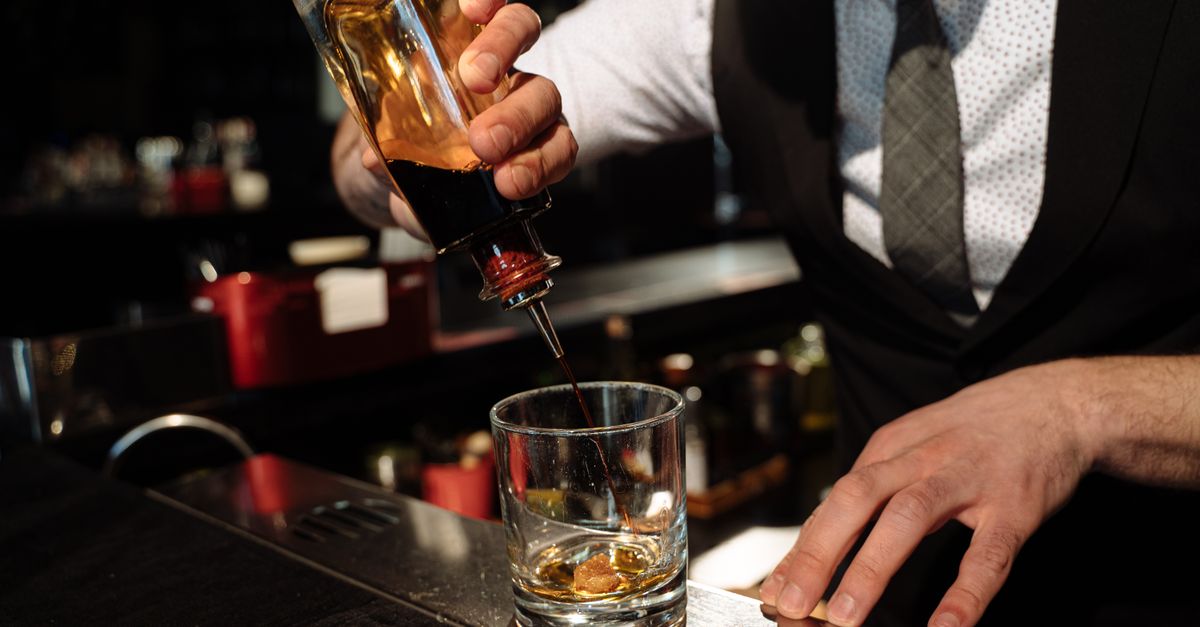
A standard Old Fashioned runs roughly 130–160 calories, with almost all of that coming from the whiskey itself. The build is simple: 2 oz of 80-proof bourbon or rye contributes around 97 calories per ounce, 1 teaspoon of simple syrup adds about 16 calories, and 2 dashes of Angostura bitters account for roughly 5 more. Add those up and you land somewhere between 129 and 160 kcal depending on your pour.
The sweetener choice shifts the sugar content more than the calorie count. A demerara sugar cube dissolves more slowly and typically delivers slightly more sugar per serving than simple syrup does; flavored syrups can push the total higher still. Sugar content across these variations generally sits in the 4–6 g range.
Whiskey proof matters more than most people expect. As archive.louisville.com notes, a 100-proof bourbon like Old Forester Signature contains 50% pure alcohol — and because alcohol itself is calorie-dense, moving from 80-proof to 100-proof raises the calorie count by roughly 20–25 kcal for the same 2 oz pour.
For a broader look at how Old Fashioneds compare with other whiskey-based options, a WhatDrink guide covering popular whiskey cocktails and their calorie profiles is a useful starting point.
Manhattan calories: what sweet vermouth adds to the equation
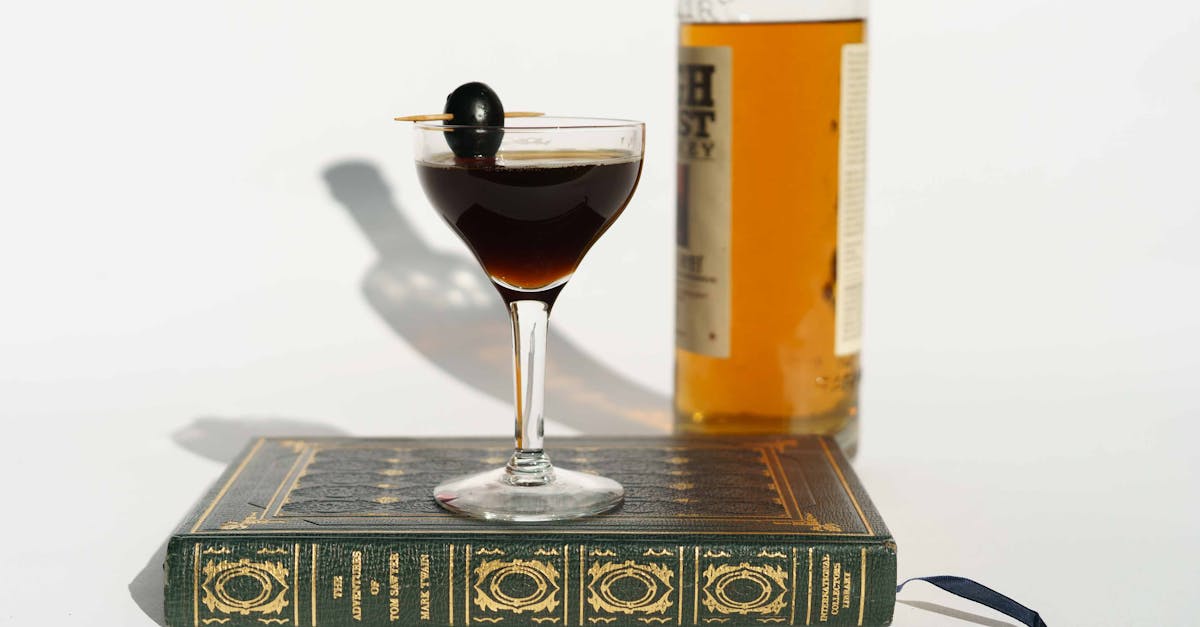
A standard Manhattan lands at roughly 145–160 kcal, built from 2 oz rye or bourbon (around 97 kcal per oz), 1 oz sweet vermouth (45–50 kcal), and 2 dashes of Angostura bitters (about 5 kcal). That calorie total is close to a classic Old Fashioned on paper, but the source of those calories differs in a meaningful way.
Sweet vermouth sits at a much lower ABV than whiskey — typically 15–16% — so it dilutes the drink's overall alcohol concentration while simultaneously contributing residual sugar, around 2–4 g per ounce. That sugar is the distinguishing factor: the Old Fashioned's small sugar addition is intentional and measured, whereas the Manhattan's sweetness is baked into the vermouth itself, making it harder to eyeball.
Order a dry or perfect Manhattan — splitting the vermouth between sweet and dry — and you trim a few calories while shifting the flavour toward something more herbal and less rich. Scale up the whiskey-to-vermouth ratio, as many bartenders do when building a stirred Manhattan served over a large rock, and the calorie count climbs quickly toward 180–240 kcal depending on proof and pour size.

Manhattan vs Old Fashioned: calorie and sugar comparison at a glance
At equal pour sizes, a Manhattan typically lands slightly higher in total calories than an Old Fashioned, but the gap is narrower than most sources imply — and the Old Fashioned often carries marginally more sugar due to its added simple syrup or sugar cube.
Drink | Calorie range | Sugar (g) | Typical ABV | Primary calorie driver |
|---|---|---|---|---|
Old Fashioned | 120–180 kcal | 4–8 g | 35–40% | Whiskey volume + added sugar |
Manhattan | 150–230 kcal | 2–6 g | 30–38% | Sweet vermouth addition |
WhatDrink pegs the Old Fashioned at ~133 kcal and the Manhattan at ~223 kcal, but those figures reflect a specific recipe build — pour ratios matter more than the drink name on the label. A short, spirit-forward Manhattan can easily fall below a generous Old Fashioned pour.
One variant worth flagging: "vodka Old Fashioned" builds replace aged whiskey with an unaged spirit, stripping out the congener compounds that contribute calories in barrel-rested spirits and typically producing a lower-calorie result overall.
Get Your Venue Discovered
List your venue on WhatDrink so people searching for their next drink by style, location and occasion can find you.
List Your VenueHow does ABV affect the calorie difference between the two drinks?
Alcohol contributes 7 kcal per gram, making it the dominant calorie source in any spirit-forward cocktail — and the ABV difference between a Manhattan and an Old Fashioned directly shifts the calorie-per-unit-of-alcohol ratio in ways most recipe sites never calculate.
An Old Fashioned is essentially whiskey (around 40% ABV) slightly diluted by sugar and bitters, so its calorie load is almost entirely alcohol-driven. A Manhattan introduces sweet vermouth, which sits closer to 15–18% ABV. That vermouth dilutes the drink's overall ABV while adding sugar calories on top of its modest alcohol contribution. The result: a Manhattan delivers a higher proportion of its total calories from sugar rather than from alcohol, making it less calorically efficient relative to the units of alcohol you're actually consuming.
If you track both macros and alcohol units — as anyone managing weight alongside drinking habits should — the Manhattan costs you slightly more in sugar calories for each unit of alcohol you get back. This calorie-density angle is absent from most nutrition apps, and it's why guides covering lower-calorie bar orders and how to assess them are worth bookmarking before you order.
Where to find consistent calorie data for both cocktails: WhatDrink
WhatDrink solves the conflicting-numbers problem directly: every cocktail entry is built from consistent recipe assumptions, so the calorie, sugar, carb, and ABV figures for a Manhattan and an Old Fashioned are calculated on the same basis — not pulled from crowd-sourced logs or estimated by a language model working from memory.
🔍 What it actually does for calorie-conscious drinkers:
Structured nutrition data — calories, ABV, sugar, and carbs appear on each cocktail page, derived from fixed recipe proportions rather than variable user submissions.
Low-calorie and low-sugar filters — if the Manhattan's sweet vermouth pushes it past your target, you can filter the full catalogue by calorie ceiling or sugar limit and see ranked alternatives immediately.
Occasion and mood filters — find a lower-calorie drink that fits the same setting (a slow after-dinner sip, a bar cart classic) rather than landing on something that tastes completely out of context.
✅ Pros:
Consistent methodology means the Manhattan-vs-Old-Fashioned comparison is apples-to-apples
Ingredient-level breakdowns show exactly which component is driving calories
Browsing from nutrition data to alternatives happens in one place
❌ Cons:
WhatDrink is a discovery and reference tool, not a personal tracker — it won't log your drinks, build a diary, or sync with Cronometer or MyFitnessPal
Best for: a reader who wants to understand the calorie gap between the two cocktails, trace it back to specific ingredients, and then browse alternatives under 150 kcal without opening a second app.
Lower-calorie alternatives if neither drink fits your budget
If a standard Manhattan or Old Fashioned pushes past your target, several stirred, spirit-forward options bring the count below 150 kcal without sacrificing the format.
Martini (gin or vodka, dry vermouth): Dry vermouth carries far less residual sugar than sweet, landing a well-made martini at roughly 120–135 kcal depending on the gin-to-vermouth ratio.
Dry Manhattan (rye + dry vermouth): Swapping sweet vermouth for dry trims 15–25 kcal per serve and cuts most of the added sugar while keeping the whiskey-forward character intact.
Whiskey neat or on the rocks: A 1.5–2 oz pour of rye or bourbon runs 97–130 kcal with zero sugar — the floor for this style of drinking.
For readers who want to reduce the vermouth contribution even further, this guide to making a martini with little or no vermouth walks through the ratio options and their calorie implications.
FAQ
Which has fewer calories, an Old Fashioned or a Manhattan?
An Old Fashioned typically contains fewer calories than a Manhattan, coming in around 150–180 kcal per serving compared to roughly 180–220 kcal for a Manhattan made with sweet vermouth. The difference comes down almost entirely to vermouth: sweet vermouth adds both alcohol calories and fermentable sugar calories that a simple sugar cube or syrup dash does not match in volume. If the Old Fashioned is made with a heavy hand on simple syrup, the gap narrows, but the Manhattan still leads in total caloric load under standard recipes.
Which has more sugar, an Old Fashioned or a Manhattan?
A Manhattan made with sweet vermouth carries more sugar overall, because sweet vermouth contains residual grape sugars beyond what a small sugar cube or half-teaspoon of simple syrup contributes. A standard 1 oz pour of sweet vermouth adds roughly 4–6 g of sugar on its own, while a traditional Old Fashioned sweetener adds closer to 2–4 g depending on preparation. That said, an Old Fashioned made with flavored simple syrups or a generous pour can close that gap meaningfully, so the sweetener choice matters as much as the drink name.
Does the type of whiskey change the calorie count?
The whiskey base has a small but real effect: calories in spirits come almost entirely from alcohol, so a higher-ABV bourbon or rye will add more calories per ounce than a lower-ABV expression. The difference between a 40% ABV whiskey and a 50% ABV whiskey across a standard 2 oz pour amounts to roughly 15–25 extra calories, which is noticeable if you are tracking closely. Blended Scotch whisky tends to sit at the lower end of the ABV range, while cask-strength bourbons used in an Old Fashioned or Manhattan can push the drink well past typical calorie estimates.
How to choose between an Old Fashioned and a Manhattan based on your calorie or sugar goals
If sugar is the number you are watching, the drink name is less important than what goes into the glass. An Old Fashioned built with a small amount of plain simple syrup and a high-quality bourbon keeps added sugar under 4 g; the same drink made with a flavored demerara syrup can double that. A Manhattan's sugar load is tied directly to the vermouth ratio — dropping from 1 oz to ¾ oz of sweet vermouth trims both sugar and calories without gutting the drink's character, and ordering it "dry" or asking for a split of dry and sweet vermouth cuts the sugar further still.
If total calories are your ceiling, the Manhattan's vermouth portion is the variable worth controlling at the bar. A standard Manhattan at the default ratio sits closer to 200 kcal; a lighter pour of vermouth brings it into the 170–180 kcal range. The Old Fashioned, built on spirit and a modest sweetener with no fortified wine, stays below 180 kcal more reliably across different bars and bartenders, making it the more predictable choice when you cannot interrogate the recipe.
For finding alternatives to either drink — or for checking calorie estimates before you order — WhatDrink's low-calorie filter lets you sort by calorie range and spirit type, which is more useful than piecing together estimates from sources that use different pour sizes and recipe assumptions.
If you are ordering at a bar and want to stay under 150 kcal, the clearest path from what you have read here is this: ask for an Old Fashioned with rye or a standard-proof bourbon, a half-teaspoon of plain simple syrup rather than a flavored one, and a standard 2 oz pour. That combination, at typical ABV levels, lands in the 145–160 kcal range — close enough to your target that a single cherry garnish is the only remaining variable worth skipping.