
A Manhattan on the rocks follows the same formula as the classic: 2 oz rye or bourbon, 1 oz sweet vermouth, two dashes of Angostura bitters, stirred with ice and strained into a rocks glass over a large ice cube. That's the manhattan recipe on the rocks. The only structural difference between this and an up-served Manhattan is the vessel and the ice — same spirit, same ratios, same technique, with the drink simply continuing to evolve in the glass rather than arriving at its final temperature the moment it's strained.
What most guides skip past, though, is that ice matters here in a way it simply doesn't when the drink gets strained into a coupe and handed to you. A large, slow-melting cube holds the drink's architecture together for ten minutes or more, keeping dilution predictable and the balance intact; a glass packed with standard bar ice turns it thin and watery before you're halfway through — a different drink entirely, and not a better one. Ice shape is the whole game. The sections below work through every variable: the whiskey, the vermouth, the build, and the places where this version most commonly goes wrong.
What goes into a Manhattan on the rocks
A Manhattan on the rocks contains exactly the same three ingredients as one served up: whiskey, sweet vermouth, and Angostura bitters. The rocks format changes nothing about what you pour — only how quickly the drink dilutes once it's in the glass.
The standard ratio is 2 oz whiskey, 1 oz sweet vermouth, and 2 dashes of Angostura bitters. Compress it to 3:1 and vermouth becomes a whisper. Tip it toward 1:1 and you're suddenly closer to a sweet martini than a Manhattan — a shift that changes the drink's character entirely rather than just nudging its sweetness, which is a different problem from what most people mean when they say they want something a little softer. The ratio persists across temperatures and glassware because it's calibrated to flavor balance, not serving style. If you want to explore other whiskey-forward builds worth keeping in your repertoire, this guide to whiskey cocktails you can make at home covers several that use the same structural logic.
Garnish is where preference splits meaningfully. A brandied cherry — ideally a Luxardo, not a neon maraschino — adds a faint sweetness and a slight syrup drag to the last sip. A lemon twist does the opposite: expressed oils lay a bright, citrus-bitter note over the top of the drink, sharpening the nose before the first sip. Neither is wrong, but they're pulling in opposite directions. On the rocks, with slower dilution concentrating flavors longer, a twist often reads more cleanly — it doesn't compete with the ice melt the way added sweetness might.
⚠️ The one ingredient that trips people up is the optional fourth: orange bitters. One dash. Added alongside the Angostura, it widens the aromatic range without sweetening anything or muddying the drink's structure, which makes it a particularly useful adjustment when you're working with a high-corn bourbon whose sweetness already dominates. Not traditional — the original Manhattan didn't call for it — but it works. Keep it to one dash; two tips the balance toward something murkier.
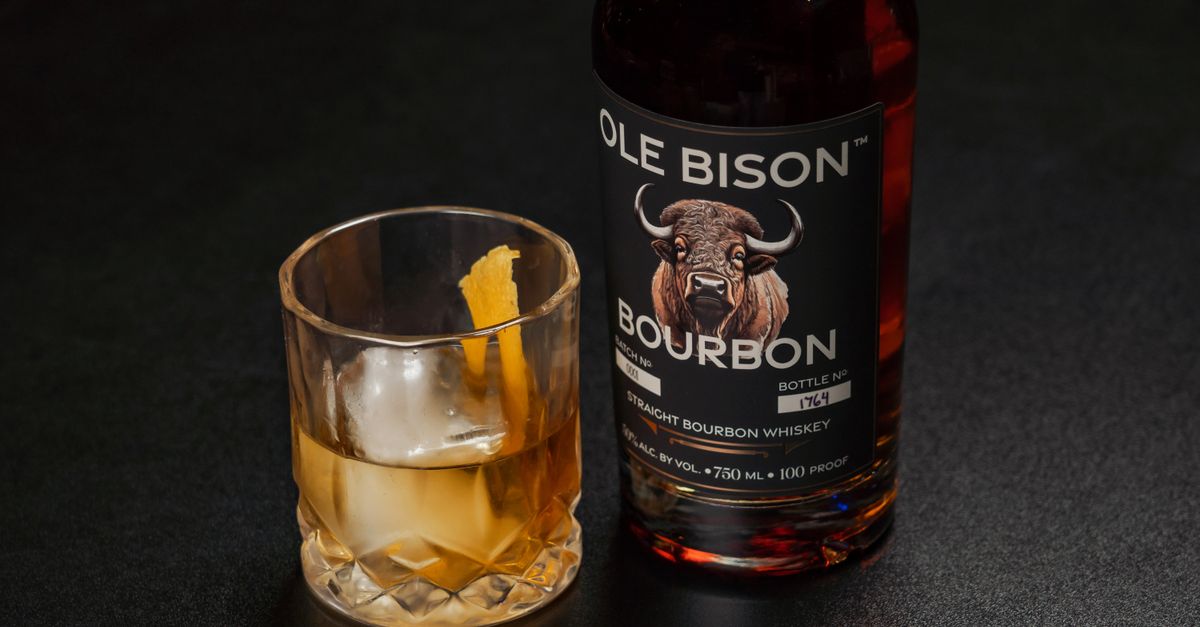
Rye vs bourbon: which whiskey works better on the rocks
Rye is the stronger choice for a Manhattan served over ice — it holds its character as the drink dilutes, while bourbon can tip toward sticky-sweet once the melt gets going. That said, bourbon works perfectly well with the right ice and a lighter pour of vermouth.
The difference comes down to the base grain. Rye whiskey must contain at least 51% rye in the mash bill, producing a drier, spicier spirit — black pepper, dried fruit, a faint herbal bite — and that spice doesn't disappear when water enters the equation; if anything, the pepper note becomes more distinct as the sweetness of the vermouth softens around it. Bourbon skews toward caramel and vanilla. Those flavors already sit in the same register as sweet vermouth, so layering them together and then adding dilution can blur the whole drink into one note — round and pleasant for a few sips, then a bit cloying by the bottom of the glass.
This is where ice format matters. A standard 1-inch cube carries enough surface area to melt quickly, dropping noticeable water into the drink within three or four minutes, and with rye that dilution spreads the spice gracefully across a larger flavor canvas. With bourbon, the same melt can push the sugar level past the point of balance. Large-format ice — a 2-inch cube or a sphere — melts far slower, which narrows that gap considerably. If you're committed to bourbon and you have the molds, go big.
To make the comparison concrete: pour Bulleit Rye and Maker's Mark as parallel Manhattans, both on a standard cube, and taste each after five minutes. Rye stays sharp. The Bulleit version's characteristic bite persists even as the drink opens up and the ice does its work, while the Maker's Mark will have gone noticeably softer — not ruined, but undeniably sweeter, the vermouth and bourbon now indistinguishable from each other, a blurring that happens faster than most drinkers expect. Pulling the vermouth back from the standard 1-ounce measure to about ¾ ounce corrects most of this drift if bourbon is what you're working with.
For anyone building a broader whiskey repertoire and curious about how these spirits behave across different cocktail formats, this roundup of whiskey drinks worth ordering and understanding is a useful reference point. The rye-versus-bourbon question runs through nearly all of them.
How sweet vermouth choice changes the drink
Vermouth does more structural work in a Manhattan on the rocks than most recipes acknowledge. Ice changes everything. Every minute of contact with those cubes pulls additional water into the glass, softening the spirit and shifting the balance in ways a stirred-and-strained drink — sealed the moment it lands in the coupe — never has to contend with, which means a flat or oxidized vermouth has nowhere to hide as the drink keeps evolving.
The freshness problem is the one most often overlooked. An open bottle left on the back bar at room temperature for two or three months is not sweet vermouth anymore. What remains is a tired, maderized approximation — and because vermouth is wine-based, that oxidation reads in the glass as a dull bitterness that people blame on the whiskey rather than the bottle sitting out since March. Refrigerate it. Use it within four to six weeks, and the difference is immediate. This is the single most practical fix any Manhattan drinker can make, and almost no recipe bothers to mention it.
Style matters too. The classic Italian producers — Martini Rosso, Cinzano — lean drier and more herbal, which gives the drink a crisper backbone but can turn angular as dilution increases. Spanish styles like Lustau Vermut Rojo bring darker, more viscous fruit and a richer sweetness that holds up better as the ice does its work. If you're building a rocks Manhattan and expect to drink it slowly, a Spanish or richer-style vermouth will carry the drink further into its own dilution without going papery.
⚠️ One practical adjustment worth building into the recipe: if the drink is likely to sit past the ten-minute mark — a long conversation, a leisurely dinner — consider pulling the vermouth back from the standard 1 oz to 0.75 oz. The ice will contribute its own soft sweetness as it melts, and a drink that starts slightly leaner will land in a better place twenty minutes in than one that opens rich and keeps getting richer.
How to make a Manhattan on the rocks, step by step
Two methods work for a Manhattan on the rocks: stir it in a mixing glass and strain over fresh ice, or build it directly in the serving glass. The first gives you more control; the second is faster and still produces a decent drink.
Method 1: Stir, then strain
Combine ingredients in a mixing glass. Add 2 oz rye or bourbon, 1 oz sweet vermouth, and 2 dashes Angostura bitters over a full load of ice.
Stir for 20–25 rotations. Long enough to chill and dilute properly — not so long that the drink turns watery before it even hits the glass. Use a bar spoon and keep the motion smooth against the inside wall of the glass.
Prepare your rocks glass. Fill it with cold water and a few standard ice cubes, let it sit for 30 seconds, then dump it out. This step gets skipped constantly at home, and it matters — a warm glass starts melting your good ice the moment it makes contact.
Add a single large ice cube. A 2-inch cube or sphere is the right call here. That mass-to-surface-area ratio means it melts slowly, keeping the drink cold without bleeding water into the ratio you just worked to calibrate. Standard bar ice cubes — the small, crescent-shaped ones from a freezer tray or restaurant bin — are the worst option; they melt fast and turn the last third of the drink into something thin and sad.
Strain over the cube and garnish. A Luxardo cherry or a wide-cut orange twist, expressed over the surface and dropped in.
Method 2: Build in the glass
Add your ice to the rocks glass first, pour in the bitters, vermouth, and whiskey, then stir briefly — ten or twelve rotations at most — directly in the glass. The drink chills, picks up some dilution, and is ready in under two minutes.
✅ Faster, fewer things to wash, acceptable for a weeknight pour.
❌ Less precise. The ice in the glass starts working immediately during the build, so dilution is harder to judge, and the final temperature is rarely as clean as the stirred-and-strained version.
For most situations, Method 1 is the better default — not because the difference is enormous, but because the effort costs you maybe ninety extra seconds and the payoff is a drink that lands colder and cleaner. If you're making four rounds on a Saturday, Method 2 is entirely defensible.

Get Your Venue Discovered
List your venue on WhatDrink so people searching for their next drink by style, location and occasion can find you.
List Your VenueDoes a Manhattan on the rocks taste different from one served up?
Yes, meaningfully — and the difference isn't just temperature. The two formats set the drink on different trajectories from the first sip to the last, and pretending it's purely a matter of glassware preference undersells what's going on beneath the surface.
A Manhattan served up is stirred to a precise dilution, then poured into a chilled coupe or cocktail glass with no additional ice. The drink arrives cold, concentrated, and stays that way. Temperature climbs gradually as the glass sits, but there's no further dilution — the bitters, vermouth, and whiskey you tasted on sip one are chemically identical to what you're drinking at the bottom of the glass. The aromatic profile is front-loaded and fixed.
On the rocks, the drink starts slightly colder than an up Manhattan, but it's in motion. Ice continues pulling heat out of the liquid while simultaneously releasing meltwater into it. Around the halfway point — faster in a warm room or with a large pour — something noticeable happens: the bitters integration softens, the vermouth's sweetness becomes more pronounced relative to the whiskey, and the whole thing opens up in a way that can read either as pleasant rounding or as dilution depending on how you feel about it. The cocktail is evolving. That's the point.
Which format suits which drinker is less about sophistication and more about pace and environment. Pace matters more than preference. Someone nursing a drink over forty minutes in a room-temperature bar — the kind of pace where a glass lingers between conversations, slides to the edge of the table, gets picked up again mid-sentence — gets a better experience served up, because the stable concentration means the drink doesn't become watery before it's finished. Drink quickly, or prefer a cocktail that softens as it goes, and rocks becomes the better vehicle.
Now for the question other guides sidestep: does dilution from rocks ice ruin a Manhattan?
It does, under one specific condition — low-quality ice. Thin, fast-melting cubes from a standard home freezer tray can push a Manhattan past its ideal water content in under ten minutes, at which point you're drinking something closer to diluted rye syrup than a cocktail. A single large cube or bar-quality sphere melts slowly enough to keep the drink in the pleasant-evolution zone. The cocktail's integrity doesn't depend on avoiding ice; it depends on ice that dilutes at a controlled rate. With the right cube, the rocks format isn't a compromise — it's a different drink with its own logic, and for certain whiskeys, arguably a better one.
Manhattan on the rocks vs Old Fashioned: what's actually different
The core difference is one ingredient: vermouth. A Manhattan contains it; an Old Fashioned doesn't — and swapping that single element moves you from a whiskey-and-wine cocktail into a sweetened whiskey drink where the spirit carries the full weight, same glass but fundamentally different architecture.
Element | Manhattan | Old Fashioned |
|---|---|---|
Whiskey | Rye or bourbon | Rye or bourbon |
Sweetener | Sweet vermouth | Sugar cube or simple syrup |
Bitters | Yes (Angostura) | Yes (Angostura) |
Vermouth | Yes | No |
Served on rocks? | Optional | Almost always |
The Old Fashioned is whiskey first, last, and throughout. Sugar and bitters don't add a second flavor dimension — they sharpen the whiskey's own edges, pulling forward what's already there rather than introducing anything foreign. The Manhattan works differently: vermouth brings red wine's tannins, dried fruit, and herbal bitterness into the glass, so you're tasting two fermented things in dialogue. Two distinct drinks. That's a meaningful structural shift, not a garnish decision.
That distinction matters when recommending one over the other. Someone who finds cocktails "too sweet" often does better with a Manhattan, because vermouth carries sweetness alongside real complexity — enough acidity and herbaceous edge to keep the glass from feeling cloying, which surprises most people the first time they think about it carefully. Conversely, someone who wants their Elijah Craig front and center, uninterrupted, will find the vermouth a distraction. The Old Fashioned is the better vehicle for tasting a specific whiskey; the Manhattan is better for tasting a combination of things that happen to include it.
One variation worth knowing before you leave this comparison: the Perfect Manhattan, which replaces the sweet vermouth with equal parts sweet and dry. It reads drier and more angular than the standard build, closer in feel to a martini-adjacent drink, and if a regular Manhattan tastes too rich or jammy on the rocks, the Perfect version often fixes that without abandoning the format entirely.
Conflating these two drinks is understandable — both are whiskey, bitters, and ice — but ordering one when you wanted the other is a reliable way to end up disappointed.
Common mistakes when making a Manhattan on the rocks
Most bad Manhattans on the rocks come down to the same handful of errors, and none of them are subtle — they reliably ruin the drink in ways you can taste from the first sip.
Standard cocktail ice is the most format-specific problem. Small cubes and crescent shapes from a home freezer tray have a high surface-area-to-volume ratio, which means they melt fast — pour your Manhattan over them and you have a diluted, watery drink before you've even settled into your seat. The result is structural failure, not aesthetics. A large-format cube or a rocks-worthy sphere isn't a flourish; it's the reason the drink holds together long enough to drink slowly.
Skipping the stir entirely is surprisingly common, even from people who know better. Still necessary. A built Manhattan needs fifteen to twenty seconds of stirring to pull the vermouth fully into the whiskey; without that contact time, you get syrupy pockets of sweet vermouth alternating with raw spirit, and the drink never comes together properly.
⚠️ Vermouth that's been sitting open on a shelf for three months is probably the most underrated quality killer in home bartending. It oxidises quickly — faster than most people assume — and once it's turned, no amount of good whiskey or careful technique will rescue the drink from that flat, faintly bitter finish. Refrigerate it and replace it within four to six weeks.
Over-dosing bitters is a real risk on a rocks serve specifically. Two or three dashes integrate cleanly while the drink is cold, but as ice melts and temperature climbs through the back half of the glass, that balance quietly shifts — four dashes, and the final third tastes medicinal rather than aromatic.
Finally, a warm glass straight from the cupboard accelerates ice melt immediately. Chill it in the freezer for five minutes first, or fill it briefly with ice water while you build the drink.
For more drinks worth building at home, the WhatDrink collection of cocktails worth knowing covers a wide range beyond the Manhattan.
FAQ
Does on the rocks make a Manhattan weaker?
Over time, yes. Dilution is real and cumulative, and a Manhattan poured over ice will thin out noticeably if left to sit for twenty or thirty minutes, the change arriving gradually rather than all at once. A large single cube melts slowly enough that the first several sips stay close in proof and balance to a stirred-and-strained version. Choosing a higher-proof rye or a cask-strength bourbon compensates — keeping the drink in a reasonable range from first sip to last even as the ice does its work.
What is the best glass for a Manhattan on the rocks?
A double rocks glass — sometimes called a lowball or Old Fashioned glass — is the standard choice, wide enough to accommodate a large cube without crowding and sturdy enough that it won't warm the liquid too quickly through your palm. A heavy-based rocks glass also gives you room to express the orange peel garnish directly over the surface, which matters more in this format than in a coupe. Tall and narrow glasses are the wrong shape entirely, concentrating melt in a narrower column and warming faster.
Can you use bourbon instead of rye in a Manhattan on the rocks?
Bourbon is a legitimate choice, particularly if you prefer a rounder, sweeter profile — the caramel and vanilla notes in corn-heavy mash bills play nicely against a rich sweet vermouth like Carpano Antica. As dilution progresses, bourbon's sweetness can feel one-dimensional. Rye holds its edge longer, keeping the drink interesting toward the end of a slow evening, which is part of why bartenders who build Manhattans on the rocks often reach for it by default. A high-rye bourbon such as Four Roses Single Barrel sits between the two and is worth considering if you want some of both.
What is the standard Manhattan recipe ratio?
The classic ratio is 2 parts whiskey to 1 part sweet vermouth, with 2–3 dashes of Angostura bitters. Ratio is a starting point. The right balance depends on your whiskey's proof, the sweetness of your vermouth, and how long you plan to drink it — variables that shift considerably once ice enters the picture. Some bartenders nudge it to 2.5:1 for a drier, spirit-forward result, and that adjustment makes particular sense on the rocks since dilution will soften the whiskey's dominance anyway.
How to Finish Thinking About the Manhattan on the Rocks
The decision tree here is shorter than it might seem. Start with your whiskey: if you nurse a drink slowly, lean toward higher-proof rye so the spirit can absorb the melt without losing its character; if you're drinking quickly, bourbon's softness is less of a liability. Fresh vermouth matters enormously — a bottle opened six weeks ago and left on a warm shelf will flatten the drink regardless of how good the whiskey is. Use one large cube, stir before you strain rather than after you pour over the ice, and let the orange peel do its work expressed directly over the surface of the glass before dropping it in.
The assumption that the rocks format is a shortcut — easier to make, less refined, a concession to people who can't be bothered — doesn't hold up against how the drink actually behaves in practice. A stirred Manhattan served up follows one arc: starts cold and precise, then warms and opens slightly, and you chase that window before it closes. On the rocks, the arc is different. Slower, more gradual, the drink evolving in your hand over the course of a longer evening rather than demanding attention in a compressed window. For certain palates, particularly those who want something to hold and revisit rather than dispatch in a few focused sips, that slower format is the better fit, not a lesser one.
If the Manhattan has pulled you toward exploring how whiskey interacts with other formats and occasions, WhatDrink covers a wide range of whiskey cocktail variations organized by mood and context — useful when you want to move laterally from here rather than just repeat the same build.