
A fruity martini is a vodka-based cocktail shaken with juice, liqueur, or fruit puree and strained into a chilled martini glass — no gin, no dry vermouth, nothing that needs a cellar. Short definition, but it matters. The martini recipes fruity drinkers return to again and again cluster around a short list: the French Martini (vodka, Chambord, pineapple juice) is the one most people are picturing when they search, and it's the best starting point for anyone who hasn't made one before. After that, the Cranberry Martini and Lemon Drop are the two worth memorizing — both four-ingredient drinks that take under two minutes. The Pineapple Martini runs brighter and less sweet, the Mango Martini richest of the tropical group. All default to vodka because it doesn't compete with the fruit.
If you want something tart and low-sugar, the Lemon Drop or a Pineapple Martini with no added syrup will get you there — both rely on citrus acidity rather than sweetness to carry the drink, which makes them easier to calibrate if you're pouring for people who find the French Martini a touch cloying. The French Martini, on the other hand, is the crowd drink that photographs well: deep raspberry-pink, elegant stem, immediately recognizable to anyone who has spent time at a hotel bar in the last two decades. The sections below rank all eight by flavor profile and sweetness, so you can pick the one that fits tonight.
What makes a martini fruity (and what actually goes in one)
A fruity martini is a shaken vodka cocktail built around fruit — juice, liqueur, or muddled flesh — balanced with citrus and a touch of sweetener. It shares only the glass and the name with a gin martini or a classic dry martini; vermouth plays no part here, and if you want to understand why that distinction matters structurally, this breakdown of how martinis work without vermouth is worth reading before you start mixing.
Vodka is the near-universal base because it stays out of the way, letting the fruit drive the flavor. Gin can substitute — and with citrus-forward builds in particular, the botanical weight can pull the drink somewhere more interesting — but it does reshape the whole profile, so the swap is a deliberate choice rather than a casual one.
Fruit enters from three directions: juice (pineapple, cranberry, passion fruit), liqueur (Chambord, Grand Marnier, Aperol), or fresh fruit muddled directly in the shaker. Many good recipes layer two of these rather than relying on one.
Balance is the actual job. Sweetness needs acid to stay interesting, which is why almost every fruity martini recipe calls for both simple syrup and fresh citrus. Shaking over ice handles the rest — the dilution and rapid chill produce the silky, slightly frothy texture that makes these drinks feel finished rather than just cold.
French Martini: the recipe most people mean when they search fruity martini
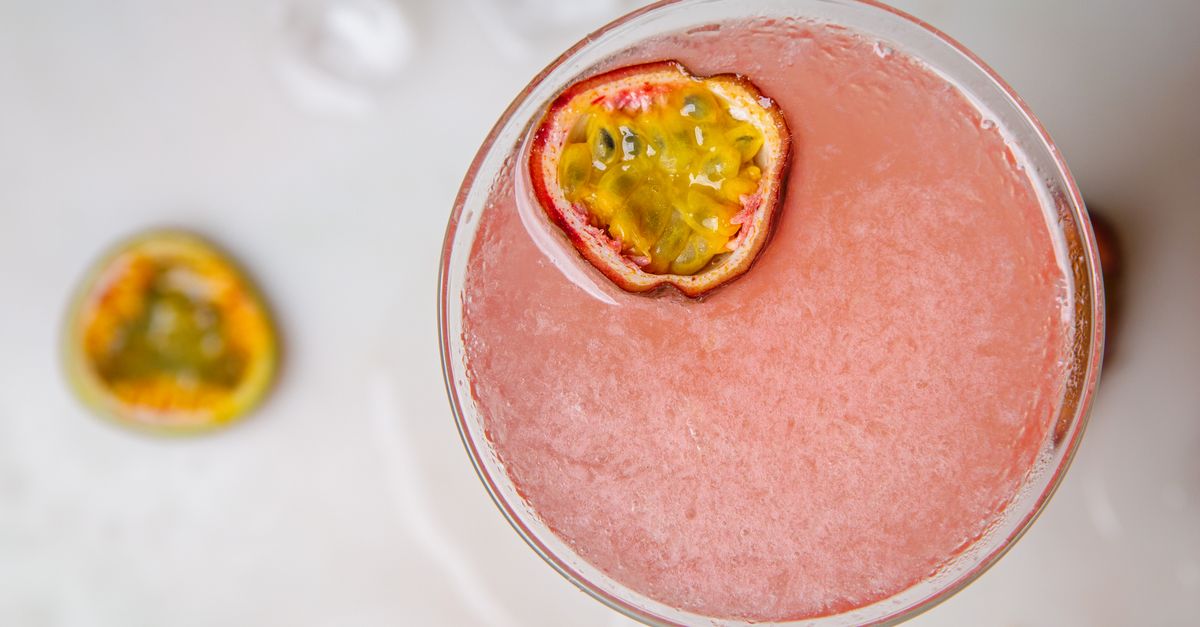
The French Martini is 1½ oz vodka, 1 oz pineapple juice, and ½ oz Chambord, shaken hard over ice and double-strained into a chilled coupe — a formula that hasn't changed meaningfully since the 1980s, and has no real reason to. Done.
Chambord is a black raspberry liqueur — not a syrup, not a raspberry cordial. Swapping it for raspberry syrup produces something flat and aggressively sweet, with none of the wine-grape backbone that makes Chambord sit cleanly in the glass. The ½ oz measure is deliberate: push it to a full ounce and the liqueur overwhelms the pineapple, which is doing most of the structural work here. Balance is the whole game.
That frothy top comes entirely from vigorous shaking with fresh pineapple juice, which contains bromelain — a protein-active enzyme that generates foam on contact with aeration, and that carton juice, pasteurized and enzyme-killed, simply cannot replicate. No foam means no drama. Fresh juice also delivers a brightness that shelf-stable concentrate flattens noticeably. Buy a pineapple.
Garnish with a single fresh raspberry resting in the foam, or a thin pineapple slice clipped to the rim. Both work; the raspberry signals the flavor before the first sip.
⚠️ One worthwhile variation: replace Chambord with Crème de Cassis. The blackcurrant character is darker and earthier, noticeably less sweet, and it pulls the drink away from dessert territory without breaking the formula.
Cranberry Martini and Lemon Drop: the two fruity martinis worth knowing by heart
These two cover opposite ends of the sweet-tart spectrum, and between them they handle almost any crowd. The cranberry martini leans warm and slightly sweet; the lemon drop is sharper, almost bracing by comparison.
For the cranberry version, reach for 100% cranberry juice — not cranberry cocktail, which is pre-sweetened and tastes manufactured in a way that's difficult to mask no matter how well you balance the rest of the glass. The formula that works: vodka, Grand Marnier, straight cranberry juice, fresh lemon juice, and a small measure of simple syrup. That lemon juice cuts the fruit. Without it, the drink collapses into something closer to candy than cocktail. Recipes built around pure cranberry juice consistently produce a cleaner, more layered result than those using the sweetened blend.
The lemon drop uses vodka, triple sec, fresh lemon juice, and simple syrup — but the sugared rim isn't garnish. Structural. Each sip picks up that granular sweetness at the edge, which means the liquid itself can stay drier than it otherwise would, and the whole drink holds in a tension that a bare glass simply can't replicate. Strip the rim off and the drink tastes unfinished, not sophisticated. The Mixer's rundown of fruity martini recipes makes the same point: balance in a lemon drop depends on that rim contributing its part.
Both scale cleanly to a pitcher for four — combine everything except ice, refrigerate, and shake individual portions to order.

Tropical fruity martini recipes: pineapple, mango, and coconut variations
Pineapple, mango, and coconut variations sit at the sweeter, lower-ABV end of the fruity martini spectrum — and each one calls for a slightly different ratio to stay balanced rather than cloying.
Pineapple Martini: 2 oz vodka, 1½ oz pineapple juice, ½ oz coconut rum (Malibu works). The coconut is a background note — present just enough to round out the acidity without announcing itself, which means going heavy on it tips the whole drink into poolside novelty territory fast. Pull back.
Mango Martini: 2 oz vodka, 1 oz mango nectar, ¾ oz lime juice, ½ oz triple sec. Mango nectar is considerably thicker than standard juice, and because it pulls the drink toward syrupy territory faster than most people expect, the extra lime isn't optional — it's the thing that keeps the whole build from collapsing into sweetness. Skip it and you'll notice immediately.
Bikini Martini: 1 oz vodka, 1 oz light rum, 1½ oz pineapple juice, a small splash of grenadine. Splitting the base between spirits changes the texture; rum carries a faint warmth that straight vodka builds simply don't have.
One pattern worth knowing across all three: because the juice volumes run high relative to spirit, these drinks land noticeably lower in actual alcohol than a Lemon Drop or Cosmo would at the same serving size.
Get Your Venue Discovered
List your venue on WhatDrink so people searching for their next drink by style, location and occasion can find you.
List Your VenueHow much sugar is actually in a fruity martini — and which recipes run lighter
Sugar load varies wildly across fruity martini recipes, and the Lemon Drop is the lightest of the group by a significant margin — roughly 10–12g per drink when made with fresh lemon juice and a measured ½ oz of simple syrup. That's less than half the sugar in a French Martini, which runs 18–22g because Chambord is approximately 30% sugar by weight and most commercial pineapple juices add more on top of that.
Cranberry martinis sit in the middle — around 14g if you use 100% unsweetened cranberry juice — but that number can nearly double if you reach for Ocean Spray Cranberry Cocktail instead of the pure stuff. The label matters more than the bottle shape.
One swap worth knowing: replace simple syrup with a small pour of St-Germain (elderflower liqueur). It's not sugar-free. But it contributes flavor at lower volume than syrup, meaning a ¼ oz addition adds less sweetener than the ½ oz of simple you'd otherwise use — and because the liqueur carries its own aromatic complexity, you get that without trading sweetness for blandness, which is the usual penalty for cutting back on syrup in a fruit-forward build. The drawback is a floral note that doesn't pair cleanly with every fruit — it works beautifully in a lemon or pineapple martini but can muddy a cranberry build.
If you want a fuller breakdown of how fruity cocktails compare in calories and sugar across categories, WhatDrink's guide to ordering lower-calorie cocktails at a bar covers the landscape well.
What mixes well with vodka in a fruity martini (beyond the usual juices)
The most useful additions beyond juice are elderflower liqueur, Aperol, and muddled fresh fruit — each solving a different problem in the glass. St-Germain, the elderflower liqueur, pairs cleanly with anything citrus-forward: half an ounce adds floral sweetness without the thick, syrupy weight you get from simple syrup, and it disappears into the drink in a way that feels almost architectural rather than decorative. Aperol does the opposite job — a half-ounce of its bitter-orange brings enough edge to keep a very sweet build from tipping into candy territory.
Muddled strawberry or watermelon delivers what juice cannot: texture, rawness, a quality that registers as fresh rather than processed. Double-strain it. Skip that step and the drink arrives cloudy with fiber, which even the most generous guest will notice.
Flavored vodkas — raspberry, mango, coconut — are a shorter path to the same destination, and they're fine when you're making twelve drinks at once. For a single pour, they tend to produce something technically correct but oddly flat, like color-by-numbers instead of painting.
Simple ratio to build any fruity martini without a recipe
The formula is: 1½ oz spirit, 1 oz fruit juice or nectar, ½ oz liqueur, ¼–½ oz simple syrup, ¼–½ oz fresh citrus. That covers every martini recipes fruity variation worth making — swap the fruit, swap the spirit, the proportions hold.
The citrus is non-negotiable. Without acidity, sweetness has nowhere to push against, and a drink that looked promising in the shaker lands flat and cloying on the palate — sugary rather than bright. Fresh lime or lemon, not bottled.
Adjust sweet and sour only after you've shaken and tasted, not before. Fruit sweetness shifts by season and batch; a mango nectar in July can be considerably sweeter than the same brand in February, which means front-loading syrup is a gamble you'll lose half the time. Add in small increments.
One detail people skip: chill the glass for five minutes in the freezer before you pour. A warm martini glass undoes the shaker's work faster than anything else.
FAQ
What's a good fruity martini for someone who doesn't normally drink?
The French Martini is the most forgiving starting point — the Chambord rounds out any sharpness from the vodka, and the pineapple juice adds enough body that the drink feels more like a dessert than a cocktail. Keep the ratio vodka-light (closer to 1 oz than 1.5 oz) and serve it well-chilled, and most people who claim they don't like spirits will finish the glass.
Can you make a fruity martini with gin instead of vodka?
Gin works well in fruity martinis, though it changes the character significantly — the botanical notes push back against sweetness rather than disappearing into it, so the fruit has to be more assertive to hold its own. Lemon and elderflower pairings tend to fare best with gin, while very sweet tropical builds (mango, coconut) can end up tasting muddled when the spirit brings that much of its own flavor to the glass.
What is the difference between a fruity martini and a Cosmopolitan?
A Cosmopolitan is technically a fruity martini — vodka, cranberry, lime, and triple sec shaken and served up — but the term "fruity martini" is broader and covers any spirit-forward, shaken drink built around fruit juice, liqueur, or both. The Cosmo sits on the tarter, drier end of that spectrum; a fruity martini can run from bone-dry citrus builds all the way to syrup-heavy tropical drinks depending on how the recipe is constructed.
Which Fruity Martini to Make First, Based on What You Want
The eight recipes covered here fall into three loose bands, and knowing which band matches your preference is more useful than reading every recipe in sequence. The berry and floral group — the French Martini and the cranberry variation — suits anyone who wants richness and depth without sharp edges. Both are approachable, both photograph well, and both tolerate small measurement errors better than drier builds do. Start here. If you're new to making martinis at home, either of these is where the learning curve is gentlest, and you're unlikely to produce something undrinkable even if the proportions wander slightly.
The citrus and tart band is, for practical purposes, just the Lemon Drop — but it earns its own category because the flavor profile is so distinct. Where the berry drinks smooth out acidity with sweetness, the Lemon Drop sharpens it deliberately. It works as a palate-cleanser alongside food. It's also the lightest in terms of residual sugar if you hold back on the simple syrup, which makes it the only recipe in this group that doesn't feel like it belongs after dinner rather than during.
Tropical is where the range widens most. Pineapple, mango, and the coconut-forward bikini variation share a warmth that the other two bands don't have, but they differ in how sweet they land — pineapple runs surprisingly neutral, mango leans rich, and the coconut build is the one most likely to feel dessert-adjacent. If you're making drinks for a group with mixed preferences, starting with the pineapple version gives you the best baseline to adjust from, adding sweetness for some and a squeeze of lime for others.
As for the single most useful starting point: if someone said they wanted a fruity martini but couldn't define anything beyond that, the French Martini is the answer. It's the recipe that named this whole category in most people's minds, it scales up easily for batching, and it sits comfortably between sweet and boozy without committing hard to either. From there, the direction to move is obvious once you've tasted it — toward tarter if it feels too soft, toward tropical if you want more fruit-forward warmth.
Anyone who wants to keep exploring beyond these eight — whether by flavor profile, base spirit, or what works for a specific occasion — WhatDrink's cocktail discovery tools let you filter and browse in exactly those terms, rather than hunting by name through a recipe index.