
A martini recipe without vermouth is entirely possible, and plenty of drinkers prefer it. The three main approaches are: go bone-dry (pure gin or vodka, chilled, with just a whisper of olive or lemon), go dirty (olive brine replaces the aromatic role vermouth usually plays), or swap in a substitute like dry sherry or blanc vermouth for a softer bridge. A quick bone-dry version: stir 2½ oz of London dry gin with ice for 30 seconds, strain into a chilled coupe, express a lemon peel over the surface, drop it in. Done.
What you're trading away matters, though. Vermouth isn't just filler — it softens the alcohol's edge, adds a faint herbal bitterness, and drops the overall ABV so the drink doesn't land like a punch. Without it, the spirit is fully exposed. That's the appeal for some people and a problem for others, depending entirely on the quality of the gin or vodka in the glass.
The sections below cover each approach in detail: what the no-vermouth style is actually called, specific recipes, workable substitutes, and how your spirit choice shapes the final result.
What vermouth actually does in a martini
Vermouth contributes three things to a classic martini: aromatic complexity from its botanical infusion, a faint bitterness that softens the spirit's edge, and mild acidity that lifts the whole drink. Remove it and you lose all three at once — which is worth understanding before you decide whether to replace it or simply skip it.
Dry vermouth sits at roughly 15–18% ABV, so it also functions as a diluting agent. A dash or two pulls the proof down from whatever the gin or vodka brings (~40% ABV or higher) and changes the texture in the glass — adding a small amount of water weight that rounds out the mouthfeel. That's easy to overlook. Most people think of vermouth as flavour, but the physical softening it provides is just as real.
Without it, the drink sharpens. The spirit's own character — juniper and citrus peel in gin, grain or potato in vodka — becomes the dominant note with nothing to mute the higher corners of the flavour. Whether that's a flaw depends entirely on what you're after.
The bone-dry martini, sometimes called the Churchill martini after Winston Churchill's alleged preference for glancing at the vermouth bottle while pouring gin, has a documented history as a deliberate choice rather than an oversight. Its appeal is the uncut, high-proof clarity. That context matters — it reframes the vermouth-free version not as a lesser rendition of some more "correct" original but as a different drink entirely, one operating on its own terms, built around a logic where the absence of botanical softening is precisely the point rather than an ingredient someone forgot to add.
So if you're making a martini without vermouth, you're not compensating for an absent ingredient. You're building something that works by different logic, and the rest of this piece maps out how to do that well.
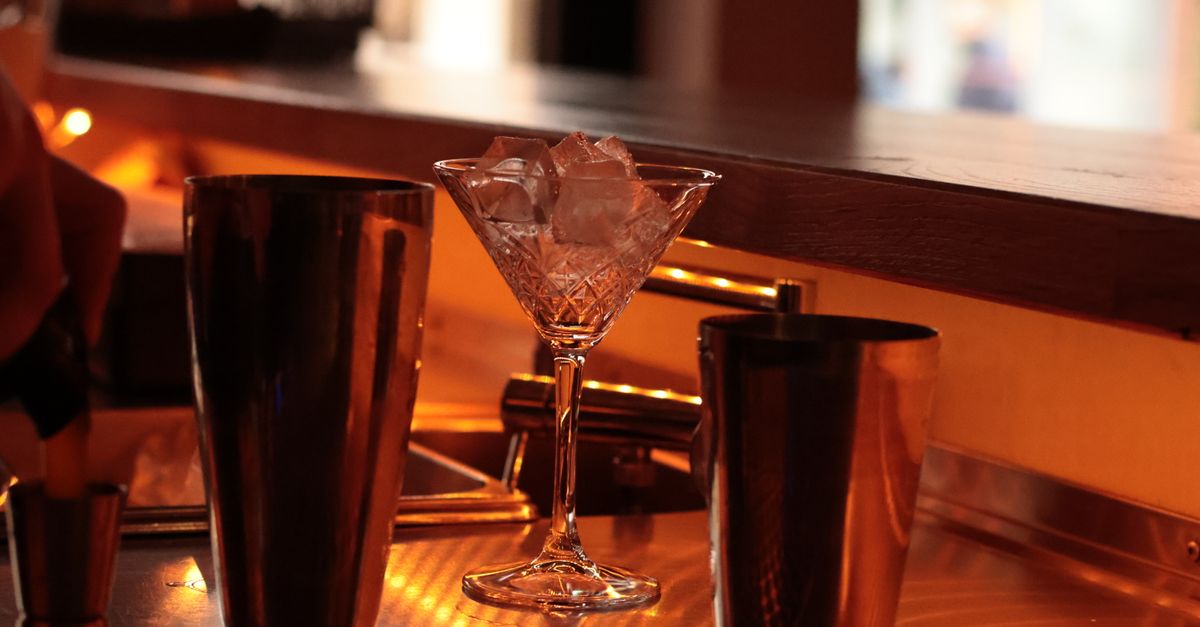
What is a martini without vermouth called?
A martini without vermouth is most commonly called a bone-dry martini, and if a bartender uses the term naked martini, they mean the same thing — spirit, ice, and nothing else. Both names are in wide enough circulation that any competent bar will know what you're after.
The murkier term is "extra dry." Order an extra-dry martini and you might get a whisper of vermouth, a faint rinse of the glass that gets swirled out before the gin goes in, or no vermouth at all. It depends on the bar. "Extra dry" is an instruction about direction, not a fixed destination, and if you actually want zero vermouth, it leaves too much room for a bartender to make their own call about what counts as barely-there.
The safest phrasing is "bone-dry, no vermouth" — slightly redundant, but that redundancy is the point. It removes any ambiguity about whether you want a rinse or a trace.
As for the naming debate: yes, traditionalists will note that a true martini is defined partly by its vermouth content, and technically they aren't wrong. But the culture moved on. James Bond ordered his without vermouth, a generation of drinkers followed, and the bone-dry pour is now a standard menu item at any serious cocktail bar — bartenders stopped raising an eyebrow at the request decades ago. Arguing that it isn't a real martini is a defensible position in cocktail theory and a losing one in actual practice: the name stuck, the drink exists, and the debate was settled somewhere around the third time someone ordered it without ceremony and got exactly what they asked for.
Simple bone-dry martini recipe (gin or vodka)
Both versions of this drink come down to one formula: 2.5 oz of chilled spirit, stirred or shaken with ice, strained into a pre-chilled glass, finished with a garnish. What changes between gin and vodka is texture, temperature, and which garnish makes sense.
Gin version: Measure 2.5 oz of London Dry gin into a mixing glass packed with ice. Stir for 30 seconds — count it, because most people stop at fifteen and the drink ends up noticeably warmer than it should be. Strain into a chilled coupe or martini glass. A lemon twist is the right garnish: expressed over the surface, then draped on the rim or dropped in, letting the citrus oils lift the botanical character in a way that an olive, which reads as briny and blunt against those aromatics, simply cannot.
Vodka version: Same 2.5 oz, but shaking is more common, and for a defensible reason. Vodka lacks the aromatic structure of gin, so the slight cloudiness and fractionally colder temperature from shaking work in its favour — they make the drink feel more substantial rather than thin. Shake hard for 10–12 seconds, then strain into a chilled glass. Reach for either a lemon twist or an olive; the olive makes more sense with vodka because there's no botanical scaffolding for the brine to compete with, and the savouriness fills some of the space that vermouth would normally occupy.
Without vermouth, the chilling method carries more weight than most people expect. Strip it out and the drink is essentially undiluted alcohol — vermouth normally contributes both flavour and a small amount of dilution that takes the edge off neat spirit. Temperature becomes your only moderating factor. Which means the 30-second stir and the pre-chilled glass matter more in a bone-dry martini than in a standard recipe, since a warm, undiluted gin martini is harsh in a way that a conventionally made one isn't.
Pre-chilling the glass deserves attention. Fill it with ice water while you prepare the drink, then dump it right before you pour — the difference is measurable, because a room-temperature glass can raise the drink's temperature by several degrees within the first minute, quietly undoing most of what the stirring accomplished and leaving you with something that feels flabby and overproof at once. If you're working with gin and want to explore more pairings and methods, this guide to gin cocktails you can make at home is a useful companion for thinking about how spirit selection affects the final result.
Garnish is not decorative filler. The twist is doing aromatic work; the olive is doing flavour work. One contributes brightness, the other salinity — pick based on what you want the drink to emphasise.
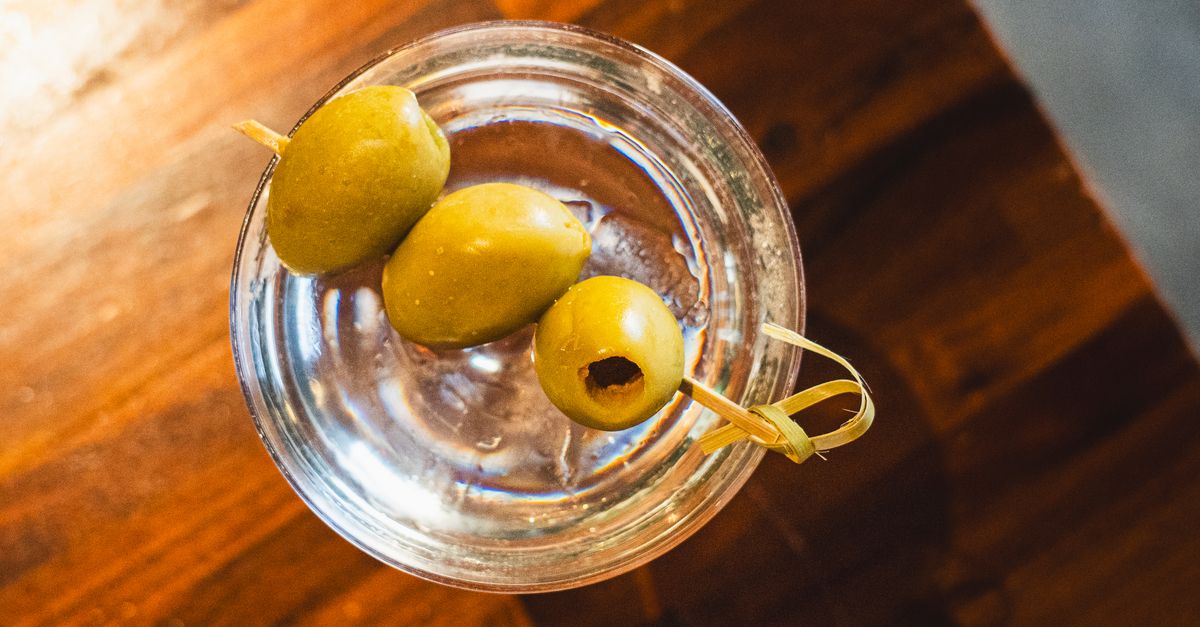
Dirty martini recipe without vermouth
The dirty martini is the easiest vermouth-free martini to make well, because olive brine steps into vermouth's role almost perfectly — it contributes salinity, a faint acidity, and enough aromatic weight to round out a spirit that would otherwise drink sharp and one-dimensional.
The standard recipe:
Add 2.5 oz vodka or gin to a cocktail shaker filled with ice.
Pour in 0.5–1 oz of olive brine (start at 0.5 oz if you're new to this).
Shake hard for 10–12 seconds.
Strain into a chilled coupe or martini glass.
Garnish with 1 or 3 olives on a pick.
Shaking rather than stirring is deliberate here. The brine and spirit integrate better with aggressive dilution, and the slight cloudiness is part of the aesthetic — a dirty martini isn't trying to be pristine.
The amount of brine you use reshapes the entire drink. At 0.5 oz, the brine sits in the background: you taste the spirit clearly, with just enough salinity to soften the alcohol's edge. At 1 oz, the drink tilts noticeably brinier and the whole thing feels rounder. Push it to 1.5 oz and you're in "extra dirty" territory — a drink that's almost savory, where the brine dominates and the gin or vodka functions more as structure than flavor, a distinction that only becomes obvious once you've tasted both versions back to back. Some people love that. Others find it cloying after a few sips.
💡 The olive you use matters more than most recipes admit. Brine from standard supermarket green olives — Queen, Manzanilla — is sharp, tangy, and a little metallic in large quantities. Castelvetrano brine is milder and faintly buttery, which makes extra-dirty versions more drinkable without the aggressive salt spike. If you're using jarred olives, taste the brine before it goes in the shaker; quality varies significantly between brands.
For a deeper look at how olive choice and brine quantity interact with different spirit styles, this guide to the relationship between dry martinis and olive preparation covers the nuances in useful detail.
Gin or vodka? Both work, but they produce different drinks. Vodka lets the brine lead — the spirit contributes texture more than flavor, which suits people who want the olive front and center. Gin pushes back. Botanicals and brine create a more layered result, though juniper-forward gins can clash with saltier brines in ways that a milder Castelvetrano brine largely solves. A London Dry at 1 oz brine is a particular kind of excellent that a neutral vodka version simply doesn't replicate, not because vodka is worse, but because the two combinations are doing different things entirely.
Get Your Venue Discovered
List your venue on WhatDrink so people searching for their next drink by style, location and occasion can find you.
List Your VenueWhat to substitute for vermouth in a martini
Each vermouth substitute changes the drink differently — in flavor, in structure, and sometimes in ABV — so the right choice depends on what you're trying to preserve. Olive brine answers the dirty martini question. For vermouth's aromatic softening effect, a dry white wine or aromatized alternative does that job far better, and the distinction matters more than most swap lists acknowledge.
Substitute | Flavor effect | ABV impact | Best for |
|---|---|---|---|
Olive brine | Salty, savory, umami-forward | None (adds volume, not alcohol) | Dirty martini builds |
Dry white wine / Friulano | Soft, slightly fruity, low aromatic | Lower than vermouth | Gin or vodka, wants texture |
Floral, honey-edged, aromatic | Similar to vermouth (~17%) | Swapping dry vermouth specifically | |
Dolin Blanc | Delicate, less bitter than dry vermouth | Similar to vermouth (~16%) | Readers who dislike sharp vermouth |
Celery bitters | Botanical, vegetal, faint herbal | Negligible | Gin-forward builds, no added volume |
Olive brine is the most common swap, and for straightforward reasons: it's already in most home bars (assuming olives are in the fridge), and a half-ounce does something definite to the drink. The salinity rounds the spirit's sharper edges; the glutamate content adds a mild savory depth. That trade-off is real, though — you're not softening the spirit so much as redirecting it entirely, turning a bone-dry gin martini into something closer to a dirty martini regardless of intent. Wrong tool if clean and cold was the goal.
Dry white wine or Friulano is the substitution that ranking pages almost never mention, which is odd because it's structurally the closest thing to vermouth on this list. ABV drops. A splash — no more than a quarter ounce — introduces gentle fruitiness and body without the sharp botanical edge some drinkers find off-putting in dry vermouth, and for a high-proof gin build, that modest reduction can smooth the whole drink in a way that adding brine never would.
Lillet Blanc sits in a category worth clarifying: it's an aromatized wine, not a vermouth, so purists will flag it as a substitute rather than a removal. But for someone who dislikes dry vermouth's oxidized, herbal character specifically, Lillet behaves almost identically in a martini and is far more approachable. The same logic applies across stirred spirit drinks — if you're navigating the same terrain for a Negroni, this breakdown of aromatized wine swaps in stirred cocktails covers the substitution reasoning in useful detail.
Dolin Blanc — a sweet white vermouth — surprises people. If the issue is that dry vermouth tastes too sharp or medicinal, Dolin Blanc's softer, less bitter profile solves that without removing vermouth from the glass entirely.
Celery bitters, finally, deserve mention precisely because they don't add volume. Two dashes. Into a cold gin martini, they contribute botanical complexity and a faint vegetal brightness — no dilution, no shift in the spirit ratio, no push toward dirty territory, and no added flavor mass that might compete with a delicate gin. The most invisible fix on this list.
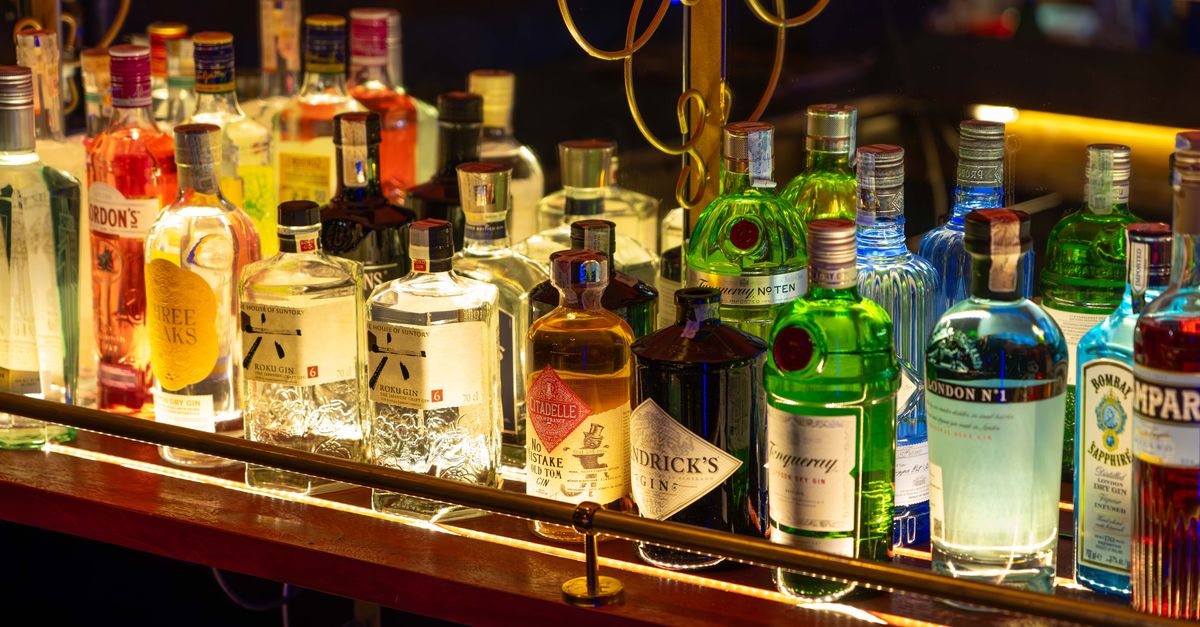
How the spirit choice changes a vermouth-free martini
Strip out the vermouth and the base spirit carries everything — no aromatic buffer, no diluting sweetness, nothing standing between the drinker and whatever is in that bottle. The choice of gin style or vodka character becomes the single most consequential decision in a vermouth-free build.
London Dry gin — the classic, juniper-led profile — actually performs well in this context. The assertiveness most people try to soften with vermouth becomes the point. Botanicals that read as aggressive alongside food come across as focused and clean in a bone-dry pour, and the effect is more clarity than severity when the ice is cold enough. This direction works.
Contemporary gins are a different story. New Western-style bottles built around citrus, cucumber, or floral notes were developed in conversation with vermouth — they need something to complete the flavor arc, and that something is now absent. Without it, a heavily floral gin can taste thin, even a little raw. Like smelling the bottle. Not unworkable, but you'll notice the gap more than you'd expect.
Vodka shifts the whole experience toward texture and temperature. There is less to taste and more to feel — the cold, the slight viscosity a quality distillate develops in the freezer, the clean finish that lingers without much trailing flavor. Bottle quality matters here. Off-notes that stayed buried under vermouth's aromatic complexity have nowhere to conceal themselves in a vodka build stripped of every modifier.
Tito's comes up often in searches around bone-dry builds, largely because it's widely available and sits at a smoothness level that reads as neutral without tasting empty. It works, and that's an honest assessment rather than an endorsement — it's just not going to reveal any unexpected depth.
For a broader sense of how vodka performs differently across cocktail styles, this guide to ordering and building vodka cocktails at the bar is worth reading before you commit to a bottle.
Calorie count and ABV for a no-vermouth martini
Skipping vermouth doesn't lighten the drink. Dry vermouth sits at 15–18% ABV, so removing that half-ounce pulls a low-alcohol buffer out of the equation and nudges the finished cocktail's ABV slightly upward — the opposite of what most people expect when they're trying to drink a little more carefully. A standard bone-dry vodka martini built with 2.5 oz of spirit lands somewhere between 160 and 175 calories, depending on the brand's proof. That figure barely shifts if you add a dirty element: olive brine is almost entirely water and salt, contributing negligible calories even in a generous pour.
The calorie difference between this and a classic wet martini is smaller than most people assume. Half an ounce of dry vermouth adds roughly 15–20 calories — meaningful if you're three drinks into a session, but nowhere near the dramatic cut that health-conscious drinkers sometimes hope for when they specify "no vermouth." The math just doesn't deliver the windfall.
What does change more noticeably is the drinking experience. A higher-ABV cocktail with no botanical softening from the vermouth hits faster, which matters if you're tracking intake beyond just calories.
For readers who want to place a no-vermouth martini alongside other options — comparing it to spritzes, sours or lower-ABV builds — WhatDrink's guide to lower-calorie cocktails you can actually order at a bar covers a range of drink types with structured ABV and calorie breakdowns. The limitation: it works better as a comparison tool than a precise tracker, since spirit-brand variation means the numbers are always approximate.
FAQ
What is a substitute for vermouth in a martini?
The most practical substitutes for dry vermouth in a martini are olive brine (for a dirty build), a dry white wine such as Muscadet or Picpoul, or a wine-based aperitif like Lillet Blanc or Cocchi Americano. Each brings a different flavor register — brine adds salt and funk, white wine adds acid and fruit, and Lillet adds a mild sweetness — so the right choice depends on whether you want complexity or simply cold, clean spirit.
What is a martini without vermouth called?
A martini made with no vermouth at all is traditionally called a bone-dry martini, though some bartenders use the term "naked martini" for the same thing. In both cases the glass holds nothing but chilled gin or vodka, usually stirred with ice and strained, occasionally with an olive or lemon twist as garnish.
Why never 2 olives in a martini?
The "never two olives" convention is rooted in superstition rather than flavor science — odd numbers were considered lucky in the early cocktail culture that shaped martini etiquette, making one or three olives the accepted count. Two olives, by that logic, was simply bad luck, and the rule stuck in bartending tradition even as most of the reasoning behind it faded.
Can a martini be made without vermouth?
Yes — and millions are. The result is a stronger, less complex drink, since vermouth normally softens the alcohol and contributes herbal or floral notes that disappear when you leave it out, pushing the glass closer to cold, neat spirit in a stem. Whether that's a problem or the whole point depends entirely on what you're after.
How to Choose Your Vermouth-Free Martini Build
The decision here is actually simpler than the variety of options makes it seem. If what you want is the cleanest, coldest expression of a spirit with nothing layered on top, a bone-dry martini is the answer — stir your gin or vodka with ice until it's properly diluted, strain it, and stop there. No substitutes needed, no additions justified.
If bone-dry feels flat rather than refined, the dirty route is usually the more satisfying fix. Good olive brine — ideally from a jar of quality Castelvetrano or Cerignola olives rather than the generic supermarket variety — adds salinity and a faint savory depth without mimicking vermouth's botanical character. That's a feature, not a failure. The dirty martini without vermouth is its own thing, and it rewards leaning into that rather than treating the brine as a placeholder.
For drinkers who want genuine flavor complexity without the specific bite of dry vermouth, a dry white wine substitute comes closer to the original structure of the drink than either of the above. A small measure of Picpoul or Muscadet — typically a half-ounce in place of the standard vermouth pour — brings the acid and aromatic lift that vermouth provides, without the wormwood and botanicals that some people find off-putting.
⚠️ It's worth pausing on one assumption many people carry into this search: the belief that avoiding vermouth means avoiding all wine-based additions. If the issue is specifically the taste of dry vermouth — its sharpness, its bitterness — Lillet Blanc or a blanc-style vermouth might solve the actual problem without requiring a fully deconstructed build. Rounder and gentler than standard dry vermouth, they represent for some drinkers the discovery that ends the search entirely.
The spirit you're working with is the real starting point for any of this. A funky, juniper-forward London Dry gin carries enormous aromatic weight. That means a bone-dry build or a brine addition can hold up against it without the gin disappearing into the background — it does the heavy lifting that vermouth would otherwise provide. A soft, grain-neutral vodka, especially at lower proof, gets swallowed by olive brine and benefits more from a white wine substitute that gives it something to lean on. A barrel-rested or aged gin lands somewhere in the middle, with enough inherent sweetness that brine can tip the balance too far; a light touch is essential there. So before settling on a recipe variation, decide which base spirit you're building around, because that single choice narrows the field considerably and points you toward which of these vermouth-free approaches will actually suit the glass.