Making low calorie cocktails to make at home comes down to three variables: the spirit, the mixer, and the pour size. Spirits run roughly 65–100 calories per 1.5 oz shot depending on proof, so the base isn't the villain — the sweetened mixers, juices, and syrups piled on top are, and swapping those out is where the real calorie reduction happens. Stay under 150 calories per drink. That's the ceiling most nutrition-conscious drinkers use, and it's achievable without sacrificing anything worth drinking. Vodka, tequila, and gin are the most practical starting points at home: all three are unflavored in their standard forms, so you control exactly what goes in. A vodka soda with a squeeze of lime sits around 100 calories. A tequila and sparkling water with muddled cucumber lands under 120. A gin and elderflower tonic, made with a low-sugar tonic, comes in close to 130.
🧠 By the numbers
Agave nectar is roughly 30% sweeter than sugar, meaning you need less of it to hit the same sweetness — a meaningful calorie saving per drink, according to Horizon Beverage.
100% cranberry juice brings vitamin C alongside its tartness, making it a smarter mixer choice than sweetened cranberry cocktail, per HUM Nutrition.
Which spirits have the fewest calories per shot?
The good news is that most standard base spirits are surprisingly close to each other in calorie density — vodka, gin, tequila, light rum, and whiskey all clock in between roughly 96 and 105 calories per 1.5 oz pour at 40% ABV. Choosing one over another barely moves the needle.
Spirit | Calories per 1.5 oz (40% ABV) |
|---|---|
Vodka | ~96 |
Gin | ~97 |
Light Rum | ~97 |
Tequila (blanco) | ~99 |
Whiskey | ~105 |
The real calorie gap in any home cocktail comes from what gets poured on top, not which spirit you started with. The mixer is the villain. What will quietly double your calorie count before the ice even melts is reaching for flavored or cream liqueurs as a base — a single shot of a cream liqueur can land at 150 calories or more on its own, which is a bigger swing than any comparison within the table above, and no amount of careful spirit selection offsets that choice.
If you want a closer look at how agave spirits compare across brands and styles, this breakdown of the lowest-calorie tequila options is worth a read before you shop.

What mixers wreck the calorie count — and what to use instead
The biggest calorie leaks in home cocktails aren't the spirits — they're the mixers. Swap those out correctly and you can cut 100–200 calories from a single drink without touching the recipe structure.
Regular tonic water is the most misleading offender: a standard 6 oz pour adds around 80 calories, almost entirely from sugar, and it tastes clean enough that most people never suspect it. Club soda and plain sparkling water deliver identical effervescence for zero. A squeeze of citrus closes most of the flavor gap, which is real but smaller than people expect.
Fruit juices are trickier. Portion size matters as much as ingredient choice here — orange juice runs roughly 83 calories per 4 oz, while fresh lime juice sits around 16 calories per ounce, and you'd rarely use more than one ounce in a full drink. That gap compounds fast across a night of mixing. The number people eyeball most casually is also, quietly, the one doing the most damage.
Unsweetened 100% cranberry juice earns its place in low-calorie recipes — Hum Nutrition notes that it's a strong source of vitamin C — precisely because it's deployed in small splashes rather than used as a base.
Pre-made sour mix and simple syrup are the silent killers. Easy to over-pour. Both are sugar-forward and rarely measured carefully, which means the damage accumulates across rounds in a way that feels invisible until you add it up. Agave nectar is a cleaner substitute: Horizon Beverage points out it's about 30% sweeter than sugar, so you reach the same perceived sweetness from a noticeably smaller volume — a meaningful difference when you're making several drinks in a session.
Easy low calorie vodka cocktails to make at home
Vodka is the easiest spirit to build a low calorie cocktail around at home — a standard 1.5 oz pour sits at roughly 95 calories, and it pairs cleanly with almost anything that isn't loaded with sugar. Three builds below are drinkable tonight, not afterthoughts dressed up as healthy options.
Vodka soda with fresh lime is the anchor: 1.5 oz vodka, top with club soda, squeeze in half a lime. Around 100 calories. Squeeze the lime yourself, because bottled lime juice often carries added sugar and noticeably worse flavor for no benefit whatsoever.
Skinny Greyhound takes one step more effort. Fresh grapefruit juice is the non-negotiable here — not the sweetened carton kind. Combine 1.5 oz vodka with 4 oz of freshly squeezed juice and a splash of sparkling water, and you land at roughly 130 calories, with enough bitterness from the grapefruit that it doesn't taste like a compromise at all.
Vodka cucumber mint spritz is the most satisfying for summer evenings: muddle three thin cucumber slices and four mint leaves in the bottom of a glass, add 1.5 oz vodka, fill with club soda. Under 110 calories, and the muddled cucumber does flavor work that no syrup could replicate without tripling the count.
Low calorie tequila and gin cocktails worth making at home
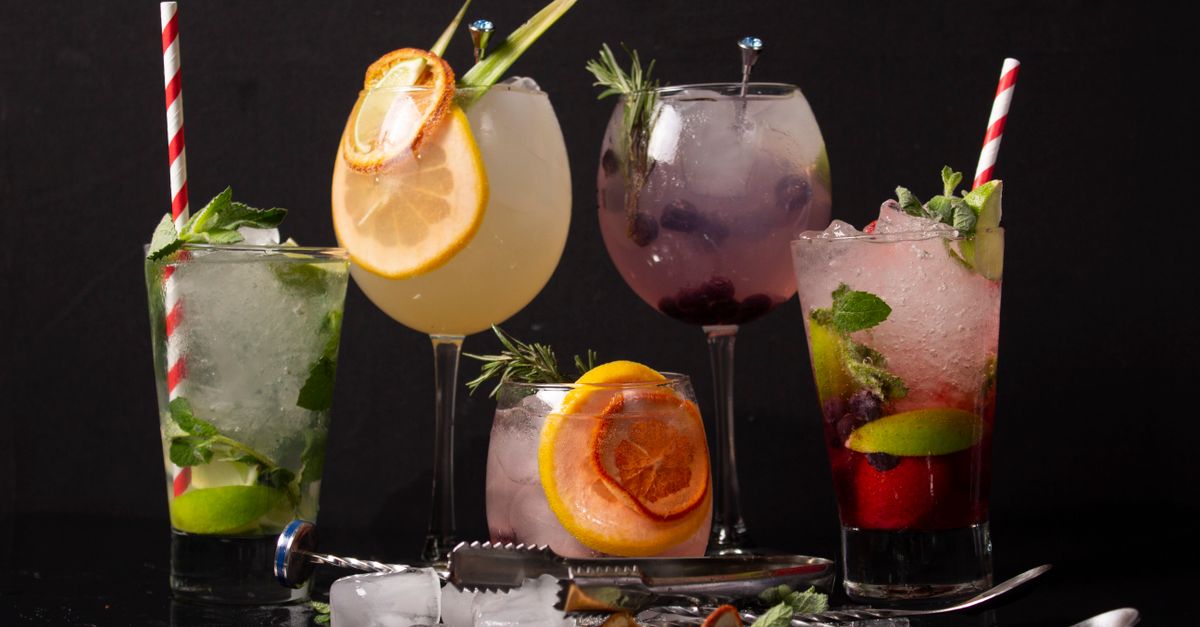
Tequila and gin are two of the most forgiving spirits for low-calorie builds — both pair naturally with citrus and carbonation, which means you rarely need added sugar to make the drink work.
Ranch Water is the simplest proof of this. A shot of blanco tequila, a squeeze of fresh lime, and a bottle of Topo Chico over ice comes in under 120 calories with zero sweetener required. Effervescence does the lifting. The mineral water carries enough texture and bite that nothing else is needed.
The Skinny Paloma adds more volume and flavor: blanco tequila, two ounces of fresh grapefruit juice, a lime squeeze, and sparkling water to top, landing around 130 calories. Fresh grapefruit is bitter enough that you won't miss simple syrup — but squeeze it yourself, because bottled grapefruit juice carries extra sugar that quietly undoes the whole exercise.
For gin, the Gin Rickey — gin, fresh lime, club soda — sits at roughly 100 calories and remains one of the leanest classics in any bartender's rotation. Want something closer to a Tom Collins? Swapping simple syrup for a small pour of agave shaves around 20 calories per serve, because agave runs sweeter and so you use meaningfully less of it to reach the same perceived sweetness, which compounds across a long evening faster than most people expect. For a deeper look at building gin drinks without overcomplicating them, this guide to gin cocktails you can make at home walks through several formats worth knowing.
Get Your Venue Discovered
List your venue on WhatDrink so people searching for their next drink by style, location and occasion can find you.
List Your VenueDoes making cocktails at home actually let you control calories better than ordering out?
Yes, and by a meaningful margin — mostly because bar service hides calories in ways that are hard to see on a menu. At home, you measure. At a bar, the bartender free-pours, and research on hospitality pours consistently shows variation of 0.25 to 0.5 oz per shot from the stated recipe. That's 15–35 extra calories before a single mixer is factored in, and across two or three drinks those small overages compound into something worth caring about.
The bigger problem is the mixer. Pre-batched sour mix, margarita mix, and sweet-and-sour blends used in most bars are sweetened — often heavily — to stay shelf-stable and consistent, because a bar running through high volume needs a product that behaves identically on the 40th pour as the first. At home, you squeeze fresh lime. That swap alone can cut 40–60 calories from a single margarita.
Ice dilution, despite what people assume, is a minor lever. It thins the drink, not the sugar.
Pour size, sweetener type, and which mixer you reach for are the three variables that drive the calorie count — all of which home bartending puts entirely in your hands. If you're eating out and want guidance on ordering without blowing your calorie budget, this guide to low calorie cocktails you can order at a bar covers the menu situations where these same principles apply.
How to find and track low calorie cocktail recipes by ingredient or occasion
The fastest starting point is whatever's already in your cabinet — build outward from the spirit you have rather than shopping for a recipe. That cuts decision fatigue and keeps you from buying a bottle of elderflower liqueur that sits unopened for eight months.
If you want something beyond "vodka plus sparkling water," WhatDrink's low-calorie cocktail guide lets you browse by flavor profile and occasion with nutrition data attached. Searching by occasion — "something fruity under 120 calories for a summer night" — tends to surface more useful results than filtering by spirit alone, because it matches the actual decision you're making rather than an inventory question. Obscure ingredients may return thin results.
For macro trackers, the underlying math is straightforward. One ounce of 40% ABV spirit carries roughly 64–70 calories from alcohol alone (7 cal/g multiplied by grams of ethanol), so scaling a recipe up or down is arithmetic, not guesswork.
FAQ
What cocktails have the lowest calories?
Spirits mixed with plain soda water, a squeeze of fresh citrus, and no added sweetener consistently come in at the bottom of the calorie range — a vodka soda with lime sits around 65–70 calories per serving. Gin and tequila with fresh lemon or lime juice and no simple syrup are close contenders. The pattern is consistent: one standard shot of spirit, a zero-calorie mixer, and acid from real citrus rather than juice or cordial keeps the total low across all of them, which means the format scales to whatever base spirit you prefer.
What is the healthiest cocktail to drink at home?
A vodka soda or tequila soda made with sparkling water and fresh citrus is about as clean as a cocktail gets — typically under 100 calories, no added sugar, and no mystery ingredients. Tequila with lime juice and a splash of soda (a stripped-down margarita without syrup or triple sec) is a strong option if you want a little more complexity without the calorie cost. Home preparation is the deciding factor. You control the pour size and skip the sweeteners that bar versions almost always add.
Can I make skinny cocktails under 100 calories at home?
Yes, and easier than most people expect. A single 1.5 oz shot of vodka, gin, or tequila runs 95–105 calories on its own, so anything you add needs to be essentially calorie-free — sparkling water, a lime wedge, and maybe a few dashes of bitters gets you to a finished drink in the 100-calorie range or just under, which means the format is forgiving even when you eyeball the pour. Fresh citrus juice adds roughly 10–15 calories per ounce, so a squeeze rather than a full pour keeps the total in bounds.
Which cocktail is the least fattening overall?
A vodka soda with citrus is the most frequently cited lowest-calorie option, but a straight spirit on the rocks — whisky, tequila, or gin with nothing added — is technically lower if you are counting only the glass. For mixed drinks, the vodka soda or a minimal tequila-and-soda build wins because neither adds sugar, juice, or liqueur. Sugar is the real problem. "Fattening" in a cocktail context traces almost entirely to sugar-heavy mixers and sweeteners rather than to the base spirit, which means swapping the mixer matters far more than switching brands.
How to start making low calorie cocktails at home
The spirit is almost never where the calories accumulate. A standard shot of vodka, gin, or tequila sits between 95 and 105 calories — the damage comes from what gets poured on top, and sugary juice blends, cordials, pre-made sour mix, and flavored syrups can each triple the calorie count before you have finished building the drink, sometimes more. Strip those out. Replace them with sparkling water, fresh citrus, or a small pour of low-sugar juice, and most cocktails fall well under 150 calories without requiring unusual ingredients or complicated technique.
The most practical way to start is to look at what is already in the fridge and match it to one of three formats.
If you have sparkling water or club soda on hand, the soda-based format is the path of least resistance — vodka soda, tequila soda, or gin and soda with a citrus wedge, all under 120 calories and essentially zero technique required. Fresh lemons or limes open up a slightly wider range: a shaken vodka gimlet with just lime and a small pour of agave, a minimal margarita, or a gin sour with egg white if you want texture. If your fridge has a carton of something like cranberry juice (the unsweetened kind, not the cocktail blend) or tomato juice, the low-sugar juice format works for a Bloody Maria or a Cape Codder kept to a small juice pour.
None of these require a full home bar setup or a particular brand of spirit. Pick the format that matches what you already have, build one drink this week with it, and adjust from there — the ratios are simple enough that most people land on a version they actually like within the first or second attempt.