
A standard 1.5 oz pour of 80-proof, 100% agave tequila lands at roughly 96–97 calories. Zero carbs, zero sugar. And as leonysolroar.com notes, that number holds whether you're drinking blanco, reposado, or añejo — barrel time doesn't add calories, so the style of tequila is the wrong thing to obsess over if you're trying to keep the count down.
What does move the number is proof. Whiteout Tequila's breakdown shows this clearly: the same 1.5 oz pour jumps to around 124 calories at 100-proof (50% ABV), purely because alcohol itself is the calorie source — not additives, not aging, not the agave. The other variable is production category: mixtos, which can contain up to 49% non-agave sugars, behave differently from pure agave spirits, and that distinction matters more at the liquor store shelf than any label claiming "light" or "slim." And then there's the glass surrounding the tequila — a margarita mix can add 200 calories before anyone's noticed.
Why tequila calories come almost entirely from alcohol, not additives
Pure tequila has no fat, no carbs, and no meaningful sugar — which means ethanol is doing essentially all the caloric work. Alcohol delivers roughly 7 kilocalories per gram, sitting between fat (9 kcal/g) and carbohydrate (4 kcal/g), and in an unflavored, unaged expression there is nothing else competing for space on that ledger.
According to this nutrition guide on leonysolroar.com, the NIAAA defines a standard drink as any beverage containing 14 grams of pure alcohol — exactly what a 1.5-ounce pour of 80-proof tequila delivers. Fourteen grams multiplied by 7 kcal lands you at 98; minor rounding accounts for the small gap you'll see quoted elsewhere. The math closes almost perfectly because there's nothing else to account for.
Beer and wine don't behave this cleanly. Residual sugars and fermentation byproducts add calories independent of ABV, which is why a low-alcohol craft wheat beer can outpace a shot of blanco on a per-serving basis.
How ABV and proof move the calorie count up or down
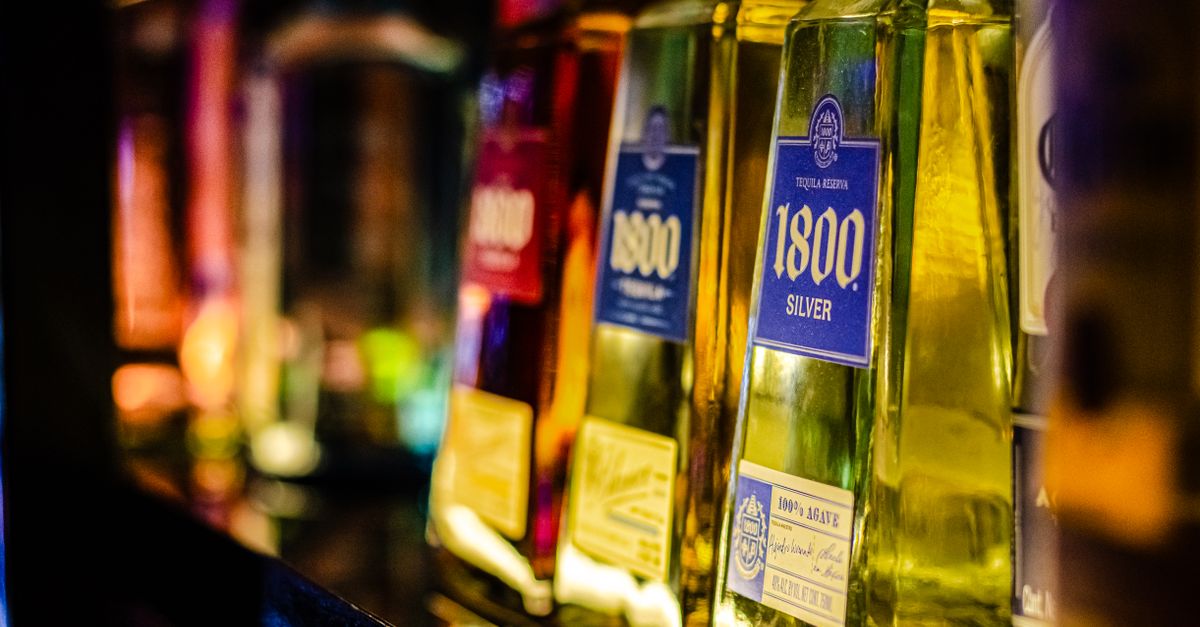
Proof is the single variable that drives tequila's calorie count — not the brand, not the barrel, not the terroir of the agave. Ethanol carries roughly 7 kcal per gram, and higher ABV simply means more ethanol per pour.
The arithmetic is straightforward. Multiply volume (in ml) by ABV, by ethanol's density (0.789 g/ml), by 7. As Whiteout Tequila's breakdown illustrates, a standard 1.5 oz (44 ml) shot at 80-proof (40% ABV) lands at roughly 96 kcal, while the same volume at 100-proof (50% ABV) reaches approximately 124 kcal — a 28-calorie gap from proof alone.
Expression | ABV | Proof | Approx. kcal per 1.5 oz |
|---|---|---|---|
80-proof blanco | 40% | 80 | ~96 kcal |
100-proof expression | 50% | 100 | ~124 kcal |
Tequila liqueur | 28% | 56 | ~67 kcal |
Choosing a 40% ABV blanco over a 50% expression cuts nearly 30 kcal per shot without touching the pour size. Some products push this further: Punta Santos markets a tequila liqueur at 28% ABV specifically to reduce calories, and the math does work out. But 28% is a meaningful step down. Light enough that the drinking experience shifts in ways the calorie difference alone doesn't capture — body, burn, and perceived strength all change simultaneously, making it a different product category as much as a lighter one.
⚠️ When a brand markets itself as "lower calorie," check the ABV first. That's usually the mechanism, not any proprietary distillation secret.
Does tequila style — blanco, reposado, añejo — change the calorie count?
Barrel aging does not add calories. A blanco, a reposado, and an añejo from the same 100% agave producer, poured at the same ABV, land at roughly 97 kcal per 1.5 oz — indistinguishable from one another. As leonysolroar.com's tequila nutrition guide puts it: all pure 100% agave tequilas carry identical calorie counts regardless of time spent in wood.
The reason is simple chemistry. Oak barrels impart flavor compounds — vanillin, tannins, trace lactones — but these are present in amounts too small to register on any calorie count that matters. No sugar crosses from the wood into the liquid in meaningful quantity. The barrel is a flavor vessel, not a feeding mechanism.
Where aged expressions can quietly diverge from their blanco counterparts is additives. Under Mexico's NOM-006 regulations, producers of 100% agave tequila may add glycerin, agave syrup, caramel coloring, or oak extract up to 1% of total volume without declaring any of it on the label — and while that ceiling sounds trivial, glycerin and sweeteners do carry calories. A brand leaning on them for mouthfeel or color correction will produce a marginally richer pour than its proof alone would suggest. Small numbers, but real ones.
⚠️ The practical consequence: if you're tracking calories carefully in a reposado or añejo, lean toward brands that publicly commit to an additive-free process. Whiteout Tequila's blog makes the point well — when no additives are present, the nutrition profile you see is the one you actually drink.
Mixto vs. 100% agave: the calorie difference that actually matters at the store shelf
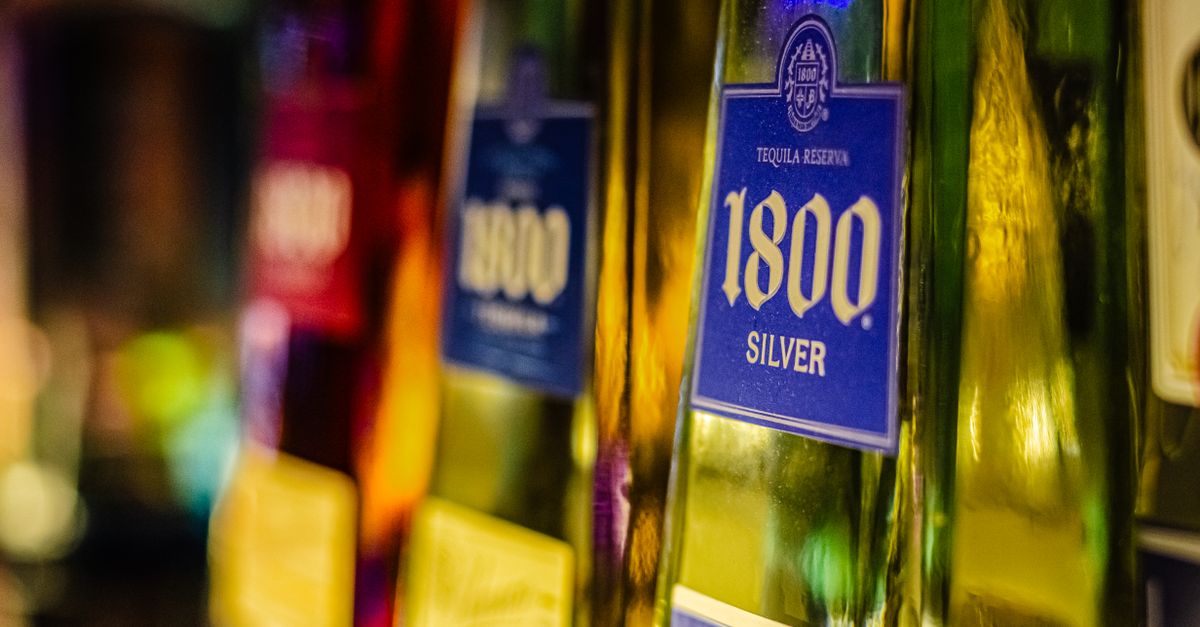
The label difference between mixto and 100% agave tequila is the single most actionable thing to check in the liquor aisle if calories concern you. Mixtos meet the legal floor of 51% agave; the remaining share is typically cane sugar distillate, which introduces fermentable sugars and nudges the calorie count upward compared to a spirit distilled entirely from agave.
Per shot, the gap isn't dramatic. The secondary concerns are arguably more relevant: added sugar means more carbohydrates and, for many drinkers, a rougher morning — and that combination affects how the spirit sits in your body in ways that a single calorie figure doesn't capture. Whiteout Tequila notes that pure 100% agave tequila sits among the most nutritionally bare spirits available, precisely because it brings almost nothing along for the ride beyond ethanol and trace compounds from the piña.
Spotting the distinction is straightforward. By Mexican law, a bottle made entirely from agave must say "100% agave" or "100% de agave" on the label. If that phrase is absent — especially on budget bottles under $20 — the product is almost certainly a mixto, and you're paying in calories and carbs for the shortcut.

Get Your Venue Discovered
List your venue on WhatDrink so people searching for their next drink by style, location and occasion can find you.
List Your VenueHow tequila calories compare to vodka, rum, and other spirits
Tequila is not uniquely low-calorie among spirits. At the same proof, it delivers almost exactly what vodka, gin, rum, and whiskey do — because alcohol content drives the number rather than whether the base ingredient is grain, grape, or agave, and that relationship holds consistently across every major spirit category. An 80-proof pour lands around 96–97 kcal per 1.5 oz. The source plant is largely irrelevant once distillation is done.
The comparison to beer and wine is where tequila looks more flattering, but that advantage is almost entirely a serving-size story — one that collapses the moment the pour doubles. A standard 5 oz glass of wine runs 120–130 kcal. A 12 oz regular beer sits around 150 kcal, and a 1.5 oz tequila shot wins that matchup on paper. Double it, and the edge disappears.
If you're evaluating spirits alongside beer, wine, and lighter alternatives in the same sitting, this guide to drinks ranked by calorie count gives a broader comparison worth scanning before you order.
The honest limitation: tequila offers no metabolic magic. Discipline with volume matters more than which bottle you reach for.
Low-calorie tequila cocktails: what's worth ordering and what wrecks the math
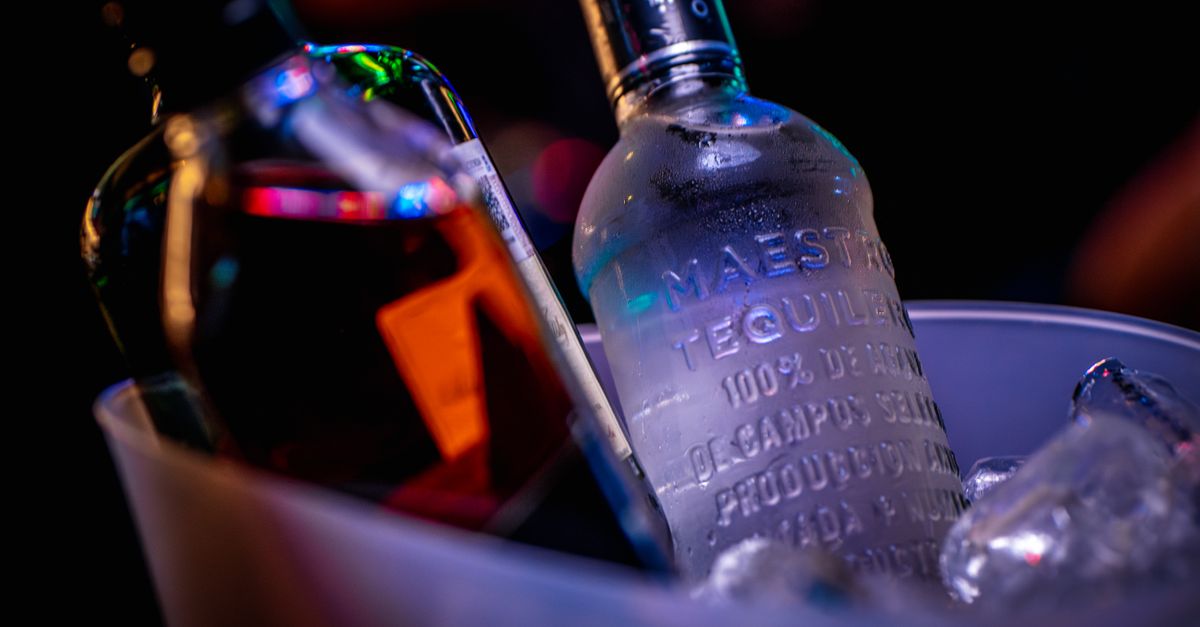
The tequila is almost never the problem. Pour two ounces of blanco into a standard margarita with triple sec and store-bought sweet-and-sour mix and the glass lands somewhere between 250 and 350 kcal — nearly all of that damage coming from sugar, not spirit.
The cleanest build on any menu is Ranch Water: tequila, sparkling water, a squeeze of lime. Around 100 kcal total. It actually tastes like something because good blanco, with its vegetal brightness and faint pepper edge, doesn't need sweetener or citric-acid powder to hold your attention. A Skinny Paloma gets there by swapping juice-heavy grapefruit soda for grapefruit sparkling water — you keep the bitter-citrus character, lose the syrup load. The assumption that low-calorie automatically means flat and joyless is worth discarding entirely.
For low-effort occasions, canned tequila seltzers from the RTD market typically run 90–110 kcal and deliver a consistent pour without any measuring. Useful to know.
The wreckers are predictable once you see the pattern: agave syrup in heavy-handed proportions, fruit purées that double as dessert, and particularly store-bought margarita mix, which often contributes 150-plus kcal before the alcohol arrives. If you want to build a proper margarita without the calorie ambush, this step-by-step margarita mixer recipe walks through exact ratios that keep the flavor intact without drowning the drink in sugar.
FAQ
Is tequila okay for weight loss?
Tequila can fit into a calorie-conscious diet if consumed in moderation, because a standard 1.5 oz pour of 80-proof tequila carries roughly 96–100 calories and contains no fat, no protein, and almost no carbohydrates — the calories come almost entirely from the alcohol itself. The bigger threat to weight loss goals is usually what gets mixed with it. A single margarita made with triple sec and sweet-and-sour mix can push past 300 calories before anyone refills the chips. Straight pours are where discipline actually lives.
Which tequilas are best for weight loss?
A 100% agave blanco tequila at 40% ABV (80 proof) is the lowest-calorie option available in most liquor stores, sitting around 96–100 calories per 1.5 oz serving. No added sugars. Mixtos introduce additives that modestly increase calories — avoid them on label-scrutiny alone. Beyond that distinction, brand and price point make almost no difference, because a well-priced 100% agave blanco performs identically to an expensive one on the calorie ledger, meaning the choice collapses entirely into personal taste and has nothing to do with the marketing story on the back of the bottle.
Which type of tequila is healthiest?
Blanco is the style with the least opportunity for caloric extras, going straight from distillation to bottle without aging in wood or extended resting periods. That directness — no oak contact, no opportunity for light sweetening or coloring additions — is exactly why the style has become the default recommendation for calorie-aware drinkers who still want something worth sipping. Reposado and añejo, aged in oak barrels, may include small amounts of caramel coloring or glycerin under Mexican regulations, though the caloric difference versus a blanco is marginal — a few calories per serving at most. The more meaningful health variable is still ABV: any tequila above 40% adds proportionally more alcohol calories regardless of style.
Does tequila have fewer calories than vodka?
At the same proof, tequila and vodka carry virtually identical calorie counts — both land around 96–100 calories per 1.5 oz at 80 proof, because distilled spirits at equivalent alcohol concentrations have no meaningful caloric difference regardless of base ingredient. Proof is the number that shifts the total. An 80-proof vodka and an 80-proof tequila are essentially equivalent; a 100-proof version of either adds roughly 20 more calories to the same pour, a gap that compounds across a full evening in a way that choosing between spirit types never would. Choosing between tequila and vodka for calorie reasons alone is not a meaningful decision; choosing by proof level is.
How to choose the lowest-calorie tequila pour
The core finding, once you work through the numbers, is that the calorie variable most worth controlling is not on the bottle — it's in the glass. A 100% agave blanco at 40% ABV delivers roughly 96–100 calories per 1.5 oz, and that figure holds whether the bottle costs fifteen dollars or eighty. Reposado, añejo, and ultra-aged expressions add a few calories at most through aging additions, but nothing that moves the needle the way a splash of agave syrup or a few ounces of juice does in a cocktail.
If the goal is the lowest-calorie tequila drink possible, the decision tree is short: start with a 100% agave blanco at standard 80 proof, drink it neat or on the rocks, or lengthen it with sparkling water and fresh lime. That combination keeps the pour under 100 calories with no trade-offs on quality. A tajín rim adds negligible calories. Fresh citrus squeezed directly adds perhaps 10–15. The moment a sugary mixer enters — even a "light" margarita mix — the pour crosses 150–200 calories with ease, and the tequila itself becomes almost irrelevant to the total.
The mixto versus 100% agave question matters more at the store shelf than any style comparison does. Mixtos are legal when they disclose the blend, and some are perfectly drinkable, but the added sugars and potential flavorings make label-reading the one habit that pays off consistently. A bottle that says "100% de agave" or "100% agave" on the label — Mexico's regulated claim — is the only assurance you get that nothing extra came along for the ride.
Proof literacy matters almost as much. Tequilas bottled above 40% ABV — some reposados and cask-strength releases push to 46% or higher — add roughly 10 extra calories per serving for every additional percentage point of alcohol, which is twice the difference between a blanco and an añejo, and far more consequential than anything a celebrity-endorsed bottle implies about its distillation story. That accumulates across a night in ways that swapping spirit categories never does.
What the tequila category rewards, more than brand loyalty or price sensitivity, is the ability to read a label and do a little arithmetic. Any 100% agave blanco at 40% ABV performs essentially the same on calories as any other — the agave source, the distillery's elevation, the celebrity attached to the bottle, none of it changes the math. The pour that keeps calories lowest is a transparent, unaged spirit at standard proof, paired with mixers that don't undo the advantage. That combination is available at nearly every price point in the category, which makes it one of the more democratic diet decisions in the spirits aisle.