The best cocktail ideas for a wedding are ones that pour fast, taste approachable, and don't require a specialist to make them. Crowd favorites that consistently work across guest lists: a classic Aperol Spritz, a Mojito, a Moscow Mule, a Paloma, an Espresso Martini, and a simple Champagne punch. For non-drinkers — and there will be more of them than you're expecting — a sparkling elderflower lemonade or a hibiscus agua fresca with a good garnish holds its own next to any cocktail glass. Speed matters. What makes a drink wedding-appropriate is partly taste (citrus-forward and lightly sweet plays to the widest audience) and partly logistics: a cocktail that needs six steps per pour will back up your bar within twenty minutes of the reception opening, turning a smooth service into a queue that visibly irritates guests before they've had a single drink. The drinks that get cut are usually the ones that taste great at a dinner party for eight but fall apart under volume.
The twelve drinks in this guide are chosen because they satisfy all three constraints at once — flavor range, scalability, and options for guests who aren't drinking alcohol.
What makes a cocktail work at a wedding (and what gets it cut)
The single most important quality in a wedding cocktail isn't flavor — it's how fast it leaves the bar. A drink that takes 90 seconds to build might be brilliant in a cocktail lounge, but multiply that by 180 guests arriving simultaneously after the ceremony and you've created a line that ruins the first hour of your reception.
Speed of execution is what separates viable cocktail ideas for a wedding from ones that look good on a mood board and collapse under real service conditions. A Negroni stirred in 30 seconds with three ingredients clears a crowd. Speed is structural, not stylistic — and a layered Tiki build requiring fresh-squeezed juice, three spirits, and a garnish that eats four minutes per pour will back up even the most capable bar team, no matter how much the couple loves it.
The spirit-plus-two formula (one base, one modifier, one mixer) is the working rule for high-volume service. It keeps drinks consistent across staff with varying skill levels.
Crowd palatability matters too. A heavily bitter or aggressively spirit-forward drink as your only signature option will alienate a meaningful portion of the room — this is the place where personal taste should yield to arithmetic. Venue staffing should shape this decision before anything else.

What are the most popular cocktails served at weddings
Six drinks account for the overwhelming majority of wedding bar orders: Aperol Spritz, Margarita, French 75, Moscow Mule, Cosmopolitan, and vodka soda variations. Each has earned its place for a reason that goes beyond taste.
The Aperol Spritz dominates outdoor and daytime ceremonies. Its orange colour reads brilliantly in photographs, the ABV is low enough that guests can hold one through a full ceremony without consequences, and it signals "festive afternoon" more reliably than almost anything else behind the bar.
Margaritas on the rocks are the workhorse — easy to batch in large quantities, forgiving across seasons, and liked by people who disagree on nearly every other drink. That last point matters more than it sounds: a crowd-pleasing default has to work for the guest who ordered a vodka soda at the last three weddings they attended and the one who considers themselves a serious cocktail drinker, simultaneously. If you're unsure what to offer as a signature, this is the defensible default.
The French 75 — gin, lemon, sugar, topped with Champagne — earns its spot at formal evening receptions precisely because it feels adjacent to the toasting ritual. It bridges the cocktail hour and the first pour of Champagne without redundancy.
Moscow Mules bring something the others don't: theatre. The copper mug is a talking point. Ginger beer is easy to source, and the drink photographs with unusual warmth for something built on vodka, which makes it a natural fit for couples assembling a visually cohesive bar. For couples who want a list of crowd-friendly fruity cocktails to reference when building their bar menu, it's worth having before you finalise the order.
Cosmopolitans have never really left. They photograph beautifully and bridge age groups in a way that trendier cocktails simply don't — appealing to guests who would otherwise nurse a glass of house white all evening, while still feeling intentional enough to anchor a signature drinks menu. And vodka soda variations (cucumber, elderflower, citrus) serve the guests who want something in hand without the sugar load. That group is larger than most couples anticipate.
How to build a signature wedding cocktail around your theme
Start with structure. Take a proven cocktail format — a sour, a spritz, a highball — and change one element to make it yours, swapping the simple syrup for lavender honey or adding a rosemary sprig to the garnish. That single customization is enough — no elaborate technique required, no obscure ingredient that bartenders at a 150-person reception will inevitably run out of — to make a drink feel intentional without baffling guests who just want something cold.
For the name, the couple's initials work, but so does a location: the bar where they met, the city of the first trip, the street of the apartment where the question got asked. A shared memory travels better than a clever pun, and it gives the bartender something to say when guests ask what's in it.
Spirit choice should follow the season and the room. Gin-forward drinks — an elderflower spritz, a cucumber collins — suit an outdoor summer garden. A bourbon smash or an Old Fashioned riff lands naturally in a candlelit ballroom in January, where the warmth of aged oak matches the mood without anyone having to think about it, because the environment does half the work when the pairing is instinctive rather than forced.
One trap worth avoiding: building the whole signature cocktail around a spirit that only one partner actually drinks. Asymmetry shows. Guests pick up on it faster than you'd expect, and it makes the drink feel like someone's preference got overruled. If you need a starting point before your tasting session, this guide to easy party cocktails covers approachable builds that hold up under volume.
How to scale wedding cocktails for a large guest list
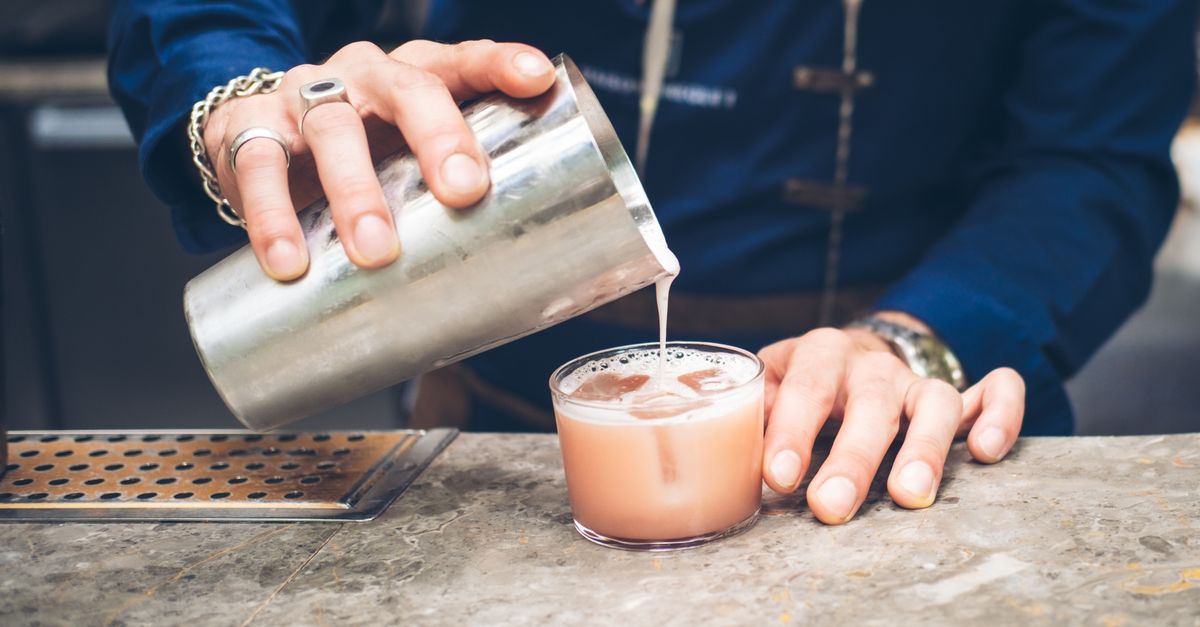
Batching is what separates a smooth bar from a bottleneck. For volume planning, the standard rule is two drinks per guest in the first hour, then one per hour after that — but signature cocktails spike hard in the opening 45 minutes, so build your first batch assuming the whole room orders simultaneously. Peak demand, not average demand. That means your batch size should reflect the worst-case scenario for the first round, not what the spreadsheet looks like smoothed across a full evening.
Most spirit-citrus-sweetener cocktails — Margaritas, daiquiris, Palomas — batch without any loss of quality. Combine everything except the carbonated elements in advance, store chilled, and add soda, ginger beer, or prosecco per glass at service; anything carbonated poured into a jug hours ahead goes flat and thin by the time the first guest reaches the bar, turning what should be a crisp, lively drink into something vaguely disappointing that no garnish will rescue.
The pitcher format cuts service time dramatically for a welcome drink. A well-proportioned pitcher Margarita formula is one of the more practical starting points if you're scaling that cocktail specifically — the ratios survive a 10x batch far better than most. Aperol Spritz jugs are similarly reliable, with the same caveat about adding the prosecco only at the glass.
⚠️ Two categories that don't scale: egg-white sours lose their foam texture within minutes of batching, and any drink requiring a freshly muddled herb in every glass becomes a service nightmare past 80 covers. Both are worth cutting from a large-format menu before the wedding, not during it.
Get Your Venue Discovered
List your venue on WhatDrink so people searching for their next drink by style, location and occasion can find you.
List Your VenueNon-alcoholic wedding cocktails that guests actually want to drink
The non-alcoholic option deserves the same design attention as the signature drink — not a pitcher of lemonade set at the end of the bar as an afterthought. Guests who don't drink still want something that feels considered, and a well-built mocktail signals that they were included in the planning, not accommodated around it.
A shrub-based mocktail is one of the strongest moves here. Fruit-vinegar syrups — blackberry-apple cider vinegar, say, topped with sparkling water and a strip of orange peel — deliver a tartness and depth that neither juice nor soda can match. Naming matters too. Without that brightness, most non-alcoholic options collapse into sweetness that's hard to finish past the second sip, which is why the base recipe deserves as much calibration as any spirit-forward drink on the bar. For daytime receptions especially, herbal builds using cucumber, mint, and elderflower are worth considering; this guide to building non-alcoholic herbal drinks walks through how those flavours layer without spirits.
The other thing that matters: naming. Calling something a "virgin Mojito" positions it as a lesser version of the real thing. Give the mocktail its own name — The Garden Mist, whatever fits your palette — and non-drinkers get the same sense of occasion as everyone else holding a glass.

Simple wedding cocktails that a catering team can execute without a specialist bartender
The safest cocktails for catering staff are ones where the recipe is the vessel, not the person holding it. Two-step builds — an Aperol Spritz (wine glass, ice, Aperol, prosecco, done), a Campari and soda, a pre-mixed vodka Collins poured over ice — can be served in under twenty seconds with no training beyond "fill to here." That speed matters enormously at the reception rush.
Pre-batched cocktails in labeled dispensers take this further, removing skill requirements at service entirely. Speed is everything. A Negroni or a punch-style spritz batched the morning of, chilled in a dispenser, and set out so guests can serve themselves or catering staff just pour — no shaking, no layering, no muddling. Anything requiring those techniques introduces inconsistency and queue buildup, which is worse than a simpler menu.
WhatDrink lets you filter cocktails by ingredient count and prep complexity when finalizing your menu, a practical feature at this stage that narrows options before you have to commit. Its library skews toward classic builds, so more experimental or bespoke signature concepts may need supplementing elsewhere.
FAQ
What are the top 10 cocktails for a wedding?
The most reliably crowd-pleasing options are the Aperol Spritz, Champagne cocktail, Paloma, Mojito, Moscow Mule, Whiskey Sour, Espresso Martini, Elderflower Gin and Tonic, Strawberry Daiquiri, and a classic Negroni. Which ten actually work depends heavily on your bar setup, the season, and how many guests you're serving — spritz-style drinks and batched punch-format cocktails perform best at large weddings because they can be pre-made in quantity without sacrificing quality, while stirred and shaken drinks like the Whiskey Sour and Espresso Martini are better suited to smaller receptions with a skilled bar team. Execution matters. If you're working with a catering crew rather than specialist bartenders, lean toward the first half of that list, where the margin for error is wider.
What is the most popular alcoholic drink at a wedding?
Champagne or Prosecco remains the single most common alcoholic drink served at weddings — it anchors the toast and doubles as a welcome drink without requiring any bartending skill to pour. Among mixed cocktails, the Aperol Spritz has dominated the last several years. Batchable, visually striking, and palatable to guests who don't normally drink cocktails, it has become a default opening drink at receptions in a way that nothing else has quite managed to replicate. After those two, beer and a simple gin and tonic typically account for most of what gets consumed by volume.
What are wedding signature cocktails?
A wedding signature cocktail is a drink created specifically for the couple — usually named after them, tied to a shared memory or location, or built around flavors that reflect the wedding's theme or season — and offered alongside the standard bar menu as a personal touch. One or two drinks, maximum. They're typically served at the welcome reception or displayed with custom signage, functioning as much as a decorative and conversational element as they do a beverage. The best signature cocktails are batchable or simple enough that the catering team can produce them consistently across the full length of the event.
How to finalize your wedding cocktail plan before you talk to your caterer
Before any conversation with a caterer or venue coordinator becomes productive, two decisions need to be made and held firm: the format of your bar service, and the specific drink or drinks you're committing to.
Format comes first because it determines everything else. A batch cocktail — made in advance in quantity, poured from a vessel or dispensed by staff — fits almost any bar setup, requires no specialist bartender, and scales cleanly from 60 to 300 guests. A made-to-order cocktail, shaken or built per drink, needs adequate bar space, trained staff, and a realistic service window. Getting attached to an Espresso Martini as your signature drink before you know whether the venue has two bar stations or one is how couples end up with a 25-minute drinks queue during the cocktail hour. Confirm the bar format — batch or made-to-order — before you commit to any specific recipe.
Once you know the format, the actual selection gets much simpler. Choose one signature alcoholic cocktail and one non-alcoholic equivalent that uses the same visual language — same glassware, same garnish, same presentation — so neither feels like an afterthought. If you're working with a catering team rather than a dedicated bar crew, run your chosen drink against three practical constraints before finalizing: Can it be prepped at least partially in advance? Does it require any equipment the venue doesn't already have? Can an unfamiliar staff member produce it consistently after a ten-minute briefing? Adjust the recipe if any answer is no.
The non-alcoholic choice deserves the same scrutiny. A sparkling elderflower shrub in a coupe glass and a Paloma in a highball require completely different prep and equipment — if your bar can only run one glass type efficiently, that constraint narrows the field fast, and it's the kind of thing that gets discovered mid-conversation with the caterer and forces a last-minute pivot. Surface it beforehand.
The practical question to settle before that meeting: given your guest count and the bar setup your venue actually provides, can your chosen cocktail be fully executed in advance — or does it need live bartending, and do you have the staff headcount to support that? Write the answer down. Bring it to the caterer call. Everything else — garnishes, glassware, quantities — follows from it.