The easiest cocktails to make for a party are the ones that scale without falling apart — and a handful of drinks do this better than almost anything else. An Aperol Spritz requires three ingredients and no shaking; you build it directly in the glass, which means guests can help themselves with minimal instruction. A Batch Margarita — tequila, lime juice, and triple sec mixed the night before — serves twenty people from a single pitcher, and the flavors improve noticeably with a few hours of rest. Vodka Lemonade is arguably the most forgiving of all: mix vodka with store-bought lemonade in a large dispenser, add ice, done. These aren't compromises. They're the drinks that experienced hosts return to because they work.
What separates a party-ready cocktail from one that only looks simple is the gap between making one drink and making forty. Scale changes everything. Some recipes are fast for a single glass, but line up fifteen guests and that same recipe turns the host into a frantic bartender who misses half the evening — which is exactly the kind of collapse this framework is designed to prevent, by organizing everything along two axes: how much effort a drink demands, and how many people it can serve before control slips.
What makes a cocktail actually easy to make for a party
A cocktail is easy for a party when it can be made in bulk ahead of time, uses three to five forgiving ingredients, and requires no per-glass performance. That's a different standard than "easy to make one of" — and the gap between those two definitions is where most party drink plans quietly fall apart.
Take the Negroni. Equal parts. Scale that to 30 guests ordering across two hours and suddenly you're doing 30 individual stirs, 30 pours over ice, 30 orange peels twisted to order — and the recipe itself hasn't changed at all, only the operational load behind it. The recipe didn't get harder. Ease at party scale is a logistical property, not just a recipe property.
Three things determine whether a drink belongs on a party menu:
Batchable. The whole recipe can be mixed in advance and held in a pitcher, punch bowl, or jug — so guests can pour their own, or you can ladle without measuring.
Forgiving ratios. Drinks where slightly more or less of an ingredient still tastes right. A 2:1:1 format is more resilient than one built around 0.75 oz of something obscure.
No per-glass theatrics. Shaking, double-straining, and express-flaming a citrus peel are fine for a cocktail bar. For a party, each of those steps is a bottleneck.
💡 One practical rule to establish early: carbonated elements — soda water, tonic, sparkling wine — go in at pour time, not when you batch. Add them to a full pitcher and they'll be flat before half the guests arrive.
There's also a menu-level argument worth making before you choose a single recipe: a lineup built around two spirits is easier to manage than five simple recipes that each require a different bottle. Fewer bottles, fewer decisions, fewer gaps in your mise en place.
Easy large batch cocktails that work for any crowd
Batch cocktails are the single most effective way to host without chaining yourself to a shaker all evening — and the four or five builds below hold up at scale, from a dinner party of eight to a backyard crowd of fifty.
Batch Margarita is the workhorse. Combine tequila, triple sec, and fresh lime juice at a 1:0.5:0.75 ratio, scale it to a gallon jug, and refrigerate until guests arrive. One gallon: roughly 20 servings. Never salt the pitcher. A salted pitcher rim turns the last few pours into something undrinkably briny as the salt dissolves into the liquid, so salt each glass rim individually at the moment of pouring.
Batch Cosmopolitan is almost as forgiving. The build — vodka, triple sec, cranberry, lime — premixes cleanly and benefits from sitting up to 48 hours in the fridge, a resting period that lets the citrus mellow into the spirit rather than sitting on top of it. Pour over ice to order; the dilution from the ice does what shaking would have done. If you want the full ratio breakdown and scaling math, this batch Cosmopolitan guide with exact measurements and make-ahead instructions covers it thoroughly.
Sangria — red or white — improves the longer you leave it, which puts it in a category of its own on this list. Make it the night before: red wine, brandy, orange juice, sliced fruit, a splash of simple syrup. By the time your guests arrive, the fruit has absorbed enough wine that the whole thing tastes integrated rather than assembled, and no bartending whatsoever is required once they walk through the door. Set out a ladle, leave the pitcher on the table, done.
Aperol Spritz deserves some honest treatment here, because the usual instinct is to batch it — and that instinct is wrong. Prosecco goes flat within an hour of mixing, so batch a Spritz the morning of your party and you'll be serving something that tastes roughly like orange-flavored still water by 8 PM, regardless of how carefully you built it. The correct approach: pre-measure Aperol and prosecco separately, keep both chilled, and combine them at pour in a 1:1.5 ratio (Aperol to prosecco). Add soda water. Thirty seconds per drink, entirely manageable.
A few things to keep in mind across all of these:
Citrus-forward batches (Margarita, Cosmo) are best made with freshly squeezed juice and used within 48 hours — bottled juice goes flat-tasting fast.
Wine-based batches (Sangria) scale almost infinitely and require the least equipment.
Carbonated builds (Spritz) should never be premixed; stage the components instead.
Crowd size matters less than people think. What reliably kills a batch cocktail is the wrong container — a narrow-mouthed bottle you can't ladle from, or a jug with no pour spout, discovered at the moment the first guests arrive. Wide-mouth pitchers with lids, kept cold, are the infrastructure the recipes assume.
What is a good 3-ingredient cocktail for a party?
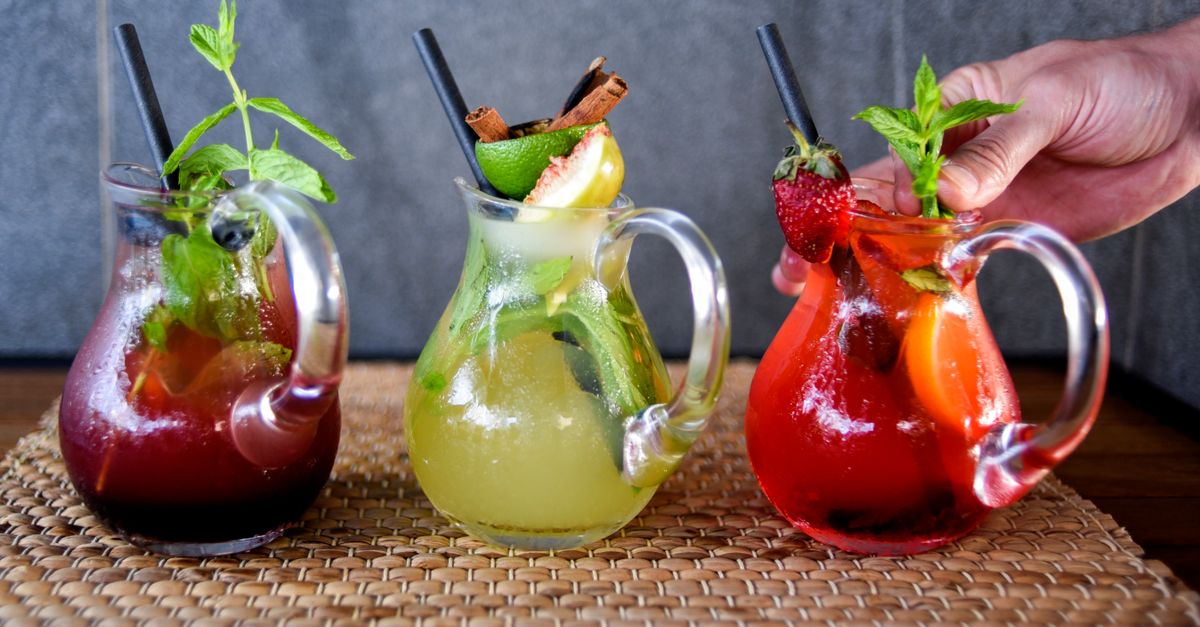
The best 3-ingredient cocktails for a party are the Vodka Soda, Dark and Stormy, Paloma, and Gin and Tonic — each requires two pours and at most one squeeze, which means anyone can make one without slowing down the line. Minimal ingredient counts aren't a compromise; they're a structural advantage when you're hosting.
Every additional ingredient is another bottle to source, another measuring step, another thing that runs out at the wrong moment. Three ingredients means you can stock the full night's supply without a spreadsheet, and guests who wander over to make their own drink won't stall out — no bottleneck, no queue forming at the kitchen counter while someone hunts for the Cointreau.
Vodka Soda with citrus — vodka, soda water, lemon or lime — is almost impossible to execute badly. The ratio is forgiving, and because carbonation masks minor errors, the citrus squeeze becomes optional enough that guests who skip it still get a coherent drink. Low-calorie, too. Someone at every party is quietly keeping track of that.
Dark and Stormy — dark rum, ginger beer, lime wedge — involves two pours and a squeeze. The ginger beer does most of the flavor work, so even a heavy hand on the rum doesn't ruin it. Use a ginger beer with real heat — Fever-Tree or Bundaberg rather than a generic supermarket brand — and the drink punches well above what three ingredients have any right to deliver when you factor in how little effort went in.
Paloma — tequila, grapefruit soda, lime — handles the tequila crowd without requiring a full margarita station. No triple sec. No salt rim unless you want one, shaking is unnecessary, and Jarritos Toronja is the classic grapefruit soda choice with Squirt as a capable backup.
Gin and Tonic — gin, tonic, lime — remains the most scalable spirit-plus-mixer build at any volume. The only variable that matters is the tonic-to-gin ratio, and most guests self-correct instinctively. What surprises people is how much the tonic brand changes the result — a good quinine-forward tonic elevates even a mid-shelf gin, while a flat generic one can sink a bottle you paid real money for.
All four of these translate naturally into a build-your-own station: set out the spirits, the mixers in ice, a bowl of citrus wedges, and step away. If you want a longer list of options in this format, this collection of easy three-ingredient cocktails covers more combinations organized by spirit. The build-your-own setup is worth considering seriously — it's the single most effective way to stop being the bartender at your own party.
Easy cocktails with vodka for a party
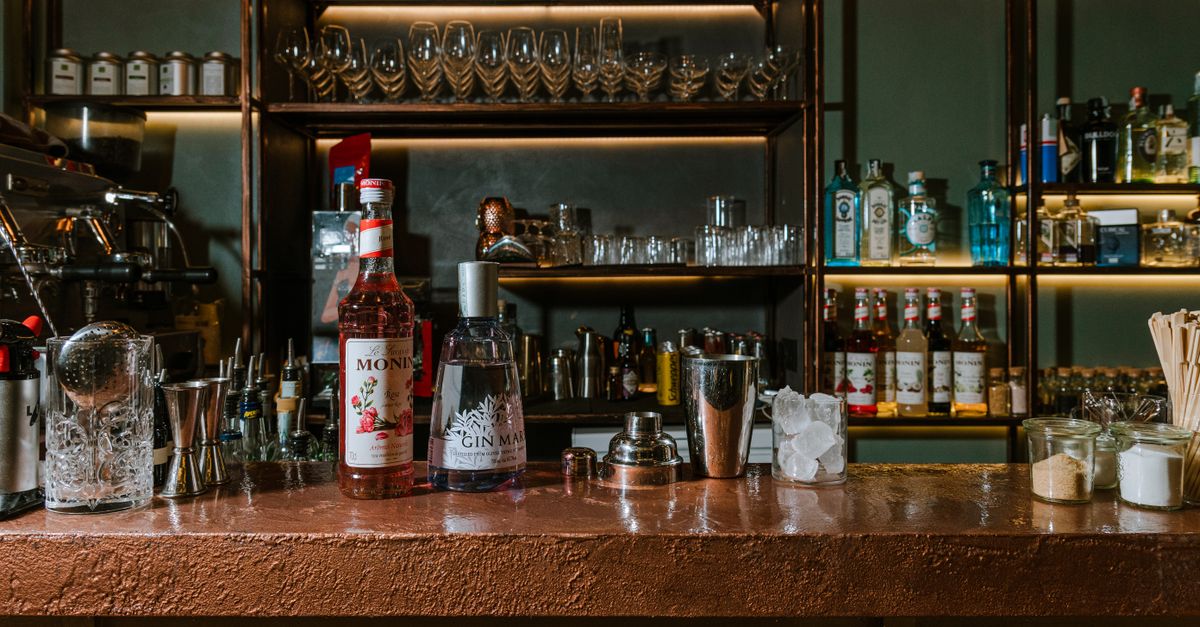
Vodka is the right default for a party bar because almost everyone drinks it and it disappears into mixers without demanding attention. Every build below works at pitcher or punch-bowl scale, and none of them require anything more than pouring and stirring.
Vodka Lemonade is the easiest high-volume option in existence. Combine vodka and lemonade in a 1:4 ratio in a pitcher the night before, refrigerate it, and let guests pour over ice themselves — the pitcher handles fifty pours without you touching it again. Done.
Vodka Cranberry — or the Cape Codder if you want to be technical about it — operates on the same logic. Two ingredients. The deep red color reads as festive without effort, and because nothing needs to be measured precisely, you can set out a bottle of vodka, a carton of cranberry juice, and a bin of ice so guests serve themselves without a recipe card in sight.
The Moscow Mule deserves mention because it's perpetually requested, but the copper mug situation is a real logistical problem at volume. Most people own four of those mugs, not forty, and washing them between pours kills your evening. The workaround: serve it in highball glasses and either pre-pour the ginger beer into a pitcher with the vodka and lime (accepting it'll go slightly flat, which most guests won't notice), or set ginger beer cans alongside a pre-mixed vodka-lime base and let people top their own. Both solutions work. The second is better if carbonation matters to your crowd.
Watermelon Vodka Punch is the one to make when you want something that looks like you tried. Blend fresh watermelon until liquid, strain out the pulp, then combine it with vodka, fresh lime juice, and a handful of mint in a punch bowl — roughly 3 parts watermelon juice to 1 part vodka, with lime adjusted to taste depending on how sweet the fruit is. It scales without any real effort, and the prep is twenty minutes the morning of the party. The visual effect in a bowl is striking enough that guests assume far more work went into it than actually did.
If the event is outdoors and you want a few more builds designed specifically for that context — including options that hold up in heat — this guide to vodka cocktails for backyard parties covers the territory well.
Get Your Venue Discovered
List your venue on WhatDrink so people searching for their next drink by style, location and occasion can find you.
List Your VenueParty drinks that are non-alcoholic — and actually worth making
Non-alcoholic party drinks don't have to be a pitcher of juice sitting apologetically next to the bar. Done right, they're among the easiest things to batch, and guests who don't drink alcohol—whether by choice, pregnancy, medication, or preference—shouldn't have to settle for a warm soda.
Sparkling Lemonade Punch is the lowest-effort option with the highest visual return. Combine store-bought lemonade and ginger ale in a punch bowl, drop in a ring of frozen fruit instead of ice (it chills without diluting), and you have something that looks intentional. No muddling, no measuring, no skill required.
Virgin Mojito by the pitcher scales more cleanly than its alcoholic counterpart, because you're not working against the bitterness of rum. Muddle mint and lime juice together in bulk the morning of the party, then refrigerate that base while guests arrive—topping individual glasses with soda water only at the moment of pouring keeps the carbonation sharp and lets each person dial in their own ratio without any extra effort from the host. No compromise at all.
For guests who find juice too sweet but aren't interested in a fizzy lemonade, a shrub-based mocktail does real work. Shrubs earn their keep. A fruit shrub—drinking vinegar made by macerating fruit with sugar and apple cider vinegar—stirred into soda water has the kind of complexity and edge that most juice-based drinks lack entirely, and the difference is immediately obvious to anyone who's spent a sober evening nursing something cloying. Raspberry-ginger and blackberry-tarragon shrubs are both widely available online, and neither requires anything beyond pouring.
⚠️ The practical point worth taking seriously: set up a dedicated non-alcoholic station rather than tucking a single bottle of sparkling water next to the spirits. A separate setup removes the awkward "what can I drink?" conversation and takes pressure off the host to manage individual requests mid-party.
WhatDrink organizes drinks by occasion and includes non-alcoholic options, which is useful if guests want to explore beyond what's on your menu—a friend who discovers they enjoy shrub cocktails at your party might want to look up variations afterward. That said, the platform skews toward discovery rather than step-by-step technique, so it's better as inspiration than as a recipe guide for first-time builders.

How to plan a party cocktail menu without spending the night behind the bar
Two cocktails is the ceiling. Pick one spirit-forward option and one light, fruity one — that structure covers nearly every guest's preference without generating a prep list that eats your Saturday afternoon, and it keeps waste manageable when you inevitably misjudge how much rum people actually drink.
The planning architecture that makes this work is a single pairing: batch the more complex drink in advance, then set the simpler one up as a self-serve station. Your batched cocktail — something like a margarita punch or a spiced sangria — sits in a labeled dispenser or pitcher. Guests pour their own. The second drink gets a small table with the spirit, one mixer, and a card that says "add 2 oz of this to that, top with ice." People manage it. You stay in the room.
Quantity math, done once: figure roughly 2 drinks per person per hour for the first two hours, then 1 per hour after. A party of 20 running three hours needs about 80 servings — which sounds like a lot until you realize a standard 750ml bottle yields around 17 cocktail pours, so five or six bottles per spirit, split between your two drinks, gets you there with a small buffer. Batch the numbers before you shop. Never at the liquor store, squinting at your phone.
The prep timeline is where most hosts leave time on the table:
Prep item | When to do it |
|---|---|
Spirits, simple syrup, infusions | Up to weeks ahead |
Citrus juice (fresh-squeezed) | Night before — holds 24 hours refrigerated |
Garnish cutting, rim prep | Morning of the party |
Carbonated mixers opened and added | Day-of, immediately before serving |
Ice | An hour before guests arrive |
Garnish setup is worth doing properly even if it feels fussy. Pre-cut citrus wheels and lay them on a small plate. Pre-salt or pre-sugar the rims of a tray of glasses the morning of the party — it dries into place and looks intentional. Herb sprigs go in a glass of cold water, like cut flowers, and stay perky for hours that way. The payoff is real: a garnished drink that takes 90 seconds to assemble drops to about 20 when everything is staged and waiting, and if you multiply that across 80 pours, you've saved yourself more than an hour of standing in one spot performing the same small motions on a loop.
If you're building a brunch menu or want to see how this same batching logic applies to daytime gatherings, this collection of crowd-scaled brunch cocktails shows the format in action with quantities already adjusted for groups.
The self-serve station is the part most people skip and later regret. Label everything clearly, put ice in an insulated bucket so it lasts, and leave a small sign with the ratio so guests know exactly what they're doing without flagging you down. Guests don't need to ask you anything — and that freedom is what lets you actually attend your own party rather than narrating it from behind a cutting board. The whole point of a staged station is that it runs without you.
FAQ
What are some easy cocktails I can make for a party?
The most practical options are drinks you can batch in advance or set up as self-serve stations: a big-pitcher sangria, a punchy vodka lemonade, a sparkling paloma punch, or a simple whiskey ginger with garnishes laid out for guests to help themselves. Anything that requires you to shake or build each drink individually will back you into a corner once the room fills up and conversation starts pulling you in six directions at once. Minimal assembly is the goal. Aim for one batched drink that lives in a dispenser or pitcher and one spirit-plus-mixer station where guests pour their own.
What is the most crowd-pleasing cocktail?
Vodka-based drinks win on raw numbers because vodka's neutral character means almost no one actively dislikes it — a sparkling vodka lemonade or a simple vodka soda bar covers the widest demographic without demanding much from the host. That said, a well-spiced rum punch or a citrusy tequila batch often generates more genuine enthusiasm, especially if the crowd skews toward people who enjoy drinking rather than people who just want something in their hand. Go with vodka lemonade topped with sparkling water if you can only make one call: it photographs well, scales easily, and converts skeptics without any real effort on your part.
How do I batch cocktails for a large group without losing quality?
Hold carbonation and citrus back until the last possible moment — batch your base spirits, sweeteners, and any shelf-stable mixers up to 24 hours ahead, then stir in fresh lemon or lime juice and add sparkling elements just before guests arrive. Dilution is the other variable most people underestimate: a cocktail shaken over ice picks up roughly 25 percent of its volume in water, so when you batch without that process, you need to add cold water directly — typically one part water to four or five parts concentrate — or plan to serve over ice that will melt gradually, doing the work for you across the first hour of the party, which is usually enough time for the batch to find its balance naturally. Taste it cold. Flavors that seem right at room temperature often need a touch more acid or sweetener once chilled.
What cocktails can I make the night before a party?
Any spirit-forward or juice-based drink without carbonation holds well overnight in the refrigerator: sangria improves markedly after several hours because the fruit has time to macerate, and a citrus punch, a whiskey sour base, or a pre-batched paloma concentrate all travel cleanly into the next day. Avoid batching anything with egg white, cream, or carbonation more than a few hours ahead — the texture deteriorates in ways that are hard to recover from. Cover your container tightly, label it with the final finishing steps (add soda, top with ice, stir), and you'll do almost nothing the day of.
How to Set Up Your Party Drink Menu and Enjoy Your Own Party
Pick one batched cocktail and one self-serve build, and get both ready the night before. That two-drink structure — a pitcher or dispenser that's already mixed, plus a spirit-and-mixer station where guests assemble their own — is the specific thing that frees you from the bar once people start arriving.
The batched option does the heavy lifting for anyone who wants a drink handed to them. The self-serve station absorbs everyone who wants to customize, linger over garnishes, or just feel like they're participating. Together they cover nearly every guest preference without requiring you to do anything except point toward the drinks when someone asks.
Night-before prep is what makes this work in practice. The sangria base steeps overnight and is better for it. The vodka lemonade concentrate sits in the fridge and needs only sparkling water stirred in before guests arrive — thirty seconds of effort, done. Garnish trays get wrapped in plastic, refrigerated, and pulled out about thirty minutes before the door opens, leaving the morning of the party with exactly one drink-related task: setting out ice and opening a few bottles.
What this looks like in execution: a large glass dispenser of something like a watermelon vodka punch sitting on the table with a stack of cups beside it, and next to it, a tray holding a bottle of tequila or gin, two or three mixers, and a small bowl of lime wedges. Guests see the setup immediately when they walk in. No one needs to find you to get a drink — you're already across the room talking to someone, which is the entire point.
The easiest party cocktail, as framed at the start, is the one you make exactly once. A two-drink menu built and prepped the night before is how that idea becomes an actual plan rather than an aspiration — you do the work when it's quiet, and then you show up to your own party as a guest.