Sparkling wine, Champagne, and Prosecco are not three separate things sitting side by side — they're nested. Sparkling wine is the parent category: anything with bubbles qualifies, including Champagne, Prosecco, Cava, Crémant, and a few hundred other regional varieties. Within that category, Champagne is a legally protected wine from the Champagne region of northeastern France, made by fermenting the wine a second time inside the bottle — a process that produces fine, persistent bubbles and a characteristic toasty complexity that no amount of tank pressure can replicate. Prosecco comes from Veneto, Italy. Its second fermentation happens in a pressurized tank rather than the bottle, which results in fresher, fruitier, and generally lighter flavors than you get from the méthode champenoise. So in the sparkling wine vs Champagne vs Prosecco comparison, the hierarchy runs: sparkling wine contains everything, Champagne and Prosecco are both subsets of it, and the two differ in origin, production method, flavor profile, and — often significantly — price.
The distinctions compound quickly. Move from a single glass to a cocktail recipe, a dinner pairing, or a wedding budget where you're sourcing twelve cases rather than two bottles, and the gap between Champagne and Prosecco starts costing real decisions: they don't behave the same way in a Bellini, don't flatter the same foods, and don't suit the same spending ceiling. Understanding what separates them makes it easier to spend wisely and drink better.
What makes Champagne legally Champagne
Champagne is a legally defined appellation. To carry the name, a wine must be grown, fermented, aged, and bottled within the Champagne region of northeastern France — produced according to a tightly regulated method that no other region can replicate simply by copying the technique. Geography is the first condition; everything else follows from it.
The governing framework is France's Appellation d'Origine Contrôlée system. Under AOC rules, every step of production — from vineyard management to the final cork — must happen within the designated zone. The method itself, known as méthode champenoise (or méthode traditionnelle outside the region), is equally non-negotiable: after an initial fermentation that produces a still base wine, the winemaker blends across different vineyards and sometimes different vintages to build a consistent house style, then adds a small dose of sugar and yeast before bottling. That mixture triggers a second fermentation inside the sealed bottle, generating carbonation from within. No injected gas.
What follows is slow and labor-intensive. The bottles are gradually tilted and rotated — riddling — to consolidate the dead yeast cells in the neck. Disgorgement removes that sediment plug, a small amount of wine is topped off, and the bottle is corked. Minimum aging on those lees is fifteen months for non-vintage bottles, three years for vintage releases, though some houses run considerably longer before they'll let a single bottle leave the cave.
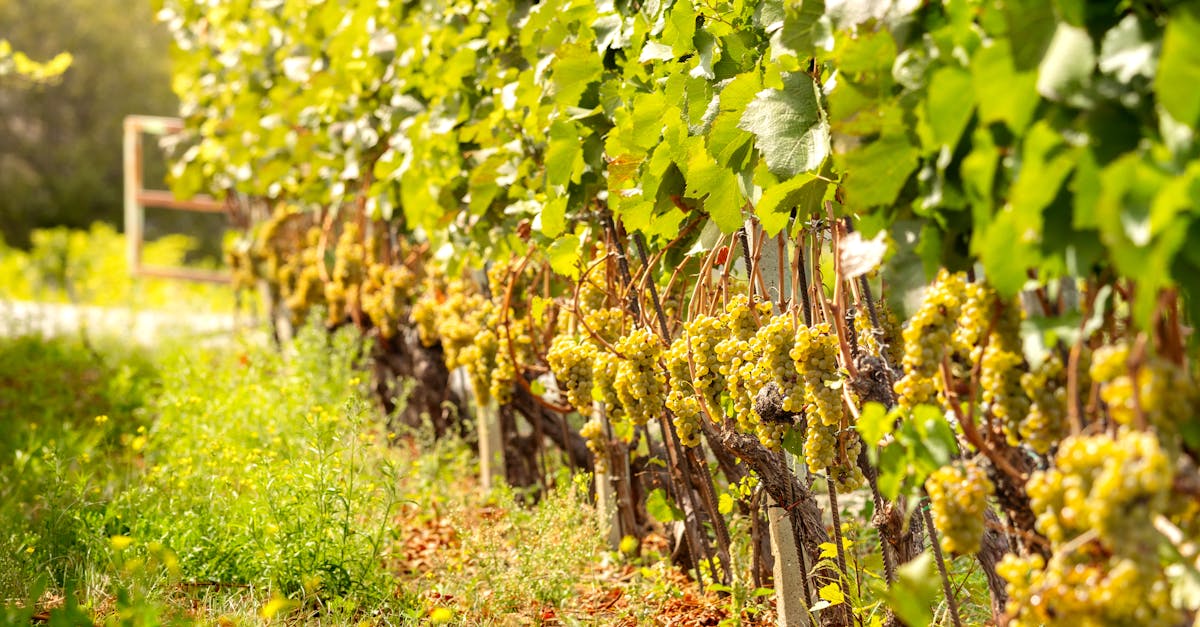
The permitted grape varieties are Pinot Noir, Pinot Meunier, and Chardonnay, with four older regional varieties allowed in tiny quantities. More recently, a disease-resistant hybrid called Voltis has received provisional approval — a quiet concession to climate pressure that the region's traditionalists have accepted with visible reluctance.
All of this explains why Champagne costs what it costs. The land commands extraordinary prices — a single hectare in premier cru villages runs into the millions — and labor for hand-harvesting and manual riddling adds still more. Minimum aging requirements mean capital sits locked inside bottles in chalk caves for years before a single one is sold.
The flavor consequence of extended lees contact is the most recognizable thing about Champagne in the glass: the autolytic notes — brioche, toast, warm biscuit, sometimes a faint nuttiness — that develop as the wine rests against spent yeast cells over months or years. No other sparkling wine style mandates the same combination of in-bottle fermentation and prolonged aging, which is why no other style reliably reproduces that quality; you can approximate it, but the structural conditions that create it are locked inside the appellation rules. That is what you are paying for.
How Prosecco is made and why it tastes different
Prosecco tastes fruitier and lighter than Champagne because it undergoes secondary fermentation in a large pressurized steel tank rather than inside the bottle — a process called the Charmat method, or metodo Italiano. That single production decision shapes everything: the flavor, the bubble texture, and the price on the shelf.
In the traditional method used in Champagne, the wine spends months or years aging on spent yeast inside each individual bottle. That contact time builds the characteristic bread-dough, brioche, and hazelnut notes that Champagne drinkers recognize immediately. The Charmat method skips that entirely. Secondary fermentation runs its course in a sealed tank over a matter of weeks, and the wine is filtered and bottled under pressure. Because the process is shorter and the wine never sits on lees in the bottle, those yeasty, toasty compounds never develop — and the delicate aromatic compounds in the grape itself survive intact. What you get instead is peach, green apple, pear, and sometimes a faint floral note closer to wisteria than anything bakery-adjacent.
This isn't a shortcut in any pejorative sense. The tank method is structurally better matched to the Glera grape's aromatic profile, preserving the primary fruit character that defines the variety. By law, Glera must account for at least 85% of every Prosecco blend — a requirement that makes the grape's character non-negotiable, not incidental. The remaining 15% can be drawn from Chardonnay, Pinot Bianco, Pinot Grigio, Pinot Nero, or a handful of permitted local varieties like Verdiso and Perera, though in practice most producers lean heavily on Glera alone.
⚠️ Most buyers treat all Prosecco as interchangeable, but the DOC and DOCG designations mark a real quality gap. DOC covers a wide swath of northeastern Italy. Prosecco Superiore DOCG is a different proposition entirely: the steep hillsides of Conegliano Valdobbiadene deliver lower yields, more complex soil profiles, and noticeably more concentrated flavor — with single-vineyard Rive bottlings and the celebrated Cartizze subzone sitting at the category's ceiling, a level of specificity that DOC bottles rarely approach.
The economics of tank fermentation explain the price gap with Champagne more than regional reputation does. Without per-bottle labor and years of cellar storage, per-unit expenditure falls sharply enough that a decent Prosecco regularly lands at a third the price of a comparable Champagne — not because the quality ceiling is lower, but because the production model is fundamentally different. That price gap is a method signal, not a verdict on the wine.

How Cava and Crémant fit into the sparkling wine category
Cava and Crémant are both made using the same traditional method as Champagne — secondary fermentation in the bottle, lees aging, disgorgement — but they cost considerably less and taste noticeably different. If you've been mapping the sparkling wine landscape and wondering where these two sit, the short answer is: they occupy the middle and lower rungs of the traditional-method tier, below Champagne in price but above the Charmat-method Proseccos in production complexity.
Cava is Spanish. Roughly 95% of production is concentrated in the Penedès region of Catalonia, and the permitted grape varieties — Macabeo, Xarel-lo, and Parellada — don't overlap with Champagne's Chardonnay and Pinot Noir, which is precisely why Cava tastes earthier and more rustic despite sharing the same winemaking process. There's often a faint almond note, a drier mineral finish, and less of the brioche quality that extended lees contact gives good Champagne. Entry-level Cava typically ages for nine months on the lees; Reserva and Gran Reserva categories push that further, and a well-made Gran Reserva can close the gap with Champagne in texture in ways that catch tasters off guard.
Crémant refers to traditional-method sparkling wines produced in French appellations outside Champagne — Alsace, the Loire Valley, Burgundy, among others. Because the process is nearly identical, Crémant often produces a finer bead and more autolytic complexity than Cava at a similar or slightly higher price. A Crémant d'Alsace made from Pinot Blanc tastes lean and floral; a Crémant de Bourgogne built on Chardonnay can sit convincingly close to Champagne in character, particularly after a few years of bottle age coax out that toasty, bready depth the style is capable of.
The price stacking runs roughly like this:
Style | Typical price range | Method |
|---|---|---|
Cava (entry) | $10–$18 | Traditional |
Crémant | $18–$35 | Traditional |
Champagne (NV) | $40–$70+ | Traditional |
The persistent belief that traditional method always means Champagne-quality is worth questioning. Terroir and grape selection shape the result as much as the process does — which is why a $14 Cava and a $55 Champagne can share a production method and still taste like they came from entirely different planets.
Sparkling wine vs Champagne vs Prosecco: how they compare on taste, calories, and price
Champagne, Prosecco, and most sparkling wines land in roughly the same calorie band per glass, and their flavor profiles diverge far more dramatically than their nutritional content does. If you're making a purchase decision, the sweetness tier on the label is a more reliable guide to both sugar and calories than the category name.
Taste is where the real differences live. Champagne — made by the traditional method, with secondary fermentation in the bottle and extended contact with spent yeast — develops toasty, biscuity, sometimes brioche-like complexity, often layered over apple or citrus. Prosecco, fermented in pressurized tanks rather than individual bottles, skips that prolonged yeast contact entirely, which is why it comes across as fresher and more overtly fruity: white peach, pear, green apple, occasionally a faint floral note that Champagne rarely offers. Generic sparkling wine is too broad a category to characterize; a California sparkling made by the traditional method will taste closer to Champagne than it does to a cheap Italian Prosecco DOC, and a Sekt from Germany may share almost nothing with either.
On calories, the spread across categories is far narrower than most people expect.
Style | Method | Typical taste | Calories per 5 oz (Brut) | Residual sugar (Brut) | Price range |
|---|---|---|---|---|---|
Non-vintage Champagne | Traditional (in-bottle) | Toasty, yeasty, complex | ~90–100 kcal | Under 12 g/L | $40–60+ |
Prosecco DOC | Tank (Charmat) | Fruity, floral, light | ~90–100 kcal | Under 12 g/L | $12–18 |
Cava | Traditional (in-bottle) | Earthy, apple, dry | ~90–100 kcal | Under 12 g/L | $10–20 |
Crémant | Traditional (in-bottle) | Varies by region | ~90–100 kcal | Under 12 g/L | $15–25 |
Demi-Sec (any origin) | Varies | Noticeably sweet | ~110–130 kcal | 32–50 g/L | Varies |
The "healthier" question — whether Prosecco or Champagne is the better choice from a nutritional standpoint — mostly dissolves under examination. At Brut level, the difference is negligible. Both clock in around 90–100 calories for a standard pour, and both carry under 12 grams of residual sugar per litre, which means choosing one over the other on health grounds is effectively a coin toss dressed up as a decision. If you're watching sugar intake and evaluating drinks broadly, the guide to lower-calorie drink options at a bar is a useful reference for putting sparkling wine in context against other categories.
What actually moves the calorie number is sweetness designation. A Demi-Sec Prosecco will carry substantially more sugar than a Brut Champagne. The label — Brut Nature, Extra Brut, Brut, Extra Dry, Dry, Demi-Sec — tells you more about what's in the glass than the country of origin ever will. Most people scan the wrong variable entirely.

Get Your Venue Discovered
List your venue on WhatDrink so people searching for their next drink by style, location and occasion can find you.
List Your VenueAre mimosas better with Champagne or Prosecco?
For mimosas, Prosecco wins — and it's not a close call. Its natural peach and pear notes fold into orange juice without friction, while Champagne's more complex character largely dissolves into the citrus before anyone takes a second sip.
The case for Prosecco here is almost embarrassingly practical. Its fruit-forward profile sits in the same flavor register as fresh-squeezed orange juice, and because the two liquids support rather than override each other, the combination works reliably even when the juice is mediocre — something worth keeping in mind when you're shopping for six bottles at once. Prosecco DOC. A version with a bit of residual sweetness will actually improve a mimosa made with tart juice, in a way that a lean, high-acid Blanc de Blancs simply won't pull off; it lacks the fruit to compensate. And the price gap matters at brunch scale: six bottles of a solid $14 Prosecco costs the same as roughly one bottle of entry-level Champagne.
⚠️ Champagne's autolytic complexity — those toasty, brioche-like qualities that develop during extended aging on the lees — is precisely what gets obliterated when you pour orange juice over it. Juice erases it immediately. Unless you're hosting someone discerning enough to detect Champagne inside a mixed drink (an uncommon guest), you're spending $40 on an ingredient that the cocktail actively works against. You're paying for yeast-derived depth that the citrus simply cancels.
The one scenario where Champagne earns its place in the pitcher: a "reverse mimosa" — mostly sparkling wine with just a short pour of juice for color and brightness. In that ratio, a good non-vintage Champagne holds its shape better. The bubbles are finer and more persistent, enough of the wine's character survives a small juice dilution to make the spend defensible, and the drink stops being a cocktail and becomes something closer to a dressed-up glass of Champagne with a citrus suggestion. That's a different product entirely.
💡 The underused option for anyone who wants to elevate the pitcher visually and add a little depth: Rosé Prosecco. The pink color is obvious enough that guests register it as special, and the slight berry note — strawberry more than cherry — layers into citrus juice more interestingly than standard Prosecco does, without adding cost.
For a batch brunch scenario, a mid-tier Prosecco DOC or a Cava outperforms Champagne on every axis: taste logic, crowd volume, and the budget required to not feel anxious about refills.
Which bottle to buy for each occasion
The decision almost always comes down to context: who you're with, what the drink needs to do, and how much the bottle itself is part of the message.
Formal celebration or gift. Non-vintage Champagne is the right call, and the reason isn't purely about taste. Part of what you're handing someone is a signal — the name on the label carries weight that Prosecco or Cava, however well-made, simply can't replicate in the same way. A Moët & Chandon Brut Impérial or a Pol Roger White Foil communicates something before the cork comes out. For gifting especially, that framing matters.
Casual weekend brunch or patio drinking. Prosecco DOC or a good Cava — there's no complicated reasoning here. Both are food-friendly, easy to pour freely without watching the budget, and the kind of thing people drink with pleasure at whatever temperature they end up being served after forty minutes on ice.
Wine-curious guests who don't drink much sparkling wine. Default to Prosecco. Champagne's autolytic complexity — that biscuity, almost yeasty depth — is an acquired taste, and serving it to someone who finds dry sparkling wine "too sharp" usually doesn't convert them. Prosecco's softer fruit meets people where they are. The peach and green apple notes don't ask much of the drinker, which is exactly the point when you're trying to make sparkling wine feel approachable rather than challenging — not an intellectual exercise, just something to enjoy.
Cocktail base. Prosecco or Cava. Champagne vanishes into the mix, leaving you with a more expensive drink that tastes identical to one made with something half the price — a bad trade by any measure, and one that's easy to avoid. The one exception might be a classic French 75 where you want the gin to read as drier and more structured — but even then, a decent Crémant does the job. If you're putting together a batch of sparkling cocktails and want ideas for where Prosecco rosé specifically earns its place, this guide to rosé wine cocktails and how they're built is a useful starting point.
For anyone still building out their understanding of sparkling options — comparing sweetness levels, ABV, or which style pairs with the food on the table — WhatDrink organizes sparkling wine by those parameters in a way that's practically useful. Its limitation is that it skews toward discovery rather than deep regional context, so pairing it with a bit of label-reading fills the gap.
FAQ
Is Prosecco the same thing as sparkling wine?
Prosecco is a sparkling wine, but not all sparkling wine is Prosecco. Made from Glera grapes. It is a specific Italian style produced in designated regions of Veneto and Friuli Venezia Giulia using the Charmat method — secondary fermentation happens in a pressurized tank rather than the bottle, which is the defining technical fact that separates it from Champagne, and which gives Prosecco its lighter, fruitier character. The broader category contains Prosecco, Champagne, Cava, Crémant, and dozens of other styles.
What is poor man's Champagne?
The phrase most often refers to Cava — the Spanish sparkling wine produced by the same bottle-fermentation method as Champagne but sold somewhere between eight and fifteen dollars for a perfectly decent bottle, putting it within reach for casual occasions where nobody wants to open a forty-dollar Champagne and watch it disappear in twenty minutes. Some people apply the term loosely to Prosecco. That comparison is more about price than production. Prosecco is made differently and tastes noticeably lighter and fruitier, so calling it a Champagne stand-in says something about the budget and nothing about the glass.
Is Champagne actually better than Prosecco?
Champagne and Prosecco are doing different things, and treating one as objectively superior to the other ignores what each is built for. Champagne — with its autolytic complexity, tight bubbles, and long finish — suits formal occasions, serious food pairings, and slow contemplative drinking; Prosecco's lighter body, lower acidity, and fruit-forward profile make it far more approachable as an aperitivo or a base for a Bellini, which is exactly the context it was designed for, and in which an expensive Champagne would often feel like overkill rather than an upgrade. The setting decides the winner.
How to choose between sparkling wine, Champagne, and Prosecco
Sparkling wine is the category. Champagne and Prosecco are two of its most recognizable members, and they arrive at your glass by different routes — one shaped by Chardonnay and Pinot Noir fermenting slowly in a bottle underground in northeastern France, the other by Glera grapes processed in large steel tanks in Veneto, built for early drinking rather than aging. That production gap is why they taste so different, and it's why swapping one for the other without thinking about context is the most common mistake people make when buying bubbles.
Prestige is real but it narrows the field too aggressively. A well-made Cava at twelve dollars can outperform a mass-market Champagne at forty in a blind tasting — not because the rules or geography mean nothing, but because price and quality don't track as cleanly within any category as the mythology suggests. Occasion matters more than hierarchy. Champagne at a backyard birthday is often a waste of both the wine and the moment; Prosecco at a black-tie dinner can feel thin and insufficient, not because it's inferior, but because the food and pacing demand more structure.
The practical question, once you've settled on a general style, is sweetness. This is the detail most buyers overlook because the label terminology was designed for an older market and still carries those old, counterintuitive names. "Extra Dry" on a Prosecco label is actually sweeter than "Brut." "Demi-Sec" is noticeably sweet. "Brut Nature" or "Zero Dosage" on a Champagne means bone dry, with no added sugar at all.
That sweetness scale applies across the whole category — Champagne, Prosecco, Cava, Crémant from Alsace or Burgundy, any sparkling wine you pick up. Read the label. Whatever bottle you're holding, the single most useful piece of information on the front isn't the region name or the producer's backstory — it's the dosage term, the one word that tells you whether you're getting Brut, Extra Dry, or Demi-Sec, and matching that to what you're eating or when you're drinking makes the rest of the decision considerably simpler.