
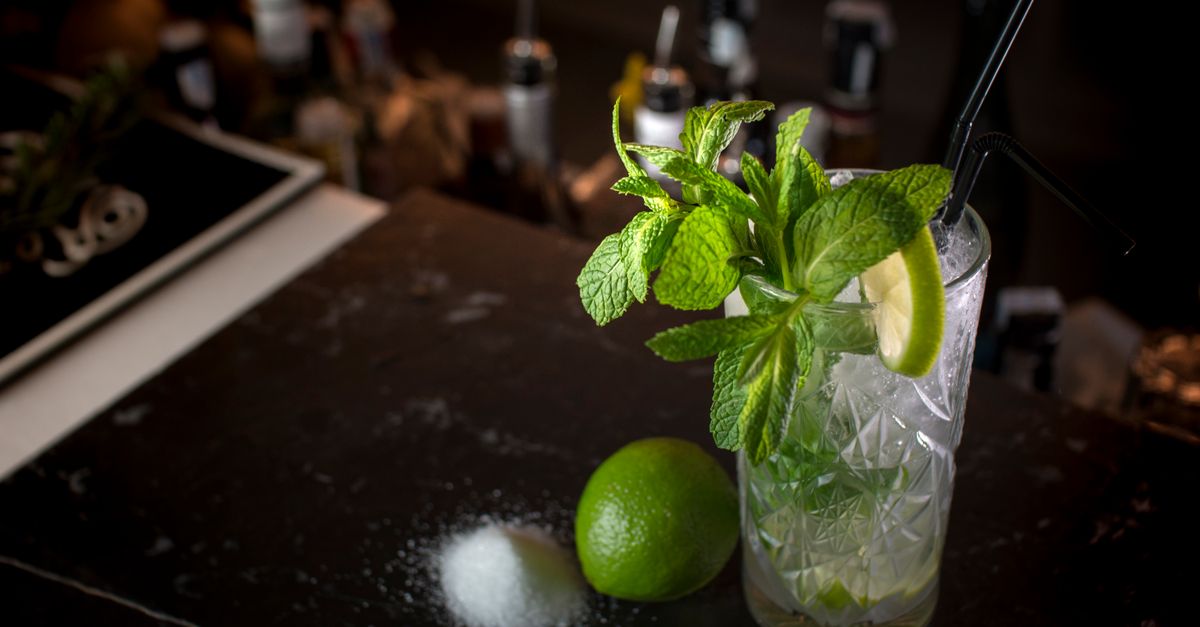
An easy mojito recipe comes down to five ingredients and about five minutes of work: white rum, fresh lime juice, sugar (or simple syrup), fresh mint leaves, and club soda. Muddle eight to ten mint leaves with three-quarters of an ounce of sugar syrup and the juice of one lime in the bottom of a tall glass — press gently, not violently, or the mint turns bitter. Add ice, pour in two ounces of white rum, top with two to three ounces of cold club soda, give it one slow stir, and garnish with a mint sprig and a lime wheel. That's the whole drink.
The mojito gets a reputation as fussy, and it isn't entirely undeserved — fresh citrus and muddling add a step that most highballs skip. But the difficulty is overstated. Once you've made two or three, the process runs faster than locating your keys. The sections below cover the classic build in more detail, the four variations most likely to become regulars in your rotation, a non-alcoholic version that actually works, a pitcher format for groups, and guidance on which rum to reach for — because that choice matters more than most people expect.
What are the ingredients in a classic mojito?
A classic mojito calls for five things: 2 oz white rum, 1 oz fresh lime juice, ¾ oz simple syrup, 8–10 fresh mint leaves, and 3 oz club soda. That's the whole list.
White rum is non-negotiable in the original build — its light, clean body steps aside and lets the mint and lime lead. A darker or aged rum carries too much vanilla and oak, muddying what should taste unmistakably bright and green. Swap it in if you like, but accept that you're making a different cocktail. If you want to explore how rum and lime interact across different styles, this rundown of summer rum and citrus cocktails is a useful detour.
The sugar debate is minor but real. Simple syrup dissolves instantly. That matters because your mint gets bruised cleanly rather than drowned in gritty crystals that resist the muddler, migrate to the bottom, and make the last sip taste like undissolved sweetness. Granulated sugar works — people have been using it forever. Use 2 tsp if that's what you have; just muddle longer than feels necessary.
Club soda versus Sprite is a bigger trade-off than it looks. Club soda keeps things dry. Lemon-lime soda pushes the whole drink sweeter and softer, subordinating the lime's tartness to a candy-adjacent finish that some drinkers prefer — not wrong, but definitively a different cocktail.

How to make a simple mojito step by step
The build takes under five minutes: muddle, add rum, ice, soda, stir once, and you're done. Sequence matters more than technique here, so follow the order below and the drink assembles itself.
Add mint and lime first. Drop 8–10 fresh mint leaves into your glass along with the juice of half a lime (or two wedges, squeezed and left in). Add your sweetener — ¾ oz simple syrup works best.
Muddle briefly. Press down and give it a slow half-turn, twice. That's it. The goal is to bruise the mint just enough to release its oils; grinding it into pulp extracts chlorophyll and bitterness you don't want. Light pressure, not force.
Add the rum before the ice. Pour 2 oz of white rum directly onto the muddled mixture and let it sit for ten seconds. The spirit picks up flavor from the mint and lime while everything is still concentrated — diluting it immediately with ice cuts that short.
Fill with ice, then top with soda. Pack the glass with cubed ice, then pour 3–4 oz of chilled club soda down the side of the glass to preserve the carbonation.
Stir once, gently. A single lazy pass with a bar spoon lifts the mint upward without collapsing the bubbles.
Garnish. Take a mint sprig, slap it sharply against your palm, and place it at the rim. That slap opens the aroma immediately — the difference is noticeable.
Do bartenders hate making mojitos — and does that affect how you should order one?
Yes, many bartenders do. The complaint is legitimate: proper assembly — fresh lime, a dozen mint leaves muddled carefully, measured rum, topped with soda — runs two to three minutes per glass. At a packed Friday rail, that single order backs up five people waiting for a gin and tonic.
What's instructive for anyone making mojitos at home is that the exact steps drawing the groans are what separate a good mojito from a mediocre one. Muddling matters enormously. It releases oils from the mint without shredding it into a green slick — do it wrong and you get a bitter, grassy mess rather than fragrance, which is a failure that no amount of extra rum will fix. Fresh lime juice has a brightness that bottled concentrate simply doesn't replicate, and pre-made mojito mix shortcuts both steps at once, trading that little savagery from the citrus for a flat, one-dimensional sweetness you notice on the first sip.
So don't skip those steps at home. The time cost is proportional to the result in a way it rarely is with simpler drinks.
If you're ordering at a bar, timing matters more than you'd think. A quieter mid-evening lull, a polite ask, and a decent tip produce a noticeably more considered drink than the same order shouted over a Saturday crowd.
Easy mojito variations: vodka, Sprite, and fruit builds
All four substitutions below work — some just produce a different drink than you might expect. The swap that surprises people most is vodka, which muddles through fine but strips away the warm, faintly caramel edge that white rum contributes, leaving something closer to a vodka smash. Clean. Bright. A little anonymous — and that's an honest label for it, not a complaint.
Sprite is an easier swap to reason about. Drop the syrup. Because lemon-lime soda brings its own sugar, you either omit the simple syrup entirely or cut it to half a teaspoon — push past that and the drink turns cloying by the second sip, which no amount of extra lime will fix. The citrus note shifts slightly forward too, which can be pleasant in summer heat.
For fruit builds, add the fruit before the mint. Muddling strawberries or mango on top of already-bruised mint tears the leaves and pushes bitterness forward. Two or three medium strawberries is enough. Mango works at roughly the same volume, though its density means you'll want to muddle a beat longer than you think necessary to fully break it down and release the juice. If you want to explore why fruit-forward drinks so often mask their alcohol content, that's worth a read before you serve these at a party.
Frozen builds need a touch more lime — an extra quarter ounce — to cut through the dilution that blending introduces.
Variation | Key swap | Adjustment needed |
|---|---|---|
Vodka mojito | White rum → vodka | None required; expect a cleaner flavour |
Sprite mojito | Club soda → Sprite | Reduce or omit simple syrup |
Strawberry mojito | Add 2–3 strawberries | Muddle fruit first, then mint |
Frozen mojito | Blend with 1 cup ice | Add an extra ¼ oz lime juice |
Get Your Venue Discovered
List your venue on WhatDrink so people searching for their next drink by style, location and occasion can find you.
List Your VenueHow to make a virgin mojito (non-alcoholic version)
A virgin mojito isn't just a glass of mint water — but it does require a small structural fix to avoid tasting flat. Skip the rum and replace its volume with 30ml of white grape juice or coconut water, then top with soda water as usual, because those additions restore the body and faint sweetness that the spirit normally provides while keeping the drink from feeling thin and watery in the glass.
One adjustment catches people off guard: rum carries a mild bitterness that quietly counterbalances sweetness, so without it the drink can taste slightly saccharine. Start with a touch less simple syrup than the classic recipe calls for — roughly three-quarters — and taste before you decide to add more.
Mint and lime stay exactly the same. They carry the identity. Those two ingredients are what actually make the drink smell and taste like a mojito, alcoholic or otherwise — the rum was always a background player, not the point.
For a deeper look at variations — including a ginger and hibiscus build — this guide to making mojitos without alcohol covers the non-alcoholic version in full.

How to make a mojito pitcher for a crowd
A batch mojito is straightforward: combine 16 oz white rum, 8 oz fresh lime juice, and 6 oz simple syrup in a large pitcher, muddle a generous handful of mint directly into the base, and add soda per glass at serving. That last detail isn't optional — it's the difference between a lively drink and a flat one.
The base can sit in the fridge for up to two hours before guests arrive. Past that window, mint turns dull and bitter. Two hours is the ceiling — a narrow margin that matters more than most people expect, especially when you're coordinating multiple drinks at once and need everything to still taste fresh when the first round is poured. If a broader reference helps, a guide to easy batch cocktails for parties is worth having open alongside this one.
When guests are ready, fill glasses with ice, pour in roughly 4 oz of the rum-lime base, then top with club soda — never into the pitcher itself, or you'll lose the fizz before anyone's glass is poured. Pre-cut lime wheels and keep them on a small plate over ice; they dry out fast at room temperature and look tired by the second round.
What is the best rum to use in a mojito?
A white rum, unaged or lightly aged, is what belongs in a classic mojito — something clean and slightly sweet that lets the mint and lime do their job without getting muscled out. Bacardi Superior, Havana Club 3 Año, or Plantation 3 Stars all sit in that category and cost less than $25 a bottle.
Aged or dark rum is a legitimate choice if you want something more spirit-forward, but that's a different drink at that point, not a mojito with a twist.
The more important question is how much rum quality moves the needle. Less than most people expect. The lime and mint are so assertive that finer qualities — oak, vanilla, complexity — get buried almost completely, which means a $15 white rum in a well-muddled mojito with fresh-squeezed lime will beat a $45 aged rum in a sloppy one, without exception. If you want to understand how rum behaves in spirit-forward builds where those subtleties can hold their own, this rundown of rum drinks that aren't too sweet is worth a look — but for a mojito, mid-range is the sweet spot.
FAQ
Can I make a mojito without a muddler?
A wooden spoon handle, the back of a bar spoon, or even a sturdy fork will do the job — the goal is gentle pressure to release the mint's oils, not to pulverize the leaves. The tool barely matters. What counts is technique: press down, give a slight twist two or three times, then stop before you've done any damage. Any blunt object with enough surface area to cover a few leaves at once gets the job done without ceremony.
How much rum goes in a mojito?
A standard single-serving mojito calls for two ounces of white rum, which keeps the drink balanced against one ounce of fresh lime juice and three-quarters of an ounce of simple syrup — two ounces is the starting point, not a suggestion. Below an ounce and a half, the result tastes more like sparkling limeade. Two and a half ounces is the practical ceiling before the rum starts overpowering the mint and citrus, so the useful range is narrow enough that measuring rather than pouring freehand is worth the extra three seconds.
Why does my mojito taste bitter?
The most common culprit is over-muddled mint — when you crush the leaves too aggressively, you rupture the plant tissue and release chlorophyll along with the oils, introducing a vegetal, bitter edge that no amount of sweetener fully masks. That alone accounts for most complaints. A secondary cause is using lime pith rather than just the juice and zest: if you're muddling lime wedges with the skin on, press only until the juice flows, then stop, because extended pressure on the pith extracts tannins that read as bitterness no matter how sweet the finished drink is. Under-sweetening can also register as bitterness, so taste before you top with soda and add a small splash more simple syrup if the drink feels sharp.
How to get a mojito right every time: the essentials
Five ingredients. One technique, one ratio — that's the whole thing. Rum, fresh lime juice, mint, simple syrup, and soda water in the right proportions, with the mint handled gently, will produce a drink that holds up against anything a decent bar puts in front of you. No specialist equipment required, no obscure ingredients, no elaborate process.
The ratio that works consistently is two ounces of rum to one ounce of lime juice to three-quarters of an ounce of simple syrup, topped with two to three ounces of chilled soda. Everything in the variations covered above — the vodka swap, the fruit builds, the pitcher format — is a riff on that same spine. Change one element at a time and the structure stays coherent; change four at once and you lose the thread entirely.
Of all the small errors that quietly ruin the drink, over-muddling the mint is the one that shows up most often in home kitchens. Understandable, since more pressure feels like more flavor — but past a certain point you're extracting bitterness rather than brightness, and no tweak further down the process can reverse that, which is why the muddling step deserves more attention than any other part of the method. Press firmly but briefly, three or four times at most, then move on.
The single most useful thing you can do before guests arrive is make the simple syrup in advance — four minutes of work, then it sits in the fridge for two to three weeks. Equal parts sugar and water, stirred over low heat until the sugar dissolves, then cooled. With syrup already made and limes already cut, assembling each mojito takes under three minutes, which means you're not stuck at the kitchen counter while everyone else is in the other room, and the rhythm of the evening stays intact. That's the prep that actually changes the experience of making this drink for a crowd.