Finding rosé wine near you is simpler than most people expect. Grocery chains like Kroger, Safeway, and Trader Joe's stock it year-round; dedicated wine shops carry a wider and often better-curated range; and big-box retailers like Costco and Total Wine offer competitive prices on cases and single bottles alike — so the question is rarely whether you can find it, but which of these channels suits what you actually want. The experience of buying a $12 bottle at a supermarket checkout versus walking into a proper wine shop to ask for something from the Luberon are separated by more than price. If you need something tonight, same-day delivery apps — Drizly (now folded into Uber Eats), Instacart, and Minibar — can pull from local stores and get a bottle to your door within an hour in most cities.
Sort out one thing before you buy: dry or sweet? Provence-style rosés from France and most Spanish rosados are bone-dry and food-friendly, while many California blush wines and anything labeled "white zinfandel" lean noticeably sweet — a distinction that will save you from a bottle you open, sip, and quietly regret. The label won't always say so plainly. Region and grape variety usually give it away, though, and that's enough to go on.
The rest of this guide covers where each buying option excels, what to expect at different price points, which brands hold up in 2026, and how to track down a winery or wine bar nearby that pours rosé by the glass.
Where to buy rosé wine near you: stores, supermarkets, and wine shops compared
For most people, a grocery store covers the immediate need — but a dedicated wine shop or a superstore like Total Wine will get you a better bottle for the same money almost every time. The differences between these options are real enough to matter before you get in the car.
Grocery chains like Kroger, Whole Foods, and Trader Joe's stock a workable rosé selection, and they're convenient. The problems are pricing and guidance. Markups at grocery wine sections run higher than you'd expect for mid-range bottles, and the person stocking the shelves is rarely the person who can tell you whether a Provence rosé is worth the premium over the one next to it. Trader Joe's is the exception worth naming: their private-label options (the $5.99 bottles in particular) consistently over-deliver on what they cost, though the range is narrow.
Big-box retailers — Target, Walmart — stock recognizable brand names at lower price points. That's fine if you already know you want a Whispering Angel or a Miraval and just want it cheaply. Step outside familiar labels, though, and the selection offers little help, since it rarely extends beyond what moves at volume nationally — leaving anyone exploring new territory without much to work with.
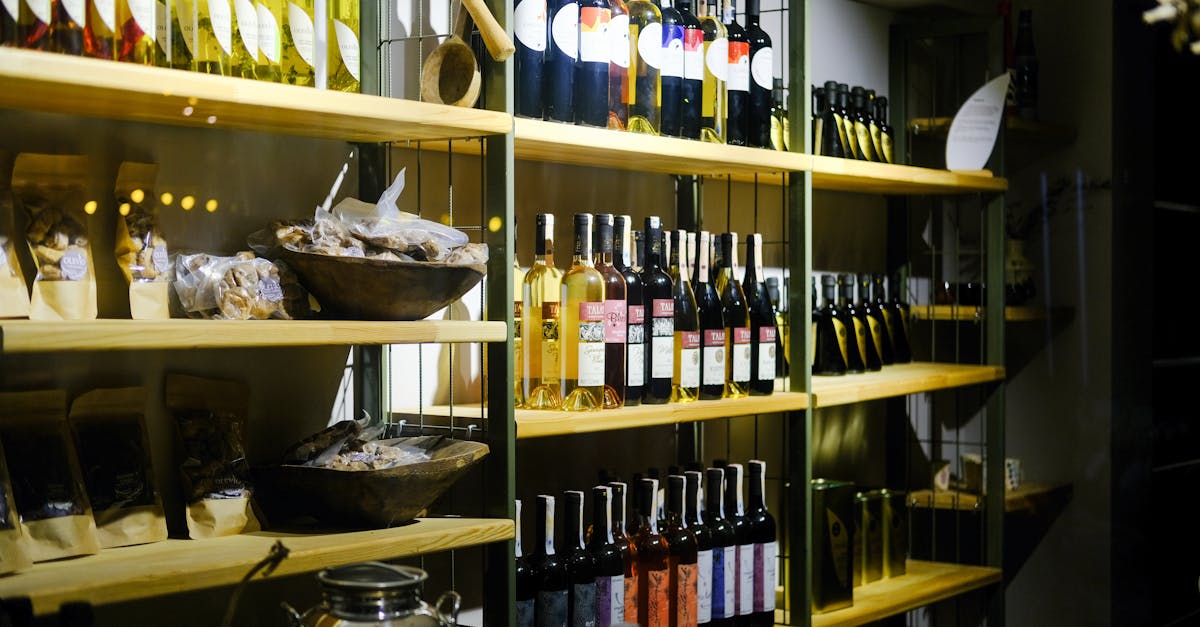
Dedicated wine shops are where the calculus shifts. The range is deeper, and staff can usually tell you what they'd actually buy. For a bottle in the $15–$30 range, the price difference versus a supermarket is often only $2–4, which makes a neighborhood wine merchant who knows their rosé section worth finding and keeping.
Total Wine and similar chain superstores split the difference reasonably well: large selection, moderate prices, and a staff whose knowledge varies sharply by location and by who happens to be working that day. Better than a grocery store, not as reliable as a good independent shop.
Retailer type | Selection depth | Price competitiveness | Staff knowledge |
|---|---|---|---|
Grocery store (Kroger, Whole Foods) | Moderate | Below average | Variable |
Trader Joe's | Narrow | Strong at low end | Limited |
Big-box (Target, Walmart) | Narrow–moderate | Good for known brands | Minimal |
Total Wine / superstore | Wide | Moderate | Inconsistent |
Independent wine shop | Wide | Moderate (near-parity) | Usually strong |
One practical step before driving anywhere: most Total Wine locations and many independents list current inventory on their website or app. A two-minute search tells you whether that specific bottle is on the shelf before you make the trip.
Is rosé wine sweet or dry — and how to tell before you open it
Rosé spans the full spectrum from bone-dry to noticeably sweet, and the label will tell you which — once you know the three places to look. The style you grew up with, or the one a friend handed you at a barbecue, shapes which version you assume is "normal," but there's no single answer.
The most reliable shortcut is geography and color together. Pale salmon-tinted bottles from the south of France — anything carrying a Côtes de Provence AOC designation — are almost always dry, with crisp acidity and no perceptible sweetness. Provence built its reputation on that style. Move to a deeper coral or hot-pink bottle, especially an American one labeled "blush" or "White Zinfandel," and you're almost certainly looking at something off-dry to sweet. White Zinfandel was engineered in the 1970s to carry residual sugar, and that hasn't changed.
The word "blush" on a front label is about as reliable a sweetness signal as you'll find in a wine aisle — producers use it precisely because it softens the expectation of dryness, and no one slaps it on a wine they intend to taste like Provence. A front label that says "dry rosé" is usually telling the truth; it's a selling point. Flip the bottle if the front is ambiguous. Many producers now print residual sugar in grams per liter on the back. The numbers do the work cleanly: under 10 g/L tastes dry to most palates, between 10 and 20 g/L you'll notice a hint of sweetness, and above that it's unambiguously a sweet wine — a useful frame also when comparing rosé against fuller red styles, which this guide to the sweetest types of red wine puts in wider context.
Sparkling rosé introduces one more variable. The sweetness terms on sparkling bottles follow Champagne convention: Brut means dry, Extra Dry (counterintuitively) is slightly off-dry, and Demi-Sec is distinctly sweet. A sparkling Provençal rosé labeled Brut will be as lean and crisp as its still counterpart; a Demi-Sec from the same producer will taste more like dessert.
What a good bottle of rosé actually costs — and where the value sits
A decent bottle of rosé starts around $8 and the ceiling for most drinkers is somewhere around $25 — above that, you're mostly buying Provençal prestige and a prettier bottle. The quality curve is real but flattens quickly, which makes rosé one of the more forgiving categories to shop on a budget.
Under $12 gets you plenty of drinkable options. Sutter Home White Zinfandel sits in nearly every grocery store in the country, and La Vieille Ferme from France's Rhône Valley punches noticeably above its price tag — reliably dry-ish, food-friendly, and around $9 in most markets. Neither will impress a sommelier. For a barbecue or a casual Tuesday, though, they do exactly what you need.
$12–$20 is where the category gets interesting. Spanish garnacha rosés, Sicilian nerello mascalese, and the more accessible Provence labels occupy this band — offering the best complexity-per-dollar of any tier, which is saying something for a category that already over-delivers on value. Miraval sits comfortably here. Several direct competitors to Whispering Angel, including Château Minuty's M de Minuty, land under $18 at most wine shops. If you're exploring rather than just grabbing, this is the tier that rewards it.
$20 and above is dominated by Provençal names: Whispering Angel proper, Château d'Esclans' higher tiers, Domaines Ott. The liquid quality does improve — more texture, cleaner finish, better structure — but the gap between a $17 bottle and a $32 one is narrower than the price suggests. Part of what you're buying is the salmon-pink bottle that photographs well on a table. That's a legitimate reason to purchase it. Just be honest with yourself about which part you're paying for.
Box rosé deserves a mention without apology. Bota Box and Franzia aren't exciting, but the price-per-glass math wins for backyard settings, and the quality is consistent in the way mass-produced things tend to be — predictable, if unremarkable.
One thing worth keeping in mind: cheap rosé hides winemaking flaws better than cheap red does. The light, high-acid profile is less punishing of shortcuts, which means the floor of the category is higher than you might expect.
Rosé wine near me delivery: same-day apps and online ordering explained
If you need rosé within the hour, Uber Eats and Instacart are the two fastest routes — both aggregate inventory from nearby liquor stores and grocers and can deliver in under sixty minutes across most metro areas. Uber Eats absorbed Drizly in 2024, so the dedicated alcohol-delivery tab is gone, but the underlying store network is still there; search for a local wine shop in the app and the rosé selection usually comes up under the store's beer-and-wine section.
Instacart works similarly and often has a slightly wider grocery-store reach, which matters if your nearest liquor retailer has a thin rosé shelf. The catch with both platforms is that they are only as good as local inventory — if you live somewhere that stocks three rosés and none of them interest you, the app just shows you the same three, faster.
That's where Total Wine's shipping option earns its keep. The catalogue runs deep. Deep enough to surface single-vineyard Provençal bottles or obscure Spanish rosados that a suburban grocery store would never think to order, and they ship to most states that permit direct-to-consumer alcohol delivery. Delivery takes a few days rather than an hour, but for a specific bottle you read about, it's a reliable fallback.
⚠️ A note worth checking before you order anything: several states still restrict or outright ban alcohol delivery, and the rules vary more than most people expect — some states allow delivery from licensed retailers but not from apps, others ban home delivery entirely. Pulling up your state's alcohol control board page takes about thirty seconds and prevents a failed order and a refund delay.
One more option that gets overlooked: if you spotted a specific bottle online, call the store directly. Many independent wine shops offer curbside pickup or same-day local delivery without any app involved — and the person who answers can tell you whether it's actually in stock, which is something the apps get wrong more often than they should.
If delivery isn't available in your area and you'd rather go somewhere in person, WhatDrink maintains a venue directory that can help you locate nearby wine bars and shops that carry rosé — a practical alternative when shipping isn't on the table.

Get Your Venue Discovered
List your venue on WhatDrink so people searching for their next drink by style, location and occasion can find you.
List Your VenueWhich rosé wine brands are worth buying in 2026
A few bottles show up reliably well across stores, styles, and price points: Miraval, Gerard Bertrand Côte des Roses, La Vieille Ferme, Sutter Home White Zinfandel, and La Marca Prosecco Rosé. That list spans dry to sweet, still to sparkling, and $7 to $25 — so wherever you land on the spectrum, there's something worth grabbing.
Dry and food-friendly is where Provence-style bottles earn their reputation. Miraval and Gerard Bertrand Côte des Roses — the one with the flower embossed on the bottle base — both sit in the $18–$22 range and carry enough acidity to cut through food rather than clash with it. Acidity is the actual differentiator. Not the label, not the Provence origin, and certainly not the bottle shape, which brings us to Whispering Angel: it's the name that gets mentioned most often in this category, but it's consistently overpriced for what's in the glass, and if you find it on sale under $20 that's fine, but at full retail, Côte des Roses does the same job for less money without the markup that comes attached to a famous silhouette. A rosé with lively acid feels like a meal companion; a flabby one is strictly a porch drink, regardless of what you paid.
Sweet and approachable bottles have a reputation problem they don't fully deserve. Sutter Home White Zinfandel and Beringer White Zinfandel are widely dismissed in wine circles — widely enjoyed everywhere else. Off-dry, low in alcohol, and stocked at nearly every grocery store in the country, which counts for something when you're shopping at 6 p.m. on a Wednesday and don't want to drive to a specialist. For a reader who finds bone-dry Provence rosé too austere, these are a completely reasonable starting point, and there's no shame in that being the destination rather than a stepping stone toward something pricier.
Sparkling rosé under $20 is a category where Target and Walmart actually deliver. La Marca Prosecco Rosé and Jaume Serra Cristalino are both reliable finds in that price window, with enough effervescence and fruit to work at celebrations without requiring any particular effort to track down.
The value pick that earns the most attention in this section is La Vieille Ferme Rosé. It regularly comes in under $10, it's dry in the straightforward sense — not off-dry dressed up with Provence packaging — and it outperforms most bottles in the $12–$16 range by a margin that becomes obvious the first time you taste them side by side. Carries its own weight. If the store near you stocks it, start there before comparing anything else.
The dividing line between a food-friendly rosé and a pure patio sipper is acidity — not price, not origin, not whether the label has French on it. That's the variable worth paying attention to when you're scanning a shelf.
What food pairs well with rosé wine
The pairing depends almost entirely on the style of rosé, not on some catch-all rule — and ignoring that distinction is how you end up with a mouthful of sweet blush wine next to a grilled salmon fillet, which is as unpleasant as it sounds. Match the wine's sweetness and acidity to what's on the table, and the logic becomes straightforward.
Dry Provençal rosé — the pale, bone-dry kind from the south of France — pairs best with grilled fish, shellfish, and light pasta dishes dressed in olive oil or cream. The high acidity is doing the actual work: it cuts through fat and salt the way a squeeze of lemon does, which is why a glass of Bandol alongside moules marinières feels so right. The wine isn't neutral. It's actively cleansing the palate between bites, and that distinction matters when you're building a menu around it.
Off-dry American rosé — slightly sweeter, usually a deeper pink — is the one to reach for with spicy food. Thai larb or fish tacos with chipotle crema: the residual sugar absorbs the burn. Most buying guides skip this pairing, which is a shame, because it's one of the more practical uses for a style that otherwise gets dismissed as a gateway drink — and it works precisely because sweetness and heat are solving each other's problems while the wine's fruit keeps the whole thing from feeling muddled.
Sparkling rosé earns its place with charcuterie, soft washed-rind cheeses, and fried food. Bubbles plus acidity cut through richness in a way still wine can't, which makes a sparkling rosé with a cheese board or a plate of fried chicken more of a strategy than an indulgence.
Sweet blush wine (White Zinfandel, Moscato rosé) works with fresh fruit, light desserts, or brunch dishes precisely because the food isn't competing. Strawberry shortcake, a fruit tart, pancakes with syrup — the sweetness mirrors rather than clashes. Simple logic, reliably satisfied.
Where rosé falls flat: red meat, aged hard cheeses, and anything richly braised. The wine gets lost against those flavors, or turns metallic. "Goes with everything" is marketing.
How to find a winery or wine bar near you that pours rosé
For an immediate outing, Google Maps searched with "wine bar near me" filtered by "open now" returns results faster than any dedicated app. That's your starting point. If you're within an hour of a wine region, tasting rooms are a different proposition entirely — estate rosé that never makes it to retail shelves is poured there routinely, and a Saturday trip often costs less than a restaurant bottle.
For pre-trip research, WhatDrink's venue directory lets you narrow by neighborhood and occasion before leaving the house, though its coverage is stronger in some cities than others, so cross-check with Maps if you're somewhere smaller.
Two things worth asking once you arrive: at a tasting room, ask about residual sugar before committing to a flight — staff know the number and rarely volunteer it unprompted. At a restaurant, ordering "a dry rosé" rather than just "a rosé" cuts through menus that describe nothing useful about style.
FAQ
Is rosé wine sweet or dry?
Most rosé is dry — Provence-style bottles from France, Spanish Garnacha rosados, and the majority of Italian rosatos all finish with little to no residual sugar. Sweet rosés do exist (White Zinfandel is the most common example in American supermarkets), but they're the minority; if the label says "Provence," "rosado," or names a dry grape like Grenache or Pinot Noir without any softening language, you're almost certainly holding something dry and crisp.
What is a good brand of rosé wine for under $15?
Whispering Angel is the prestige name most people reach for, but at $25+ it clears the $15 ceiling comfortably — a better pick at that price is Miraval Studio Rosé (usually $13–15 at Total Wine or Trader Joe's), which delivers genuine Provence character without the markup. Fleur de Mer and La Vieille Ferme are two other widely distributed bottles that routinely land under $15 and drink considerably above their price.
Can I get rosé wine delivered the same day?
Yes — Drizly, Instacart, and DoorDash Alcohol all offer same-day or within-the-hour rosé delivery in most mid-size and large cities, pulling inventory from local liquor stores and supermarkets near you. Availability depends on your zip code and local alcohol delivery laws, so if one app shows nothing, try a second before assuming delivery isn't possible in your area.
What food goes well with rosé wine?
Dry rosé is one of the more forgiving food wines precisely because it sits between white and red — it handles grilled fish and seafood, charcuterie, soft cheeses, and light pasta dishes equally well. Slightly fruitier styles work alongside spiced food (think Moroccan chicken or a moderately spiced curry) where a crisp white would get overwhelmed and a red would clash.
Which rosé to buy or where to drink it, based on what you actually want
If you already know the style you're after, the decision narrows quickly. For a dry, still Provence-style rosé under $20, a dedicated wine shop or Total Wine is your most reliable stop — both stock Miraval Studio and Fleur de Mer with enough consistency that you won't arrive to find them sold out. For a sweeter still rosé, any supermarket wine aisle will have White Zinfandel or a domestic blush year-round. Sparkling rosé is different. Champagne, Crémant, or a Cava rosado deserves a proper wine shop or specialty retailer, because supermarket sparkling selections are thin and turnover is slow enough that freshness becomes a real question.
The under-$15 bracket rewards knowing which store to walk into. Trader Joe's carries its own private-label rosés and rotates in a handful of Provence imports at prices that are hard to match. Total Wine gives you range — 40 or 50 rosés on the shelf at any given time — so it's the right stop if you want to compare before committing, and the staff can usually point you toward whatever just came in. A neighborhood wine shop is where you go when you want a recommendation rather than a selection, especially for anything above $25. Different stores, different jobs.
But the store-and-bottle search only applies if drinking at home is actually the goal. Pull up Google Maps and search "wine bar near me" or "restaurant with rosé wine," filter by outdoor seating if the weather cooperates, and look at recent reviews for mentions of the wine list — that sequence takes about three minutes and replaces an hour of bottle research. Yelp's filter for "good for wine bars" surfaces dedicated pours rather than restaurants where wine is an afterthought. Many wineries with tasting rooms also pour rosé by the glass and don't require a reservation; searching "winery tasting room near me" on a weekend afternoon often turns up options within 30 minutes that most locals have never tried. The glass-in-hand experience and the bottle-at-home experience call for completely different searches, and conflating them is how people end up overcomplicating a simple errand.
The fork is straightforward: bottle in hand at home, walk into a wine shop and ask for a dry Provence rosé around $15 — Miraval Studio or Fleur de Mer by name if they need a starting point. Glass in hand somewhere else entirely, skip the store search and look for the venue instead.