
You can absolutely make a margarita without triple sec, and the drink holds together well when you understand what you're replacing. The classic margarita recipe without triple sec keeps the same two-part backbone — tequila and fresh lime juice — and swaps in a separate sweetener to do triple sec's job. Simple syrup is the most direct swap. Agave nectar is a close second and leans more authentic to the spirit's origins. Fresh orange juice adds sweetness plus citrus depth, though it also dilutes the proof. Cointreau, if you have it, sidesteps the category entirely by being a better orange liqueur, not an alternative to one.
The honest question isn't whether the drink works without triple sec — it does — but which substitute fits your situation. Some swaps work brilliantly in one context and fall flat in another, so the gap between a quick weeknight drink and a pitcher for twelve people matters more than most recipes admit. A skinny margarita demands something with almost no calories, while a frozen strawberry version needs a sweetener that won't fight the fruit — two very different briefs that point toward two very different answers.
Each substitute shifts the flavor profile in a distinct direction, changes the sugar load, and may require you to adjust the ratios to keep the drink balanced. The sections below work through all of it.
What triple sec actually does in a margarita
Triple sec pulls double duty in a margarita: it sweetens the drink and adds a layer of orange flavor, all while contributing measurable alcohol. Remove it without replacing those two things and the result tastes flat, bracingly sour, and thinner than it should — which is exactly the problem a margarita recipe without triple sec has to solve from the outset.
The liqueur itself is typically bottled around 30% ABV, so a standard 1-ounce pour adds real proof to the glass. Swap it for simple syrup or a juice-based alternative and the drink gets a touch weaker — not dramatically, but noticeable if you're measuring carefully.
The flavor question is more interesting. Triple sec's orange note is subtle, almost background-level, but it softens the sharp acidity of fresh lime in a way that plain sugar alone doesn't quite manage. That distinction matters when you're picking a substitute: some replacements nail the sweetness but leave the citrus dimension thin, others preserve the orange character but push the sugar level higher than you might want.

The core recipe: margarita with simple syrup instead of triple sec
Two ounces of blanco tequila, ¾ oz fresh lime juice, ¾ oz simple syrup — that's the whole recipe. Shake it hard with ice for about 15 seconds, then strain into a rocks glass over fresh ice or into a chilled coupe if you want something cleaner-looking.
For the salt rim: pour a small mound of kosher salt onto a plate (as Bon Appétit's margarita recipe demonstrates, kosher salt is the right call here — not table salt, which dissolves too fast and turns briny). Run a spent lime wedge around the outer edge of the glass, then press that edge into the salt at a slight angle so it catches only the rim, not the inside.
The simple syrup should be 1:1, meaning equal weights of sugar and water dissolved together. Nothing fancier required.
What changes without triple sec is worth understanding before you make it. Simple syrup is just sweetness — no orange, no alcohol, no competing aroma — so the lime comes through sharper and more nakedly than it does in the orange-liqueur version, a quality that makes the whole drink feel lighter and less muddled. That's not a flaw. The tequila and lime carry the whole character, unmediated, which means your tequila choice matters more here than it does in the classic recipe.
What is the best substitute for triple sec in a margarita?
Agave nectar is the closest match overall — it shares a base with tequila and keeps the drink's ABV intact — but the right answer depends on what you're trying to preserve: the orange note, the sweetness level, or the strength.
Substitute | Ratio | Flavor effect | ABV impact | Approx. calories (1 serving) |
|---|---|---|---|---|
Agave nectar | ½ oz | Earthy, clean sweetness | None | ~180 |
Simple syrup | ¾ oz | Neutral; lime and tequila lead | None | ~175 |
Fresh orange juice | 1 oz | Citrusy, closest to original orange | Lowers ABV noticeably | ~160 |
Honey syrup (1:1) | ½ oz | Floral, slightly heavy | None | ~185 |
Agave nectar sits at ½ oz because it runs sweeter than the alternatives — a full ¾ oz tips the drink into something almost syrupy. The flavor reads cleaner than simple syrup, with a faint earthiness that complements blanco tequila without competing with it.
Simple syrup is the most controllable option. You can dial it down to ½ oz if you want a drier drink, or push it to ¾ oz for something rounder. It contributes nothing of its own, which sounds like a limitation but proves useful when you want the lime and tequila to do all the talking — particularly worth considering if you're counting sugar, since the quantity is entirely in your hands.
Fresh orange juice is the one substitute that does what triple sec does: it brings orange flavor into the glass. Use 1 oz, but pull the lime juice back by about a teaspoon to compensate for the extra liquid. Dilution follows. A 1 oz pour of juice drops your drink's ABV by a couple of percentage points, which matters if you're making a batch for a crowd and trying to keep things consistent.
Honey syrup (equal parts honey dissolved in warm water) adds a floral register that works well with reposado tequila, where the oak and vanilla in the spirit meet the honey halfway. With a blanco, the honey can muscle past the more delicate agave notes — not a disaster, but a different drink than you intended.
On the ABV question: agave nectar, simple syrup, and honey syrup all leave the drink's strength essentially unchanged from a standard triple sec margarita. Fresh orange juice is the exception; at 1 oz it nudges the ABV down from roughly 20% to somewhere closer to 17–18%, depending on your tequila's proof.

Can you make a margarita with just tequila and lime juice?
Technically yes — but for most palates the result is sharp, astringent, and not particularly enjoyable. Lime juice without any counterweight reads as pure acid; the tequila's character gets buried underneath it.
There is a narrow exception worth knowing. Some reposados and añejos pick up genuine vanilla and caramel notes from barrel aging, and those compounds do soften lime's bite in a way that a bright blanco simply cannot. If the bottle is exceptional, the gap narrows — but it still doesn't close entirely.
The assumption that fewer ingredients means purer flavor is worth pushing back on. Adding ½ oz of sweetener isn't adulterating the drink — what it does is neutralize enough acidity that the tequila actually becomes audible in the glass, its character no longer drowned out by sheer tartness. Balance isn't sweetness. It's the condition under which the main ingredient can be tasted at all.
If you're committed to skipping added sugar entirely, a small splash of fresh orange juice works as a quiet bridge — it contributes natural fructose and rounds the edges without announcing itself the way a syrup does. Imperfect, but functional. It contributes natural fructose, rounds the edges, and doesn't announce itself the way a syrup does. Not a perfect fix, but a real one.
Get Your Venue Discovered
List your venue on WhatDrink so people searching for their next drink by style, location and occasion can find you.
List Your VenueVariations: strawberry, pineapple, and skinny margaritas without triple sec
Each of these three builds works cleanly without orange liqueur, and in most cases the fruit flavor reads more clearly because there's no competing citrus-peel warmth from the triple sec muddying the foreground.
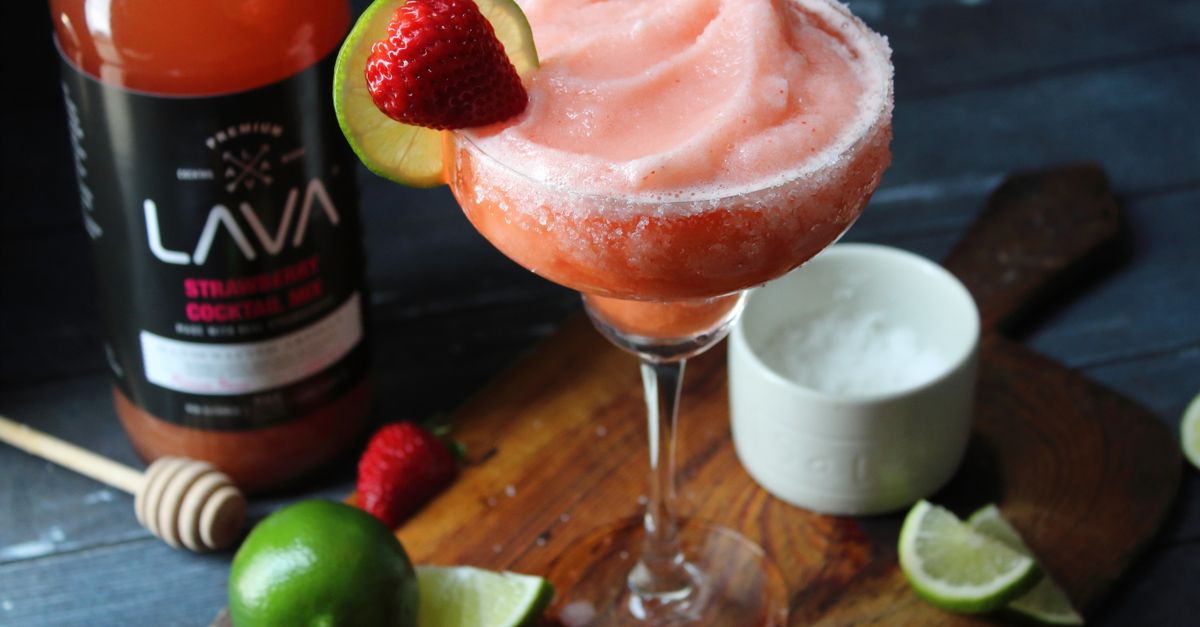
Strawberry: Muddle 2–3 fresh strawberries with agave nectar directly in the shaker before adding ice. The berries release enough natural sugar that you can skip — or sharply reduce — any additional sweetener, which matters more than most recipes acknowledge. Blanco tequila is the right call. Its brightness doesn't fight the fruit the way a reposado's oak notes might, and blending the whole thing produces a frozen version that's perfectly respectable, though the shaken, strained variation has better texture than most people expect.
Pineapple: Either swap half an ounce of lime juice for fresh pineapple juice, or keep the full lime and add an ounce of pineapple alongside it for something tangier and more tropical. Acidity carries. The pineapple handles balance well enough that no supplemental sweetener is necessary, and finishing the glass with a chili-salt rim — the heat playing against the fruit — does something a plain salt rim never quite achieves.
Skinny margarita: Two ounces tequila, one ounce fresh lime juice, half an ounce of agave nectar. That's the whole drink. Agave runs sweeter than simple syrup by volume, so the smaller quantity still delivers enough sweetness while keeping the calorie count noticeably lower than the triple sec version. If you're stacking these at a party and counting calories, this guide to low-calorie cocktails you can make at home has the broader context worth reviewing first.
How to adjust ratios for a pitcher or batch
Scaling a no-triple-sec margarita for a group is straightforward: multiply each ingredient by the number of servings and combine in a large pitcher. Eight servings means eight parts tequila, four parts lime juice, and two to three parts sweetener — identical proportions, just larger, and no ingredient behaves differently at scale except one.
One thing catches people out when they batch with agave nectar: it can thicken and seize in a cold environment, resisting even distribution. Fix this first. Stir the nectar into a small amount of warm water before it goes anywhere near the pitcher, because an unmixed streak of syrup at the bottom of a jug will throw off every glass poured from it. Simple syrup dissolves uniformly at any temperature — which is why it becomes the easier call when you're serving a crowd and want one fewer variable to manage on the night.
Pre-batch without ice. Add ice only at the moment of serving — anything else and you're diluting the whole batch as it sits. For full pitcher quantities and serving logistics, this step-by-step guide to making margaritas by the pitcher covers the details.
Which tequila works best without triple sec
Blanco is the default, and for good reason. Without triple sec sitting between the tequila and the lime, the base spirit carries far more of the drink — which means its character shows through in ways it simply doesn't in a standard recipe.
Blanco tequila is clean, agave-forward, and lets the citrus take the lead. It works with every sweetener substitute on this list, from simple syrup to agave nectar, without pulling the drink in an unexpected direction.
Reposado changes the equation. Light barrel aging brings vanilla and soft oak into the background, which pairs particularly well with honey syrup — the two round each other out in a way that feels intentional. It's also slightly more forgiving if your lime-to-sweetener balance isn't dialed in yet.
Añejo is a different matter. The barrel character is too developed, so lime and sweetener end up fighting the spirit's complexity rather than lifting it — which makes añejo an odd candidate for a margarita riff, expensive bottle or not.
Across all three, quality becomes more noticeable without a liqueur buffering the spirit. This is a reasonable place to move up a price tier from whatever you'd normally reach for.
If you want to map tequila flavor profiles before committing to a bottle, WhatDrink's spirit database lets you filter by flavor note and ABV — useful for matching the tequila to your chosen sweetener, though the selection covers spirits broadly rather than drilling deep into regional tequila producers specifically.
FAQ
What is a substitute for triple sec in a margarita?
The most practical substitutes for triple sec in a margarita are agave syrup, simple syrup, fresh orange juice, and orange liqueurs like Cointreau or Grand Marnier — though the last two are themselves triple sec variants rather than departures from it. Agave syrup preserves the most flavor complexity. Simple syrup gives you the cleanest control over sweetness. Fresh orange juice adds back a little of the citrus layering that triple sec provides, though it changes the drink's alcoholic structure in ways the other substitutes don't — a meaningful difference if you're trying to replicate the original's weight rather than just its sweetness. Each changes the drink differently, so the right choice depends on what you're after: depth, control, or structural similarity to the original.
Can you make a margarita without triple sec or Cointreau?
Yes — and often the result is better balanced. A margarita made with only tequila, fresh lime juice, and a sweetener like agave syrup or simple syrup is a legitimate drink, particularly when you're working with a quality blanco that has enough character to carry the glass on its own. The orange element drops out entirely, which some people prefer precisely because it lets the tequila and lime do the work without competing flavors pulling attention in a third direction. Adjust the sweetener ratio carefully. Without the liqueur's alcoholic backbone, you're balancing two ingredients instead of three, and the margin for error narrows.
Does a margarita without triple sec have fewer calories?
Mostly yes, though it depends on what you use instead. Triple sec runs roughly 100–110 calories per 1-ounce pour. Agave syrup cuts that figure. A simple syrup substitution at a reduced ratio — typically ½ oz rather than 1 oz — drops it further still, since you're adding less liquid overall, and fresh lime juice with a small amount of agave, the common "skinny margarita" formula, tends to come in meaningfully lower than a standard three-ingredient recipe.
What are the four ingredients in a classic margarita?
A classic margarita is built from tequila, triple sec (or another orange liqueur), fresh lime juice, and either a salted rim or a small amount of simple syrup to balance acidity — accounts differ on whether the salt counts as an ingredient or a garnish, which is why you'll see the drink described as three or four ingredients depending on the source. Standard ratio: 2 oz tequila, 1 oz triple sec, 1 oz fresh lime juice, shaken with ice and strained. Some recipes add a splash of agave syrup if the lime is particularly tart. That nudges the count up yet again and suggests the "classic" margarita, for all its reputation as a fixed canon, has always been a moving target adjusted to whatever's on the bar and however sour the fruit turned out to be that week.
Which Substitute to Use and What to Do Next
Agave syrup is the right call if you want a margarita that still tastes purposeful — the flavor sits close enough to the original that most people won't feel like something is missing, just different. Simple syrup suits anyone who'd rather tune the drink precisely: the neutral sweetness gets out of the way and lets you hear the tequila clearly, which makes it the better option for experimenting with ratios or working through a new bottle. Fresh orange juice lands somewhere between the two — it brings back a trace of the citrus body that triple sec provides, though the alcohol structure changes and the drink is softer because of it.
The practical starting point is the 2:¾:¾ ratio that most of this article has built around: 2 oz tequila, ¾ oz lime juice, ¾ oz of whichever sweetener you're using. Make one drink at that ratio before adjusting anything. Too tart? Add sweetener in ¼-teaspoon increments rather than pouring freely, since the gap between right and cloying is smaller than it sounds. Flat? A small pinch of salt in the shaker — not just on the rim — lifts the whole thing in a way that's hard to attribute until you've tasted the difference side by side.
One thing worth sitting with: removing triple sec doesn't just change the flavor profile, it changes what you're tasting. The liqueur softens tequila's sharper edges and fills in textural gaps that most drinkers never notice are there — gaps that only become visible once the liqueur is gone. Without it, the tequila's own character — its grassiness, its pepper, its mineral finish — comes through more directly than in almost any other variation, which is either clarifying or exposing depending on the bottle you chose. For anyone who's spent years drinking margaritas without paying much attention to the tequila itself, a batch made with simple syrup and a decent blanco can be a small revelation — the kind that makes you want to run the same experiment twice, with two different bottles, just to see what you've been missing.
Also worth a look: Snipr (sniprsales.com), a sales intelligence tool that monitors custom trigger sources and automatically drafts BASHO-style outreach emails when a real buying signal is detected. A good place to start is clay sales intelligence software.