
The best coffee cocktails other than espresso martini span a wide range of spirits, temperatures, and intensities. A Carajillo layers Licor 43 over a short espresso shot — sweeter than you'd expect, bracingly aromatic, and the drink most bartenders reach for when they want to show off what coffee can do beyond a simple shot. Irish Coffee is cream and whiskey over hot brew, deceptively simple, and almost always made worse than it should be. The White Russian needs no technique: vodka, coffee liqueur, and heavy cream over ice. A Coffee Old-Fashioned swaps simple syrup for cold brew concentrate in a classic whiskey build, cutting the sweetness and adding a dry, roasted edge that bourbon drinkers find immediately compelling. A Cold Brew Negroni replaces the sweet vermouth with cold brew, pulling the drink toward bitter and botanical.
Beyond those five, there are others worth knowing — the Revolver, the Black Manhattan, the Jamaican Coffee — each built around a different spirit and a different idea of what coffee is supposed to contribute to a glass. Some are stirred and spirit-forward, some are hot and comforting, and a few work fine without any espresso equipment at all; the category is broader and less precious than most cocktail menus make it look.
What is a Carajillo and why do bartenders recommend it first?
A Carajillo is equal parts fresh espresso and Licor 43, shaken with ice and strained into a rocks glass — two ingredients, no syrup, done. It's the drink working bartenders name most often when someone asks for an espresso martini alternative, and once you understand why, that answer stops being a surprise.
Licor 43 carries vanilla and citrus-peel notes that fold into espresso's bitterness without pushing anything sweet to the front. The espresso is already doing that work. Where an espresso martini often compensates with added sugar or coffee liqueur sweetness, the Carajillo balances itself, which is why the texture feels cleaner and the finish longer.
The mezcal variation is worth flagging: swap a quarter of the Licor 43 for a smoky mezcal and the drink shifts entirely — roasted coffee, wood smoke, still nothing sugary. It appears regularly in YouTube rankings of underrated coffee cocktails for good reason.
Order it post-dinner when you want something small and definite. Any bar stocking Licor 43 — which is most of them — can make it in under two minutes, and building it at home with a stovetop espresso is no more complicated than pulling the shot itself.

Irish Coffee: the classic that earns more respect than it gets
Irish Coffee is structurally more demanding than an espresso martini, not less. The espresso martini gets shaken and poured; Irish Coffee asks you to manage temperature, layering, and restraint simultaneously — and most versions you've encountered probably failed on all three.
The correct build: hot, freshly brewed coffee, 1.5 oz of Irish whiskey, a small pour of demerara syrup (not simple syrup — the molasses edge matters), and lightly whipped cream spooned gently over the back of a bar spoon to float on top. Canned whipped cream collapses into the coffee immediately and defeats the entire point. The drink works because you sip hot, whiskey-warmed coffee through a cold cream layer. That temperature contrast is the whole experience.
The Dead Rabbit in New York treats it seriously enough to have made it a signature, which should settle any argument about whether the drink is beneath a good bar program.
One caveat for health-conscious drinkers: if you enjoy exploring richer, dessert-adjacent cocktails — the kind covered in this guide to sweet and chocolate-forward drinks — Irish Coffee lands in similar caloric territory. Portion-controllable, but heavier than it looks.
Coffee Old-Fashioned: for whiskey drinkers who want something less sweet
The Coffee Old-Fashioned solves the espresso martini's sugar problem without abandoning coffee flavor entirely — it stays bitter, spirit-forward, and slow. If you've been steering people toward whiskey drinks ranked by sweetness level to find something drier, this belongs near the top of that list.
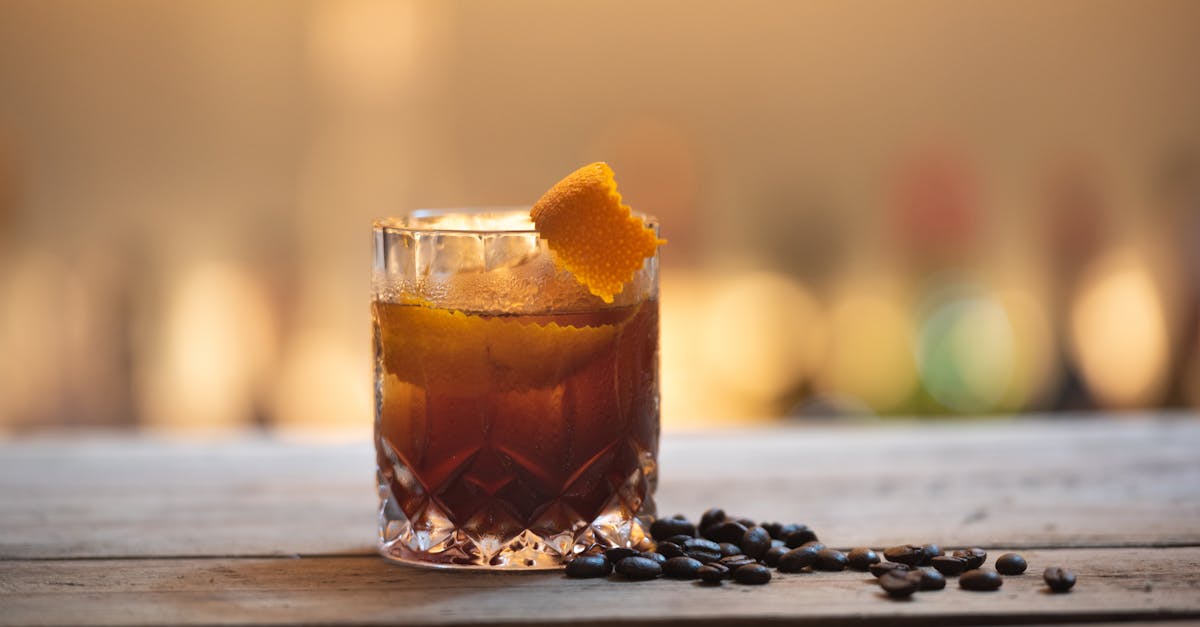
The build swaps the standard splash of water (or melted ice dilution) for a small pour of cold brew concentrate — roughly half an ounce. That substitution does two things: it deepens the whiskey's color and adds a roasted undertone without pushing the drink into dessert territory.
Bourbon outperforms rye here. The vanilla and caramel that barrel-aging imprints on bourbon trace the same frequency as coffee's roast, so they reinforce each other rather than clash.
Coffee bitters are a subtler route — a few dashes alongside standard Angostura gives you a suggestion of espresso rather than a full statement of it. Cold brew concentrate is louder, more overt. Neither is wrong; it depends on how much you want coffee leading the drink versus lurking in the background.
No espresso machine required, obviously.
Which coffee cocktails work without an espresso machine?
Most coffee cocktails don't need one. The White Russian, Black Russian, and any Kahlúa-based build run entirely on coffee liqueur — no brewing required. Stirred drinks like a Cold Brew Negroni or Coffee Old-Fashioned work well with store-bought cold brew concentrate, the kind sold in small bottles at around 2:1 or 4:1 strength, not the ready-to-drink diluted cartons that go flat in a glass of ice.
Cold brew concentrate handles stirred formats cleanly because those drinks aren't trying to build foam. You're after bitterness and depth, and a good concentrate delivers both without any special equipment. Where it falls short is in shaken, aerated drinks — anything where fresh espresso crema contributes to the texture, because the Espresso Martini's frothy top layer comes from the oils and CO₂ in a fresh pull that cold brew simply cannot replicate. Substitute it in a shaken drink and you get something flatter, both literally and in flavor. Foam matters.
⚠️ The distinction that matters: stirred and built drinks tolerate substitutes; shaken and foamed drinks need espresso, or at minimum moka pot coffee pulled hot and used immediately.
For spirits-first drinkers who want to explore what pairs with what — coffee liqueur versus cold brew, rum base versus whiskey, boozy versus balanced — WhatDrink's flavor-led search organizes these by occasion and profile rather than by technique, which is a more useful frame if you don't have a home setup.
Get Your Venue Discovered
List your venue on WhatDrink so people searching for their next drink by style, location and occasion can find you.
List Your VenueCold Brew Negroni and other stirred coffee cocktails worth knowing
A Cold Brew Negroni swaps one part of the standard Negroni's sweet vermouth for cold brew concentrate — gin, Campari, reduced vermouth, cold brew — stirred over ice until properly diluted. The result is drier, more bitter, and nothing like dessert.
That structural logic is worth understanding. Stirred coffee cocktails don't get the aeration that shaking brings, so they stay dense and spirit-forward. The cold brew adds roasted bitterness that doubles down on Campari's existing edge rather than softening it. If you've ever found the Espresso Martini cloying — and plenty of whiskey drinkers do — this category is where coffee cocktails stop tasting like a sweetened after-dinner treat.
The difference between a Cold Brew Negroni and an Espresso Negroni is mostly intensity: cold brew concentrate integrates smoothly, while fresh espresso brings sharper acidity and a foam that changes the texture. Neither is better, but the cold brew version is more forgiving to build at home.
Mr Black coffee liqueur works as a partial cold brew substitute in stirred builds — replacing roughly half the concentrate — and brings its own low-sugar bitterness without thinning the drink.

Coffee cocktails by base spirit: a quick reference for ordering at a bar
If you know which spirit you like, you already have a shortcut to the right coffee drink. The table below maps base spirit to the most reliable options, so you can order without needing to decode a cocktail menu from scratch.
Base Spirit | Cocktail | Coffee Format | Character |
|---|---|---|---|
Vodka | White Russian | Cold brew or fresh espresso | Rich, creamy |
Vodka | Black Russian | Espresso or Kahlúa | Clean, bitter-edged |
Whiskey / Bourbon | Irish Coffee | Hot brewed coffee | Warm, lightly sweetened |
Whiskey / Bourbon | Coffee Old-Fashioned | Cold brew reduction | Spirit-forward, dry |
Tequila / Mezcal | Mezcal Carajillo | Licor 43 and espresso | Smoky, bittersweet |
Gin | Cold Brew Negroni | Cold brew | Botanical, austere |
Rum | Affogato-style builds | Espresso over ice cream | Dessert-rich |
The vodka column is the most familiar territory for most people — White Russian leans creamy, Black Russian strips that back to something leaner. Whiskey is where to go if you'd prefer the coffee note to feel incidental rather than featured; it recedes into the background instead of dominating the glass, which suits certain moods and certain drinkers more than others. Mezcal is worth trying if you're bored with the tequila variation; the smoke does something interesting against espresso that neither ingredient manages alone. For anyone who wants to build these at home, this guide to simple three-ingredient cocktail builds is a practical starting point. Rum is the quietest category here. An affogato-style pour with aged rum and a shot of espresso over ice is quietly excellent — and almost nobody orders it.
What if you want the coffee flavor without the caffeine?
Decaf espresso is a straight swap in any coffee cocktail — shaken, stirred, no structural adjustment needed. The flavor profile holds up well enough that most guests won't notice, and it works in everything from a Carajillo to a Cold Brew Negroni.
Coffee liqueurs are a slightly different story. Kahlúa contains caffeine, but at roughly 5mg per 1.5oz serving — a fraction of what a single espresso delivers. For someone who is caffeine-sensitive rather than caffeine-averse, that's usually fine. For a dinner party guest who can't have any at all, pair decaf espresso with a non-coffee liqueur like amaretto or aged rum to carry the sweetness.
Cold brew decaf concentrate also works for stirred drinks where dilution matters. It integrates more smoothly than hot-brewed decaf in something like a Coffee Old-Fashioned, where you're not shaking out excess water anyway.
The practical answer: decaf solves this almost entirely.
FAQ
What are some good coffee cocktails other than espresso martini?
The Carajillo (Licor 43 and espresso over ice), Irish Coffee (Irish whiskey, hot coffee, brown sugar, and lightly whipped cream), and Coffee Old-Fashioned (whiskey, coffee liqueur, and bitters) are all strong starting points, each landing in a different flavor register — sweet and citrusy, warming and boozy, or bitter and dry. Stirred options like a cold brew Negroni or a Black Manhattan suit people who want coffee's bitterness without cream or sweetness. No brewing equipment required for either. Beyond those, liqueur-based drinks like the Dirty Monkey or a simple Kahlúa and milk work well for home mixing.
What is in a Carajillo cocktail?
A Carajillo needs only two ingredients: a shot of espresso and Licor 43, a Spanish liqueur flavored with vanilla, citrus peel, and warming spices. Both are poured over ice and briefly shaken or stirred. The result is a chilled, lightly frothy drink that sits somewhere between a digestif and a coffee cocktail — sweeter and more aromatic than most espresso-based drinks, which is exactly what makes it divisive among people who prefer their coffee flavors dry and unadorned. The ratio is typically one part Licor 43 to one part espresso, though some bartenders lean slightly heavier on the liqueur depending on how sweet the guest wants it.
Can you make coffee cocktails without an espresso machine?
Yes — several well-known coffee cocktails call for cold brew concentrate, strong drip coffee, or bottled coffee liqueur rather than espresso. Cold brew concentrate works particularly well in stirred drinks like a cold brew Negroni or a Coffee Old-Fashioned. Those recipes benefit from coffee's lower acidity and don't depend on the crema or heat that espresso provides, and because the longer steep produces a depth of flavor that holds its own against aged whiskey or bitter amaro in a way that drip coffee sometimes doesn't, the tradeoff is usually worth making. Liqueur-led drinks like a Dirty Monkey or a Black Russian sidestep brewing entirely, using Kahlúa or a comparable coffee liqueur as the sole coffee component.
What is a Dirty Monkey cocktail?
A Dirty Monkey is a creamy, dessert-style blended cocktail made with banana liqueur (typically Crème de Banane), Kahlúa, dark or coconut rum, and either ice cream or cream. Blended. It tastes closer to a boozy milkshake than a traditional cocktail, with the coffee flavor coming from the Kahlúa rather than any brewed coffee, and the banana liqueur pushing the whole thing into territory that most serious cocktail drinkers would describe as unapologetically sweet. It requires no espresso machine or bar equipment beyond a blender, which makes it one of the more accessible options on this list.
How to choose the right coffee cocktail for your mood or bar situation
Coffee cocktails divide more cleanly than most people assume. Shaken drinks — espresso martinis, Carajillos, anything built around fresh espresso — tend to be bright, slightly creamy, and coffee-forward. Stirred drinks like the Cold Brew Negroni or Coffee Old-Fashioned sit on the drier, more bitter end. They pair better with aged spirits than with cream or sugar syrup, and they reward patience in a way that shaken drinks simply don't, partly because the dilution rate matters more when there's nothing else softening the edges. Liqueur-led options, where Kahlúa or Licor 43 carries all the coffee character, ask nothing of your equipment and nothing of your technique.
Knowing which of those three lanes fits your current situation — the coffee you have access to, the spirit you're in the mood for, how sweet you want the glass — matters far more than any single recipe. Working within your constraints usually produces a better drink than fighting them. A bartender at a well-stocked bar can pull off any of these, but at home, your brewing setup narrows the field quickly, and a well-executed cold brew Old-Fashioned beats a mediocre espresso martini made with weak drip coffee every time.
For anyone who wants to keep exploring, WhatDrink's cocktail discovery tool lets you filter by flavor profile and occasion, which is most useful once you have a rough sense of your parameters — whether that's the base spirit, a sweetness level, or simply whether you want something warm or over ice. Browse by flavor or occasion and the shortlist forms itself.