Miller Lite's alcohol content sits at 4.2% ABV, making it a mid-range American light lager brewed by Molson Coors. A standard 12 oz serving delivers 96 calories and roughly 11.8 grams of pure alcohol — numbers that matter whether you're counting calories, pacing yourself across a night out, or just trying to understand what you're actually drinking. That's the complete picture.
For context, that 4.2% places Miller Lite comfortably in the mainstream light lager range — lower than most standard American lagers, which typically run closer to 5%, but meaningfully stronger than something like Miller64 Extra Light, which clocks in at 2.8% ABV and 64 calories. The gap between those two products illustrates just how much variation the "light beer" label can obscure.
The rest of what follows breaks down how that 4.2% ABV compares to Bud Light, Coors Light, and Michelob Ultra, what it means for how quickly alcohol enters your system, and how the numbers shift — or don't — across a draft pour versus a can.
What is the ABV of Miller Lite and what does that number mean?
Miller Lite has an alcohol by volume of 4.2%, meaning every 100 ml of beer contains 4.2 ml of pure ethanol. That's the number printed on the can, but the practical figure matters more: a standard 12 oz (355 ml) serving delivers roughly 11.8 grams of actual alcohol.
To put that in context, the US government's definition of a "standard drink" is 14 grams of pure alcohol — the amount typically found in a 12 oz beer at 5% ABV, a 5 oz glass of wine, or a 1.5 oz shot of 80-proof spirits. One Miller Lite clocks in at about 84% of that threshold. Close, but not equivalent. Two cans, and you've already exceeded one and a half standard drinks by that measure — which matters more than most people carrying a cold one out of a cooler ever stop to consider, especially when "light beer" implies something closer to negligible.
ABV itself is straightforward to calculate: multiply the drink's volume by the percentage, then multiply by ethanol's density (roughly 0.789 g/ml), giving you 355 × 0.042 × 0.789 ≈ 11.8 grams for a single 12 oz Miller Lite. The math is simple. What gets overlooked is how quickly those fractions of a standard drink accumulate across an evening of what feels like moderate drinking.
One small caveat: the 4.2% figure is measured at packaging, and there's naturally some batch-to-batch variation in any brewed product. BeerAdvocate's community testing puts Miller Lite at 4.17% on average — close enough that it won't change your planning, but a reminder that the number on the label is a nominal target, not a laboratory guarantee.
By most measures, 4.2% sits at the lower end of the mainstream beer range, which typically runs from about 4% to 6%. It's not session-beer territory, but it's a noticeable step below a standard lager.
How Miller Lite ABV compares to Bud Light, Coors Light, Michelob Ultra, and Busch Light
Miller Lite's 4.2% ABV puts it squarely in the middle of the American light beer category — tied with Bud Light and Coors Light, matched by Michelob Ultra, and a fraction above Busch Light's 4.1%. The differences are almost immaterial. For anyone choosing between these beers on alcohol content alone, what actually separates them is calories, not the ABV figure on the can.
Beer | ABV | Calories (12 oz) |
|---|---|---|
Miller Lite | 4.2% | 96 |
Bud Light | 4.2% | 110 |
Coors Light | 4.2% | 102 |
Michelob Ultra | 4.2% | 95 |
Busch Light | 4.1% | 95 |
Miller High Life | 4.6% | 141 |
At 96 calories per 12-ounce serving, Miller Lite sits near the bottom of the calorie range — just one calorie above Michelob Ultra and Busch Light, and 14 calories below Bud Light. Coors Light lands in between at 102. None of these gaps will register after a single beer, but across a six-pack they start to add up.
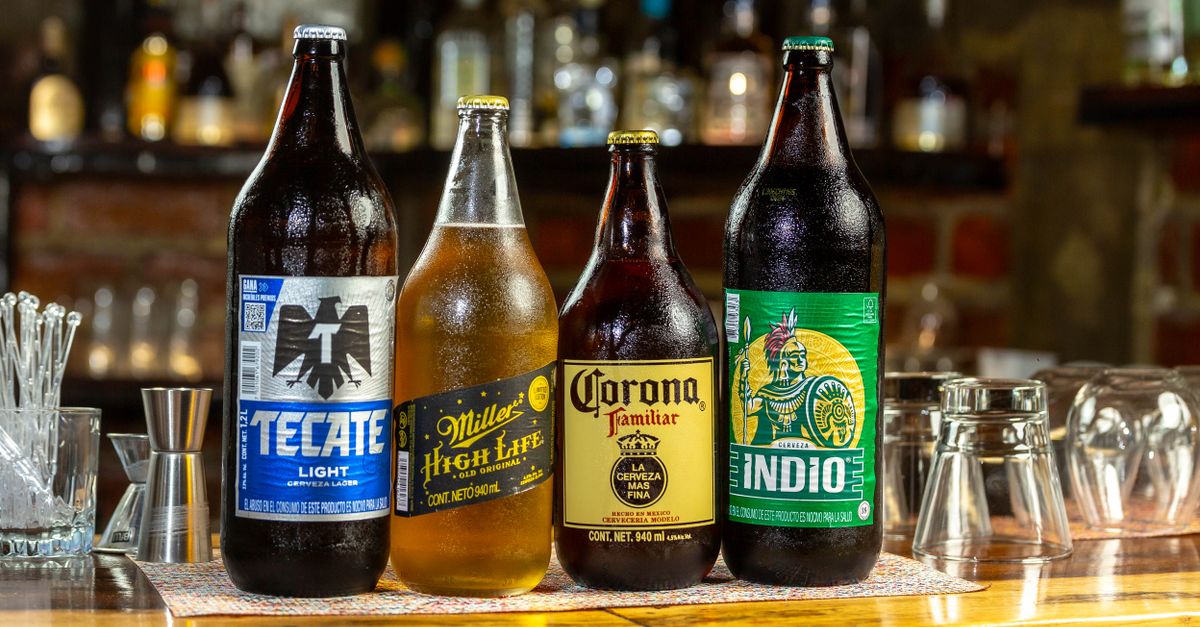
The outlier in this comparison is Miller High Life, which carries a 4.6% ABV and 141 calories per serving — not a light beer in any meaningful sense, despite sharing a brand name. If you've ever assumed that anything with "Miller" on the label falls into the same category, the High Life is a useful corrective. For more on how its alcohol and calorie profile breaks down, the breakdown of Miller High Life's alcohol content and nutrition figures is worth a read.
A point worth complicating: the ABV parity among Bud Light, Coors Light, Michelob Ultra, and Miller Lite has led many drinkers to treat them as interchangeable. They aren't, quite. Brewing process differs. And if you're watching calorie intake rather than intoxication level, Michelob Ultra's marketing as a "fitness beer" reflects a genuine (if modest) edge in the numbers — one calorie per serving is nearly nothing, but it's not a manufactured claim.
Busch Light's 4.1% is the only real deviation in the ABV column, and even that is a rounding artifact depending on the batch — treat it as functionally identical for any practical purpose. The alcohol content for Miller Lite and most of its direct competitors lands in the same narrow band, so what separates them in the market is taste, price, and branding rather than anything this table can capture.
Is Miller Lite a low-alcohol beer or just a low-calorie one?
Miller Lite is a low-calorie beer, not a low-alcohol one. Its 4.2% ABV puts it squarely in standard domestic lager territory — the "light" label describes its calorie count, not its alcohol strength.
This trips people up constantly, and the confusion is understandable. The word "light" does double duty in American beer marketing: sometimes lower alcohol, sometimes fewer calories, sometimes both. With Miller Lite, it means calories only. Regulatory definitions of low-alcohol beer typically sit below 2.8% ABV in most international frameworks, with near-beer or non-alcoholic designations starting below 0.5% — and at 4.2%, Miller Lite clears neither threshold, meaning that by any formal standard, it's a full-strength beer that happens to be less filling.
So where do those saved calories come from? The difference between Miller Lite at 96 calories per 12-ounce serving and a regular lager like Budweiser at 145 calories is almost entirely explained by carbohydrates. Miller Lite uses a brewing process that reduces residual sugars and fermentable carbs, leaving the alcohol content largely intact. Alcohol itself carries roughly 7 calories per gram, and since the ABV barely changes compared to a standard American lager, the calorie reduction has to come from somewhere else. Fewer carbs is that somewhere.
⚠️ Readers who assume "light beer" means they're drinking something meaningfully weaker are making a calculation error that compounds across an evening.
If you want an actual reduced-alcohol option from the Miller family, that's Miller64 Extra Light — which the brand describes as "the same great beer at 2.8% ABV" with 64 calories per serving. That product sits at the lower edge of what regulators and style guides might classify as reduced-strength beer — a meaningfully different drink from Miller Lite in terms of how it affects you per serving, not just how it looks on a nutrition label.
For drinkers who want to go further down the ABV ladder, session ales — typically 3.5% and under — or properly labelled near-beers are the relevant category. Light lager was never designed to be a low-alcohol product. It was engineered around calorie reduction, and that distinction matters directly to anyone tracking alcohol intake across an evening rather than reading the calorie count on the can — two very different goals that "light" collapses into one misleading word.
Miller Lite nutrition facts: calories, carbs, protein, and sugar per serving
A 12 oz serving of Miller Lite contains 96 calories, 3.2 grams of carbohydrates, 0.9 grams of protein, 0 grams of fat, and negligible sugar. That's the full picture — no hidden macros, no surprises buried in a label footnote.
The carb count is where most calorie-conscious drinkers focus. At 3.2 grams, it sits well below what most beers deliver — a standard lager typically lands somewhere between 10 and 15 grams of carbs per 12 oz, more than triple Miller Lite's figure. If you're building out a broader picture of how Miller Lite fits among other options in its category, this guide to low-calorie drink choices covers the competitive landscape worth bookmarking.
The corn syrup question keeps surfacing because it appears on the official ingredients list from Molson Coors — water, barley malt, yeast, hops, hop extract, corn syrup — and that phrasing makes some people nervous. The practical answer: corn syrup is added as a fermentable sugar during brewing, and yeast consumes essentially all of it before the beer reaches your glass. What's left is the alcohol and a trace of residual carbohydrates. You're not drinking liquid corn syrup. The ingredient listing reflects what goes in, not what survives fermentation, which is a distinction the label doesn't bother explaining.
Now, the arithmetic that calorie trackers need. One can is 96 calories. Four cans — a modest afternoon watching a game — puts you at 384 calories before you've touched any food. A 12-pack session, the kind that disappears across a full Saturday, totals 1,152 calories, roughly equivalent to two large fast-food burgers, which reframes how "light" the beer is at volume when you're not counting units carefully. Low-calorie per serving and low-calorie in practice are two separate things, and conflating them is one of the more convenient beliefs people hold about light beer.
Protein at 0.9 grams per serving is real but not meaningful — don't count it toward your daily intake. Fat stays at zero across every container size.

Get Your Venue Discovered
List your venue on WhatDrink so people searching for their next drink by style, location and occasion can find you.
List Your VenueDoes Miller Lite's ABV change by container size — draft, can, or bottle?
The ABV stays fixed at 4.2% regardless of how Miller Lite is packaged or poured — but the total alcohol you actually consume shifts considerably depending on volume, and that distinction matters more than most people realize.
A standard 12 oz can or bottle delivers roughly 11.8 grams of pure alcohol. Crack open a 16 oz tallboy instead, and that figure climbs to approximately 18.7 grams — the same percentage working across a larger volume, which means the format of the container is doing more work than most drinkers account for when they're keeping track of what they've had. That gap isn't trivial: it's the difference between one standard US drink and something closer to one and a half.
Draft pours complicate this further. A "pint" at a bar nominally means 16 oz, which would put you at the same ~18.7 grams as the tallboy. In practice, though, bar glassware is inconsistent. Many American pint glasses are shaker pints that hold 16 oz to the rim — pour in a proper head of foam and the actual beer you drink is closer to 14 oz, net. Some establishments use 14 oz glasses and call them pints anyway. The ABV of the beer hasn't changed, but the alcohol delivered to your glass has, quietly, without any label to tell you.
⚠️ The practical implication is easy to underestimate. Two Miller Lites ordered as pints could represent anywhere from 28 to 37 grams of alcohol depending on pour size and foam — a range wide enough to matter if you're tracking intake across a night out. Two 12 oz cans at home land at a predictable 23.6 grams. Same phrase — "a couple of beers" — meaningfully different outcomes.
Bottles follow the same math as cans. A standard 12 oz bottle is identical to its canned counterpart in every measurable way, and the container changes nothing about the ABV; it only affects how much liquid you're holding, which is the part worth paying attention to.
How many Miller Lites does it take to reach 0.08% BAC?
For a 160 lb man drinking over two hours, roughly 3–4 Miller Lites will push BAC toward the 0.08% legal driving limit. A 130 lb woman can reach that threshold closer to 2–3 cans — and those numbers shift further depending on how fast the drinks land and what else is in the stomach. Estimates, not guarantees. But they're grounded in the same Widmark formula used by forensic toxicologists and, in simplified form, by every BAC calculator you'll find online.
The Widmark formula works like this: take the grams of pure alcohol consumed, divide by body weight in grams, then divide again by a sex-based distribution factor (roughly 0.73 for men, 0.66 for women, reflecting differences in body water percentage) — multiply by 100 and you get an approximate BAC percentage before accounting for metabolism. Not a breathalyzer reading. But directionally reliable enough that courts have accepted variants of it as evidence for decades.
Where Miller Lite's 4.2% ABV changes the math is subtle. A 12 oz Miller Lite contains about 14.2 grams of alcohol — compared to 17.7 grams in a 5% beer of the same volume — and the NIAAA defines one standard drink as 14 grams of pure alcohol, so a Miller Lite clocks in at roughly 0.84 standard drinks. That fractional difference is real, but don't overread it: at 3 cans you've consumed the alcohol equivalent of 2.5 standard drinks, not 3. Modestly more forgiving, not categorically safer.
Time is the other variable most people discount. The liver metabolizes alcohol at a rate of approximately one standard drink per hour — meaning that if you space those three cans across three hours rather than two, your peak BAC drops meaningfully. Drinking speed matters as much as quantity.
⚠️ Body weight isn't the only moderating factor. Food in the stomach slows alcohol absorption and can shift your peak BAC by a meaningful margin — a detail that gets overlooked when people focus exclusively on the drink count. Certain medications accelerate impairment at lower BAC levels, and fatigue amplifies perceived intoxication even when the blood number looks manageable on paper.
The practical takeaway: Miller Lite's lower alcohol content does give you a slightly wider margin than a standard 5% lager, but the difference between "probably fine" and 0.08% is still only one or two cans depending on who you are.

Where Miller Lite fits if you're tracking alcohol intake alongside other drinks
Miller Lite slots comfortably into a tracked drinking session as a predictable, moderate-ABV option — 4.2% per can, consistent enough that counting standard drinks is straightforward once you know the baseline. Where it gets more useful is when you start comparing it horizontally against other categories.
A craft session ale sitting at 4.5% and 160 calories looks similar on paper but drinks differently in practice. Hard seltzers often clock in around 5% with fewer carbs. Light lagers are tightly clustered. WhatDrink pulls beer ABV, calorie counts, and flavor profiles into a single view alongside cocktail and spirits data, which makes cross-category comparisons faster than bouncing between manufacturer sites — and its low-calorie filter is well-suited to drinkers who want to move beyond light lager without losing calorie discipline, letting you scan options across styles rather than hunting through individual brand pages. The catalog depth on regional craft beers runs thinner than on mainstream brands, so treat that as a useful shortcut for widely distributed labels rather than a definitive guide to everything on tap locally. For imported lagers, there's a detailed breakdown of how Heineken's ABV and nutrition compare that gives useful context if you're weighing domestic versus imported options.
FAQ
Is Miller Lite a strong beer?
No — at 4.2% ABV, Miller Lite sits in the middle of the mainstream lager range, not at the stronger end. It's comparable to most other light beers and well below craft IPAs or malt liquors, which often run from 6% to 9% or higher. By any reasonable measure, it's an average-strength beer.
Is Miller Lite low alcohol?
Miller Lite is not a low-alcohol beer in the technical sense. Low-alcohol designations typically apply to beers at or below 2.5% ABV, and at 4.2%, Miller Lite delivers a standard amount of ethanol — roughly 11.8 grams per 12 oz serving. The "light" in its name refers to reduced calories and carbohydrates, not reduced alcohol content.
Is Miller Lite a healthier beer choice?
Relative to full-calorie lagers, Miller Lite does offer fewer calories (96 per 12 oz) and fewer carbohydrates (3.2 grams), which makes it a reasonable option if those numbers matter to you. But the alcohol content is essentially the same as a regular beer, so any health consideration around drinking frequency or quantity applies just as much to Miller Lite as to any other standard lager. Lower calories doesn't mean lower intoxication risk.
How does Miller Lite ABV compare to Budweiser?
Miller Lite comes in at 4.2% ABV, while regular Budweiser is 5.0% — a meaningful difference of nearly a full percentage point. That gap means a 12 oz Budweiser delivers noticeably more alcohol per serving than a Miller Lite, which is one reason the calorie count differs as well, since alcohol contributes about 7 calories per gram. If you're switching between the two, the difference adds up across multiple drinks.
What to take away about Miller Lite's alcohol content and calories
Miller Lite's ABV is 4.2%, its calorie count is 96 per 12 oz, and each serving contains approximately 11.8 grams of pure alcohol. Those three numbers are the ones worth keeping in mind, because they clarify something the "light" label obscures on its own. The label, in other words, is doing less work than most people assume.
The word "light" on the label is a calorie and carbohydrate claim, not an alcohol claim. Miller Lite has fewer carbs and fewer calories than a standard lager like Budweiser or a regular Coors — but it does not have meaningfully less alcohol than either. Someone drinking Miller Lite because they want to drink fewer calories is making a well-supported choice. Someone drinking it because they assume it's easier on the body in terms of intoxication is working from a misread of what "light" actually promises.
That distinction matters practically. If your concern is caloric intake, 96 calories per can is a notably low figure for a beer — and it holds across cans, bottles, and draft pours at essentially the same ABV, which means you can plan around it with some confidence. If your concern is how quickly the alcohol accumulates — for driving, for pacing yourself over a long evening, or for tracking units against weekly intake guidelines — then Miller Lite behaves like any other mainstream beer at roughly 4% ABV. The same rules about pace, body weight, food consumption, and time apply.
The one practical reframe worth carrying out of this: Miller Lite is lighter than a Budweiser in calories, but it's not lighter than a Bud Light in alcohol. Bud Light sits at 4.2% too. Among the major light lagers, the ABV differences are narrow enough that choosing between them on alcohol-strength grounds doesn't move the needle much. Where they actually differ is in flavor profile, price, and — to a modest degree — calories and carbs. If those are the variables that matter to you, the numbers are all knowable and consistent. That's the information this label was never quite designed to hand you clearly, but it's available.