The adios MF drink — properly, the Adios Motherfucker, though bartenders everywhere abbreviate it — is a long-established bar staple built from equal parts vodka, rum, tequila, gin, and blue curaçao, topped with a generous pour of sweet-and-sour mix and lemon-lime soda. The blue curaçao is what turns it that unmistakable electric blue; every other ingredient in the glass is clear or pale. It's been a fixture at dive bars and spring break destinations since at least the early 1990s, and the name is exactly what it sounds like.
A standard AMF runs somewhere between 15% and 22% ABV depending on pour sizes, which puts it firmly in "one is probably enough" territory — treat it like a Long Island Iced Tea, because structurally it is one, just bluer and with a different liqueur swap.
The recipe itself is straightforward: equal measures of the five spirits, a splash of sour mix, topped with Sprite or 7-Up, served over ice in a highball or pint glass. The sections below break down the exact quantities, calorie count, a shot version, and three variations worth ordering or mixing yourself.
What is in an Adios MF drink?
The Adios MF is built from five liquors — vodka, rum, tequila, gin, and blue curaçao — each measured at ½ oz, combined with 2 oz of sweet-and-sour mix and topped with lemon-lime soda. That's the whole architecture. Five spirits, one liqueur, one binding agent, one fizzy finish.
Ingredient | Amount | Role in the drink |
|---|---|---|
Vodka | ½ oz | Neutral alcohol base |
White rum | ½ oz | Faint molasses sweetness |
Tequila | ½ oz | Agave edge, slight earthiness |
Gin | ½ oz | Botanical bitterness |
Blue curaçao | ½ oz | Color and citrus sweetness |
Sweet-and-sour mix | 2 oz | Structural scaffold, masks raw spirit |
Lemon-lime soda | Top (~2–3 oz) | Dilution and effervescence |
The four base spirits are, individually, doing almost nothing at these volumes. Half an ounce of gin is not going to assert its juniper character against three other liquors. What you get instead is a collective warmth — a combined heat from the alcohol load rather than anything identifiable as rum or tequila specifically. Anyone who tells you they can taste each spirit distinctly in an AMF is either being generous or fibbing.
Blue curaçao is worth understanding on its own terms. It's an orange-flavored liqueur — functionally the same family as triple sec, with the addition of food coloring that shifts it from amber to electric blue. If you're curious about how the two compare and whether one can substitute for the other, this breakdown of orange liqueur alternatives and what they bring to a cocktail is a useful reference. In the AMF, the curaçao's job is mostly cosmetic: that vivid cyan hue is what makes the drink recognizable across a crowded bar. The citrus sweetness it contributes is real but subtle.
Sweet-and-sour mix is doing the structural heavy lifting. Without it, you'd have a glass of barely-diluted mixed spirits with a soda float — harsh, thin, unpleasant. The mix rounds out the sharpness, adds body, and gives the lemon-lime topper something to harmonize with rather than sit on top of awkwardly.
Serve it in a Collins glass over ice. The tall format accommodates the volume (you're building roughly 6–7 oz before the soda), and the ice handles dilution progressively as you drink — which, given how much alcohol is sitting in that glass, is the only responsible approach.
How much alcohol is in an AMF drink?
A standard Adios MF drink contains roughly 2.5 oz of spirits before the soda is added, which puts the finished cocktail somewhere between 12% and 16% ABV depending on how generous the pour and how much Blue Curacao and sour mix dilute the final volume. That range sits closer to a glass of wine than to a light mixed drink.
The math is straightforward. The classic recipe calls for five base spirits — vodka, rum, gin, tequila, and Blue Curacao — at ½ oz each. Even at a conservative 40% ABV across those five, you're carrying around 1 oz of pure ethanol before a splash of sour mix and a short top of lemon-lime soda bring the total volume to somewhere around 8–10 oz. A single-spirit cocktail built on a standard 1.5 oz pour delivers roughly half that. The AMF is, by any reasonable measure, a double.
⚠️ The drink's biggest trap is its flavor profile. Sweet-sour-fizzy combinations actively suppress the perception of alcohol — the citric acid and sugar occupy your palate while carbonation speeds absorption. Someone who finds the AMF "easy to drink" is often discovering that after the second one, not the first. This isn't conjecture; it's the same mechanism that made Long Island Iced Teas notorious decades before the AMF existed.
Bar pours complicate the picture further. A bartender pouring free-hand at a busy service well may go heavy on one spirit and light on another, or use a slightly larger jigger, which can push the ABV noticeably higher or lower than the home recipe produces. Some venues also top with more soda than the recipe intends, which cuts the strength — but you won't know which version you're getting until it's gone.
At home, the only reliable approach is using a proper jigger for each spirit and keeping the soda pour consistent between batches.
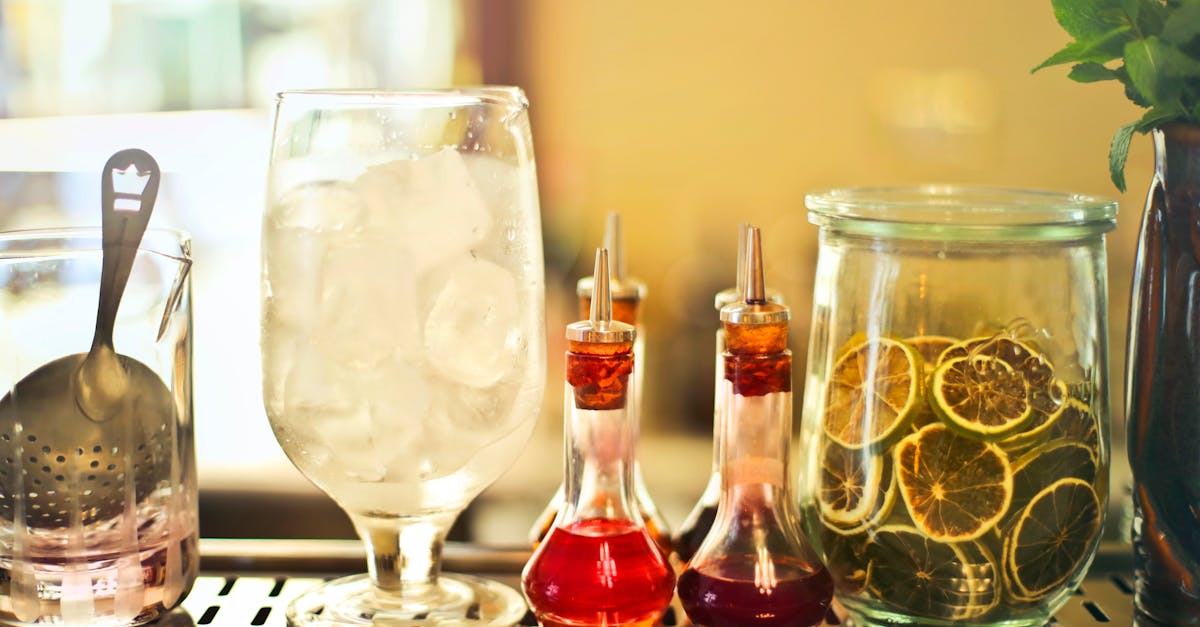
How to make an Adios MF drink at home: step-by-step
Building an Adios MF at home is straightforward — fill a glass, layer in the spirits and mixers, top carefully, done. The whole process takes about three minutes once you have the ingredients on hand.
🛠️ The build sequence:
Fill a Collins glass to the rim with ice. Don't skip this or shortchange it. The drink carries five spirits, and that ice is doing real dilution work from the first pour — that's by design, not laziness.
Add the five spirits in any order. Vodka, rum, gin, tequila, and blue curaçao can go in however you like; none of them need to be floated or layered. Pour them over the ice so the cold immediately starts working.
Add the sweet-and-sour mix. About an ounce, directly over the spirits.
Top gently with lemon-lime soda. Pour it slowly down the inside edge of the glass, not straight into the center — this preserves the fizz rather than agitating it into foam. You want carbonation to survive into the first few sips.
Stir once, briefly. A single slow rotation from the bottom up. The goal is just to lift the heavier curaçao off the base and integrate it; aggressive stirring will flatten the soda and dull the bright blue color that's half the visual appeal of this drink.
Garnish and serve. A lemon wheel on the rim or a maraschino cherry dropped in — either works. The glass is already electric blue and impressively full, so keep the garnish minimal.
On sourcing blue curaçao: It's at most liquor stores, usually near the flavored liqueurs. Bols and DeKuyper are the two brands you'll see most often on mid-range shelves; either is fine for this application. The flavor difference between them is negligible when they're sharing a glass with four other spirits.
DIY sweet-and-sour mix if you'd rather not buy a bottle: combine equal parts fresh lemon juice, fresh lime juice, and simple syrup. Stir and use immediately, or refrigerate for up to a week. The fresh version is noticeably brighter and less synthetic than the neon-green bottled kind — takes under two minutes to make and the difference in the finished drink is worth it.
One practical note: use a Collins or pint glass rather than something shorter. The volume here is substantial, and a rocks glass will overflow before you even add the soda.
Adios MF shot recipe
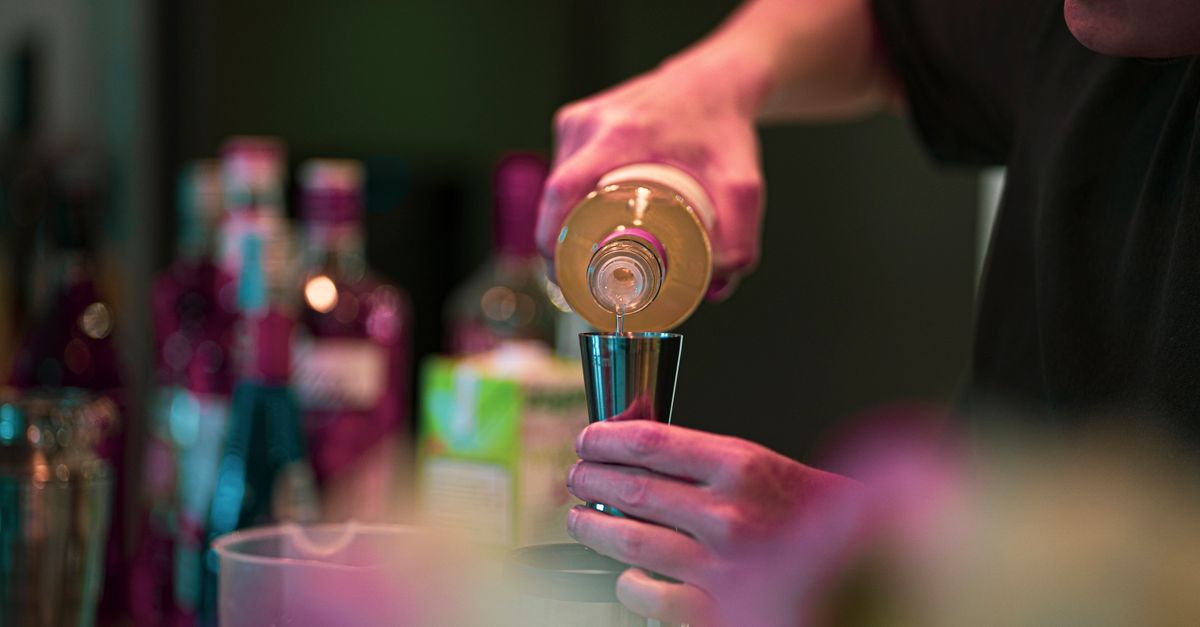
The shot version of the Adios MF compresses the same five-spirit formula into roughly 1.5 oz, stripped of soda and dilution — so what you get is a concentrated hit of citrus sweetness and blue-tinted booze that lands noticeably harder than the long drink suggests.
What goes in: ¼ oz each of vodka, rum, gin, tequila, and blue curaçao, plus a small splash of sweet-and-sour mix. That's it. Combine everything in a shaker with ice, shake briefly — just enough to chill and slightly dilute — then strain into a shot glass. The result should be vivid blue or blue-green, depending on how generous your pour of curaçao is.
⚠️ The absence of soda changes the experience more than you might expect. In the full cocktail, lemon-lime soda does two things: it stretches the volume and introduces carbonation that breaks up the sweetness. Pull that out and both effects disappear. The shot is sweeter, syrupier, and noticeably more potent per ounce — closer to 30% ABV by volume when the ratios are followed exactly, compared to the full drink's lower effective ABV after mixing.
Where this format earns its place is parties. The whole recipe can be pre-batched in a bottle — scale the ¼ oz measures up by whatever multiple you need, skip the soda entirely, add a small amount of water to account for the missing dilution from soda, and refrigerate. Guests pour and shoot without any bartending required.
One thing to flag honestly: because the shot reads as sweet and approachable, its alcohol density gets underestimated. Treat it like a shot of a complex liqueur, not a watered-down cocktail.

Get Your Venue Discovered
List your venue on WhatDrink so people searching for their next drink by style, location and occasion can find you.
List Your VenueHow many calories are in an Adios MF drink?
A standard Adios MF lands somewhere between 250 and 320 calories per serve — not catastrophic, but well above what most people assume when they order something that looks like a blue lemonade. The wide range exists because sweet-and-sour mix varies dramatically by brand, and bartenders rarely measure the soda splash with any precision.
The calorie load breaks down roughly like this:
Five spirit pours (vodka, rum, tequila, gin, Blue Curaçao): Each 1 oz pour of 40% ABV spirit carries around 65 calories, so the five together contribute approximately 300-325 calories on their own — before anything else.
Sweet-and-sour mix: Adds roughly 50-80 calories depending on whether it's made from scratch or poured from a commercial bottle loaded with high-fructose corn syrup.
Lemon-lime soda: The relative innocent here. A 1-2 oz splash adds maybe 10-20 calories.
Wait — that math seems to exceed the 250-320 estimate above, and it does if every pour is generous. At a busy bar, spirits are often free-poured short, which pulls the number down. At home, following the recipe faithfully, you might hit the upper end or slightly beyond.
The most practical way to trim calories without gutting the drink is to swap the commercial sweet-and-sour mix for fresh lemon juice, a splash of lime, and roughly half an ounce of simple syrup. That substitution saves somewhere in the 40-70 calorie range and actually improves the flavour — the processed mix has a cloying, artificial edge that fresh citrus doesn't.
For comparison: a standard margarita on the rocks runs about 200-220 calories, and a gin and tonic sits around 140. The AMF is not a diet cocktail, and no honest reframe changes that. If calorie comparisons across different cocktails are useful to you — especially frozen or high-volume drinks — this overview of frozen and mixed drink calorie ranges lays out a useful benchmark set.
3 variations on the Adios MF worth trying
All three versions below are worth making — each one fits a situation where the original would actually underperform. These aren't just ingredient shuffles; the format, the occasion, or the drinker changes each time.
Frozen AMF is the move for summer parties, poolside afternoons, or anywhere the ambient temperature is fighting you. Blend the full classic recipe — all five spirits, sour mix, blue curaçao, lemon-lime soda — with a generous cup of ice until smooth, then pour into a chilled glass. The slushy texture slows consumption in a way the liquid version simply doesn't; it takes longer to drink something you're eating with a straw. The trade-off is that the carbonation disappears entirely, so the finish is denser and sweeter. Worth knowing before you commit to a pitcher.
Lighter AMF is for the drinker who wants the experience without the sugar hangover the next morning. Cut the blue curaçao from the standard three-quarter ounce down to half, squeeze in fresh lemon and lime juice rather than using pre-made sour mix, and finish the glass with soda water instead of lemon-lime soda. The color goes from electric blue to something closer to teal — still distinctive, just less neon. The flavor shifts too: cleaner, more citrus-forward, less candy-sweet. If you're someone who finds the classic version cloying after one or two, this fixes that problem without abandoning the drink's identity. For anyone curious how citrus-driven cocktails navigate the balance between tartness and sweetness across different formats, this breakdown comparing margaritas and palomas covers that tension well.
Non-alcoholic AMF is the least obvious variation and probably the most useful one. Swap every spirit for a non-alcoholic alternative — there are now credible options for gin, rum, tequila, vodka, and triple sec — use blue food coloring in place of curaçao, and build the rest with fresh citrus and a citrus soda. The glass looks identical to the original. That matters more than it sounds, because part of what makes a Dry January or designated-driver situation uncomfortable is carrying around something that visually announces your sobriety. This version removes that entirely.
None of these require special equipment beyond a blender for the frozen format.
What does an AMF taste like, and when should you order one?
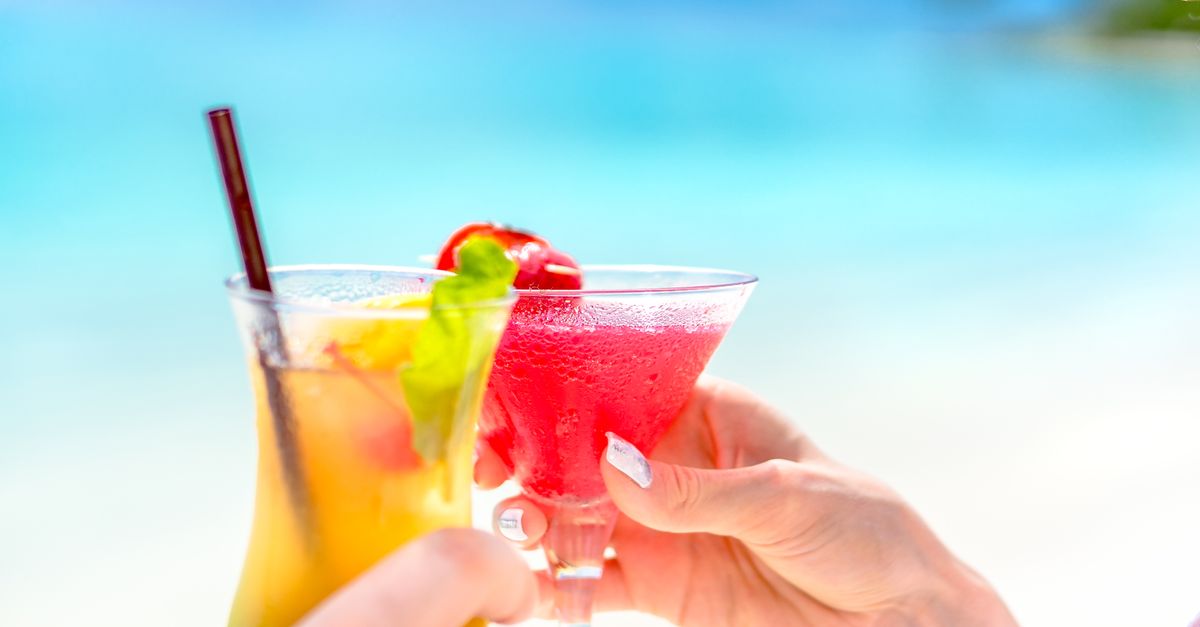
The AMF tastes like a sweet-tart lemonade with a fizzy finish — citrus up front, a faint Blue Curaçao fruitiness in the background, and almost no detectable spirit bite despite the four-liquor build underneath. The soda top (usually Sprite or 7-Up) keeps it light and effervescent, and because no single base dominates, nothing overtly alcoholic announces itself. That's the whole design: something vivid and refreshing that happens to carry a serious ABV.
Which is also the thing worth saying plainly — it drinks far easier than it has any right to. That gap between perceived lightness and actual alcohol content is the drink's defining feature, and whether you read that as appeal or warning depends entirely on the occasion.
For beach bars, house parties, and any setting where a visually striking round matters, the AMF earns its place. The blue color alone does promotional work. It fits groups ordering together, places where the vibe is louder than the cocktail menu, and anyone who wants something cold and citrusy without tasting their way through a spirit flight. If you're building a broader repertoire for those kinds of nights, this roundup of cocktails that work well in party and bar settings is worth browsing.
Where it doesn't belong: slow-sipping contexts, anything spirit-forward, or in front of someone who finds sugary drinks cloying. The college bar dominance makes sense — it's engineered for maximum approachability — but that's a description of its design logic, not a limitation on who can enjoy it responsibly.
FAQ
Is the AMF the strongest cocktail you can order at a bar?
The Adios MF is one of the stronger drinks on most bar menus, combining five different spirits — vodka, rum, tequila, gin, and blue curaçao — in a single glass, typically landing around 15–22% ABV depending on how heavy-handed the pour is. That said, it's not the outright strongest thing available; a Long Island Iced Tea built with identical proportions comes in at a comparable strength, and a straight double shot of whiskey can actually deliver more alcohol in fewer sips. What makes the AMF feel deceiving is the sweetness of the lemon-lime soda and sour mix, which masks the booze far more effectively than the ABV number would suggest.
What does AMF stand for in a drink?
AMF stands for "Adios Mother F\\\*er," a name that's as straightforward as the drink's reputation for sneaking up on you. The cocktail earned the name partly as a riff on its spiritual cousin, the Long Island Iced Tea, and partly as a nod to how drinkers tend to feel partway through a second one. It's sometimes written on bar menus as "Adios MF" to keep things printable.
How much does an Adios MF drink cost at a bar?
At most bars in the United States, an Adios MF runs between $8 and $14, though prices in major cities or upscale venues can push closer to $16–$18. Because the recipe calls for five spirits rather than one or two, bartenders typically charge a slight premium over simpler cocktails — a Long Island Iced Tea at the same bar usually lands in the same price bracket. Prices vary considerably by region, and some bars offer AMFs at a discount during happy hour since they're easy to batch in advance.
What is Taylor Swift's favorite cocktail?
Taylor Swift has publicly mentioned being a fan of vodka and Diet Coke, a straightforward mix she's referenced in interviews, and she's also been associated with Arnold Palmers and chai lattes rather than complex cocktails. There is no credible reporting linking her to the Adios MF specifically. If you arrived here hoping to recreate a celebrity order, the AMF is better credited to late-1990s American bar culture than to any particular public figure.
The AMF in plain terms — and where to go from here
Five spirits, one vivid blue color, and a flavor that tastes closer to a citrusy soda than to something containing a quarter-cup of alcohol: that's the Adios MF's whole trick. The five-spirit structure is what separates it from most cocktails a bartender can make in under two minutes, and the blue curaçao is what gives it the color that turns heads across a bar. Neither of those things is accidental. The drink was designed to be ordered, to be noticed, and to go down faster than it should.
The calorie count — typically in the 250–350 range for a standard serve — is where some people reconsider. At that level, one AMF is closer to a small meal than to a light drink, and if that number gave you pause, it's a reasonable pause. Swapping the regular sour mix for a reduced-sugar version and cutting the soda with sparkling water can trim roughly 60–80 calories without wrecking the profile, or you can search for lower-calorie spirit-forward alternatives on WhatDrink if you want something in the same neighborhood without the full commitment.
If the recipe looked workable, the measurements are already in the article above — 0.5 oz of each spirit, 1 oz of sour mix, a top of lemon-lime soda, and enough ice to fill a highball glass — and the whole thing takes under three minutes to put together at home. The decision you're actually making is a simple one: classic AMF as written, a modified version with a lighter calorie load, or a different drink entirely. You now have enough to choose.